Mecklenburg County Code Enforcement permits plumbing for Charlotte and all six towns
Charlotte Water: pH 8.5, hardness 32 ppm
Pressure-reducing valve required above 80 psi on remodeled plumbing
Paid plumbing work in North Carolina requires a state license
Last Updated:
Gas line repiping replaces the fuel gas piping that runs from the meter to the furnace, water heater, range and other gas appliances in a house. Level Repiping Charlotte arranges gas line repiping across Charlotte and the surrounding counties, with the work performed by contractors licensed for fuel piping, under a permit and inspection. This page covers why gas lines get replaced, black iron and CSST, how the pipe is sized, and how testing and inspection work before gas is turned back on.
If you smell gas, leave the house before doing anything else. Do not switch lights or appliances on or off, and do not use a phone inside. Once outside and away from the house, call your gas utility’s leak line or 911. A gas line page is not a substitute for that call, and no piping work can promise that a leak will never happen.
Gas piping is its own trade
Gas pipe shares crawl spaces and walls with water pipe, but it is a separate system with its own code, its own materials and its own license. In North Carolina, gas piping inside a building follows the North Carolina Fuel Gas Code. Paid fuel piping work is licensed by the State Board of Examiners of Plumbing, Heating and Fire Sprinkler Contractors, which issues a fuel piping contractor license and includes fuel piping privileges in its plumbing and heating licenses. A whole house repipe replaces the water supply only; gas piping is scoped and priced on its own, even when both happen in the same house at the same time.
Why gas lines get repiped
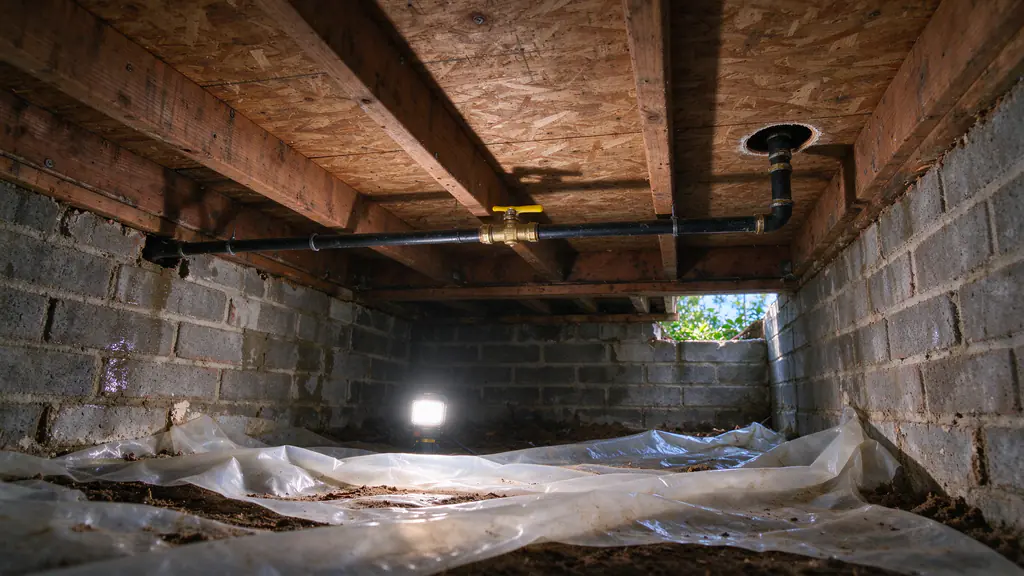
Corrosion. Black iron pipe in a damp crawl space or on an exterior wall can rust over time, especially where it touches soil or sits in standing water. Surface rust is common and not always a problem; deep pitting and flaking are.
A leak. When a utility or an inspector finds a leak in old piping, it is sometimes a single fitting and sometimes a sign that a run of old pipe has reached the end. The repair-or-replace logic is the same as for water pipe: one failed joint is a repair, repeated failures across old pipe point to replacement. Our guide to repiping or repairing explains that reasoning.
Not enough gas. Gas pipe is sized to the total load of the appliances it serves and the length of each run. Adding a gas range, a tankless water heater, a generator, a fireplace or an outdoor grill can push the demand past what the old pipe can carry. Symptoms include burners that weaken when another appliance fires. A larger line is the fix, but the load calculation proves it first.
Renovation. Moving a kitchen, finishing a basement or adding a room often means rerouting gas pipe, and an old system is easier to replace than to extend.
What happens on the first visit
The visit maps the system. The person assessing it finds the meter, traces the existing pipe from there to each appliance, notes the material and condition, and records the rating of every gas appliance, plus any you plan to add. Those ratings feed a load calculation that sizes each section of new pipe. The route is worked out through the crawl space, basement, attic or walls, and the openings it needs are listed.
The result is a written scope: the material, the route, the appliances reconnected, the shutoffs, bonding, the openings, the permit, the test and the price. Gas line repiping is quoted per job.
Black iron, CSST and outdoor pipe
Black iron is steel pipe, cut and threaded on site. It is strong and well understood, and suits exposed runs in crawl spaces, basements and mechanical rooms. Every turn needs a fitting, so long routes through finished space mean more openings.
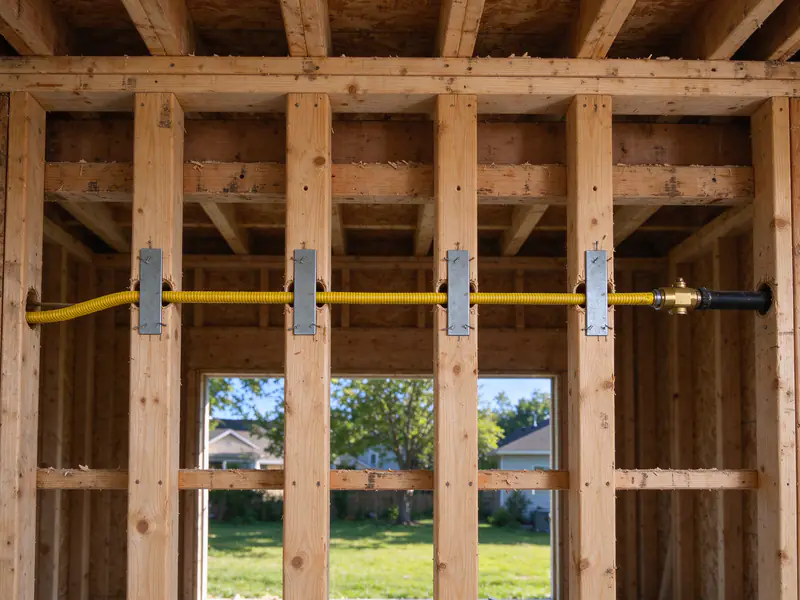
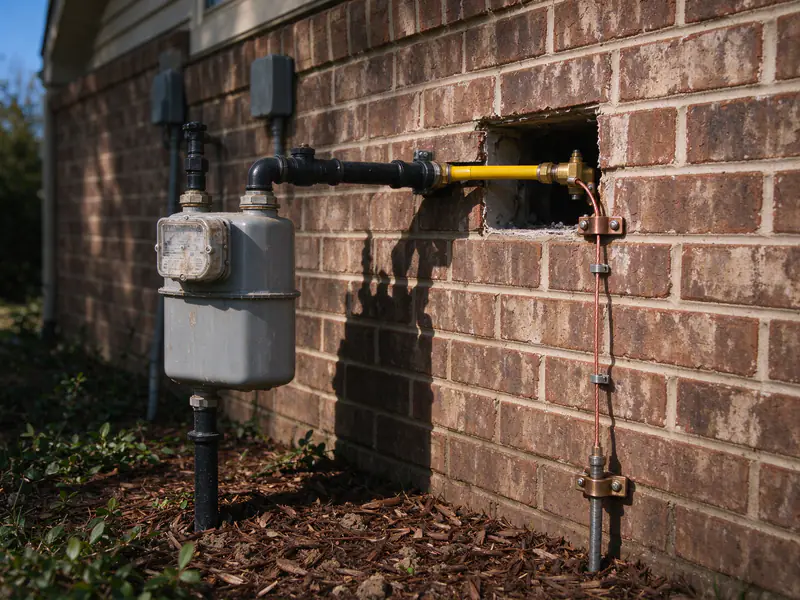
CSST, corrugated stainless steel tubing with a yellow or black jacket, bends around obstacles and runs long distances with few joints. It suits attics, joist bays and finished walls. It must be bonded to the house’s electrical grounding system as the code and the manufacturer require, and installers are trained on the specific system they use.
Buried gas pipe outside the house, for example to a detached garage, a pool heater or a generator pad, is normally polyethylene pipe approved for gas, laid with a tracer wire so it can be located later. Neither material is right for every house, and many systems use black iron where pipe is exposed and CSST where it has to snake through finished space.
Testing, inspection and turning the gas back on
New gas piping is pressure tested before it is covered or connected: the system is capped, pressurized with air and held on a gauge for the time the code and the inspector require, so any loss shows up. Where a permit applies, the county or town inspects the piping and the test. Only after that is gas restored, the new lines purged of air, and each appliance relit and checked. In Mecklenburg County, permits and inspections come from Code Enforcement; our permit guide covers how the county handles them. Outside Mecklenburg, the permit office for your address is confirmed per project.
Living in the house during the work
New pipe is usually run while the old gas system is still working, so most of the job happens with heat and hot water available. The gas is off while appliances are moved over, during testing and until the inspection passes. In winter that window matters; the scope gives it for your house. Our guide to the repiping process shows how a staged job is scheduled.
What moves the price
Gas line repiping is quoted per job. The drivers are the number of appliances, the total load and the pipe sizes it calls for, the length and route, the material, crawl space, basement or slab, finished walls and ceilings in the way, bonding, any outdoor buried run, the permit and inspection, and restoration of openings. If you are unsure what pipes are in the house, see the guide to identifying pipe material. For leaks on the water side, see pipe repair or water leak detection. To start a gas line scope, call (704) 452-4386 or use the estimate form.
What's included
What a gas line repiping includes
A gas line repiping estimate should name the appliance load it was sized for. Adding an appliance later can mean the pipe is too small.
An assessment of the existing gas piping, the meter location and every gas appliance the system serves
A load calculation adding up each appliance's rating, used to size each section of new pipe
A written scope naming the material, the route, the appliances reconnected and the openings expected
The permit, pulled by the contractor licensed for the fuel piping work
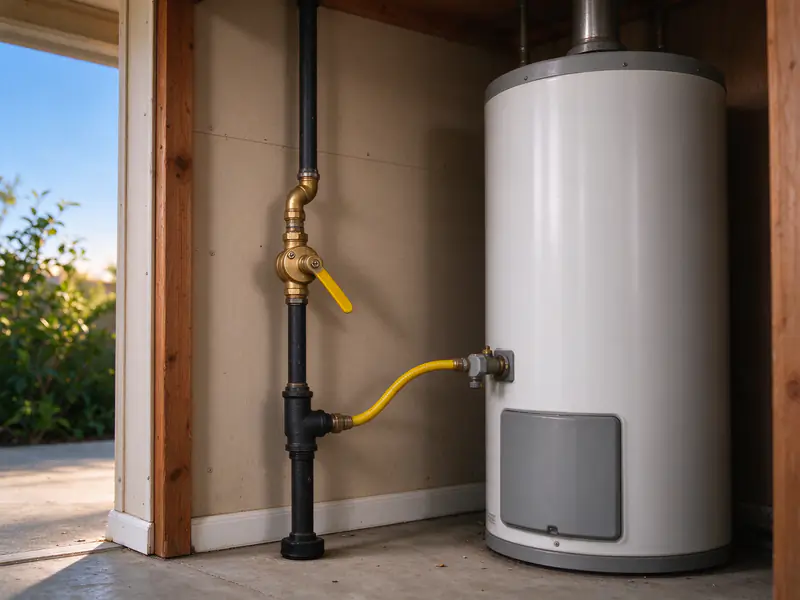
New gas piping with an accessible shutoff and sediment trap at each appliance where the code requires them
Bonding of CSST where it is used
A pressure test of the new piping, held on a gauge, before anything is covered
The inspection, then gas restored, lines purged and each appliance relit and checked
Old gas pipe disconnected and capped or removed where it can be reached
The real choice
Black iron and CSST for gas line repiping
Both are approved for indoor gas piping. The route, the access and the appliances decide which fits, and many jobs use both.
Black iron and CSST for gas line repiping
Black iron (steel pipe)
CSST (corrugated stainless steel tubing)
How it runs
Rigid lengths cut and threaded on site, joined with fittings at every turn
Flexible tubing in long runs with joints mostly at the ends
Where it suits
Exposed runs in crawl spaces, basements and mechanical rooms; short, simple routes
Long or awkward routes through finished walls, attics and joist bays
Openings
More, because each change in direction needs a fitting
Often fewer, because tubing bends around obstacles
What it needs
Protection from corrosion where exposed to moisture
Bonding to the electrical grounding system and protection where it passes through framing
Labor
More fittings and threading
Less cutting, but installers must be trained on the specific system
Gas line repiping is quoted per job.
Guides
Related resources
Guides that go deeper on gas line repiping decisions.
North Carolina law requires plumbing permits but exempts some single-family work. Here is how that exemption applies to a repipe, who is allowed to pull the permit, what Mecklenburg County charges, and how the inspection runs.
A repipe runs in stages, and most of them happen with the water still on. Here is what each stage involves, what makes one house take longer than another, and when you will actually be without water.
Five supply pipes turn up in Charlotte-area houses. Color, joints, markings and a magnet tell most of them apart in a few minutes, as long as you look in more than one place.
How it runs
How a gas line repiping runs
The call or the form
The age of the house, the pipe you have seen, crawl space or slab, and what has been leaking.
The assessment
Pipe material, fixture count, access routes and street pressure, written up as a scope with a price.
The repipe
New lines are run, then connected to fixtures and the water heater, then pressure tested before walls are closed.
Inspection and patching
The permit office inspects the new piping; access openings in walls and ceilings are then patched to the agreed scope.
What this work looks like
Yellow-jacketed CSST gas tubing run through bored holes in wood studs inside an open wall
Copper bonding wire clamped to a brass CSST fitting near a gas meter on a brick exterior wall
Black iron gas drop with a shutoff valve and a short capped sediment trap beside a water heater
Want a gas line repiping scope?
List your gas appliances, tell us whether the house has a crawl space, basement or slab, and say why you are looking at the gas line.
Who is allowed to repipe a gas line in North Carolina?
Gas piping work for pay is licensed in North Carolina. The State Board of Examiners of Plumbing, Heating and Fire Sprinkler Contractors issues a fuel piping contractor license, and fuel piping privileges are also included in its plumbing and heating licenses. You can look up a license on the board's website before work starts.
Why does CSST gas piping need bonding?
CSST has a thin metal wall. Bonding it to the house's electrical grounding system gives stray electrical energy, including energy from a nearby lightning strike, a path to ground other than through the tubing. The code and each manufacturer's instructions set how it is bonded, and the inspector checks it.
Can I add a gas range or generator to my existing gas line?
Maybe. Gas pipe is sized for the total appliance load and the length of each run, so a new range, tankless water heater or generator can leave an existing line too small. A load calculation shows whether the existing pipe is enough or whether a new or larger line from the meter is needed.
How long is the gas off during gas line repiping?
New piping is usually run while the old system stays in service, and the gas is off while appliances are moved to the new pipe, the system is tested and inspected, and gas is restored. The written scope gives the window for your house, which depends on the number of appliances and the inspection schedule.
Does gas line repiping also replace my water lines?
No. Gas piping and water piping are separate systems with different licenses, materials and tests. If both are failing in an older house, they can be scoped at the same time so walls are opened once, but each appears as its own line on the estimate.