About 40 Mecklenburg plumbing permits since 2024 that describe abandoning a private well and connecting to city water (Mecklenburg County)
160 psi Minimum pressure rating at 73.4°F for water service pipe, which must also be NSF 61 listed (NC Plumbing Code amendment)
58.3 Average nights a year at or below freezing in Charlotte, 1991-2020 (NOAA climate normals)
R-6.5 Minimum insulation on water pipe in an unconditioned crawl space or attic (NC Plumbing Code 305.4)
Last Updated:
Well water line replacement is the replacement of the buried pipe that carries water from a private well system to the house. Level Repiping Charlotte arranges well water line replacement across Charlotte and the surrounding counties, with the work performed by licensed and insured contractors under a plumbing permit where one is required. The well itself, the pump and the equipment at the well are a well contractor’s work; this page covers the line between them and your house, how to tell a line problem from a well problem, and when connecting to city water makes more sense.
Where the well line starts and ends
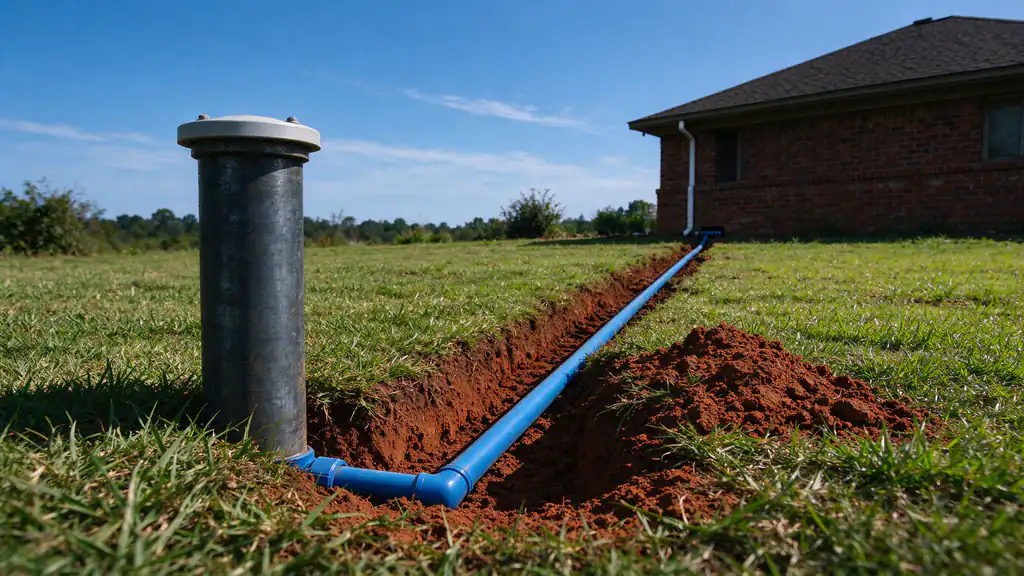
A well system has two halves. Down the well, a pump pushes water up a drop pipe to a fitting in the casing, usually a pitless adapter below ground, where it turns sideways into a buried line. That much belongs to the well. The water then reaches a pressure tank and pressure switch, which store a small volume of water and turn the pump on and off.
Where the pressure tank sits decides what the house line is. In many houses the tank is inside, in a crawl space, basement, garage or utility room, and the buried line runs from the well head straight to it. In others, the tank sits in a small well house beside the well, and the buried line carries pressurized water from there to the house. Either way, well water line replacement covers the buried run and its connections; the well, pump, drop pipe, pitless adapter and tank equipment stay with the well contractor. North Carolina requires well contractors to be certified, and well construction, repair and abandonment follow state rules.
Why well lines fail
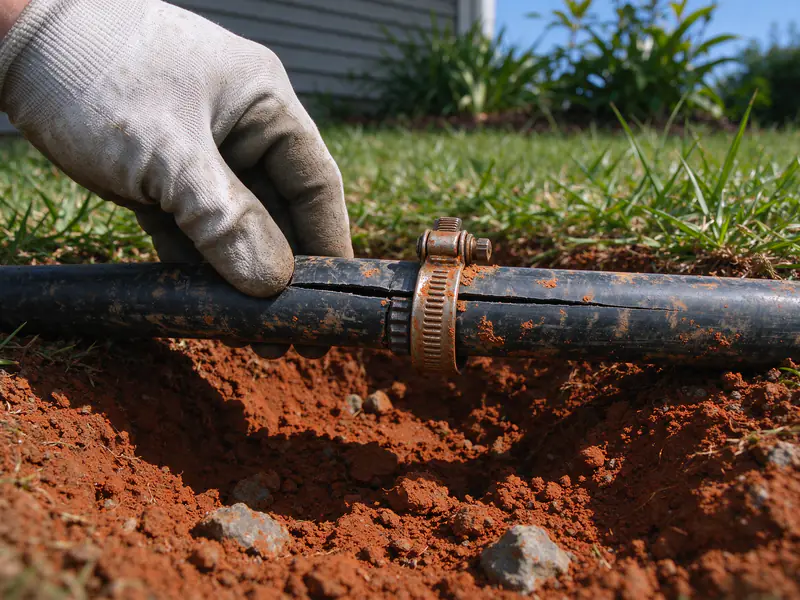
Many well lines in the Charlotte area were laid decades ago, in whatever pipe was cheapest at the time. Galvanized steel rusts from the inside and narrows. Polybutylene fails at its fittings and from within, the same way it does inside houses; see our polybutylene replacement page. Older polyethylene joined with barbed fittings and hose clamps tends to leak at the clamps as they rust.
Physical damage is the other cause. Lines get cut by later digging for fences, irrigation or utilities, crushed under driveways that were never meant to be over them, or pushed by roots. A line that is shallow or exposed where it leaves the well house or enters the house can freeze. Charlotte averages 58 nights a year at or below freezing, and hard freezes such as 6°F on January 7, 2014 and 10°F on February 2, 2026 are when exposed well lines split. Our guide to crawl space pipes freezing covers the inside end of that problem.
Line problem or well problem?
The symptoms overlap, so nothing gets blamed until something has been measured.
A pump that runs or cycles when no water is being used means water is going somewhere or the system cannot hold pressure. That can be a leak in the buried line, a running toilet, a failed check valve, a waterlogged pressure tank or a control fault. Low pressure can come from the tank or switch setting, a clogged filter, a worn pump, a restriction in old pipe, or a well that cannot keep up. Pressure, flow and well yield are different things, and a bigger pump does not fix a leaking line.
The checks are practical. Every fixture is turned off and the pressure gauge is watched. The house is isolated from the line where a valve allows it, which shows whether the loss is in the house or the yard. The route between the well and the house is walked for a wet strip, a sunken trench line or greener grass. If the evidence points to the well, pump or tank, that is a well contractor’s call. The low water pressure and water leak detection pages explain how those causes are separated on the city water side.
What happens on the first visit
The person assessing the property finds the well, the well house if there is one, the pressure tank and the point where the line enters the house. The existing pipe is identified at each end. The route between them is traced, its length measured and other buried utilities marked before any digging. The checks above confirm whether the line is the problem.
The result is a written scope: where the new line connects at each end, the pipe, the depth and route, the trenching method, the shutoff at the house, insulation, the permit, the test, restoration and the price. Well water line replacement is quoted per job.
How the replacement runs
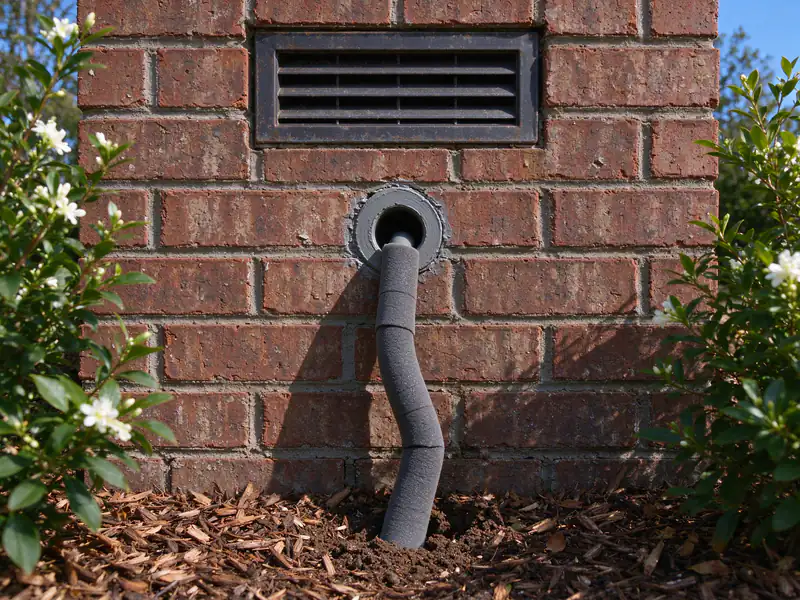
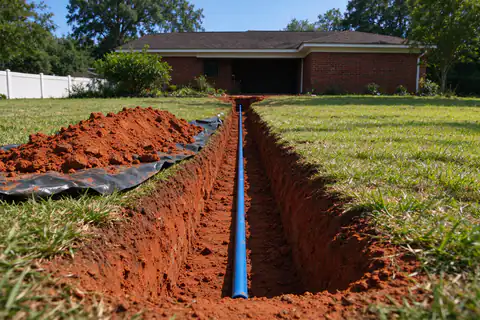
A new line is usually laid in a fresh trench beside the old one, which stays in service until the new line is ready, so the water is off only for the final connections. The pipe is rated for at least 160 psi at 73.4°F and listed to NSF 61 under the North Carolina amendments, laid on clean bedding at a depth that keeps it below frost and away from damage, with a tracer wire so it can be found later. At the house it gets a new shutoff, and pipe that runs through an unconditioned crawl space gets at least R-6.5 insulation under the state code. The line is pressure tested before backfill and inspected where a permit applies; our permit guide explains how Mecklenburg County handles plumbing permits.
Opening a well system can introduce bacteria. The line is flushed and disinfected as the work requires, and clear water is not proof of safe water, so a laboratory test after the work is the way to know.
Switching from a well to city water
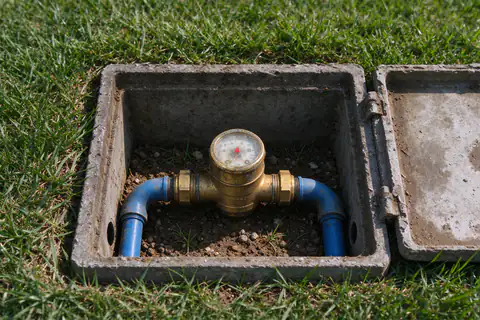
Where city water reaches the street, replacing an old well line is a good moment to ask whether to keep the well at all. About 40 Mecklenburg plumbing permits since 2024 describe abandoning a private well and connecting to city water with a new service line, most of them in Charlotte, with others in Huntersville, Mint Hill, Cornelius, Davidson and Matthews. That conversion needs a tap and meter from the water utility, a new service line to the house, often a pressure-reducing valve because city pressure can run high, and abandonment of the well by a well contractor under state rules. Our water line replacement page covers the new service line, and the guide to who owns the water line in Charlotte explains the meter split afterward.
What moves the price
Well water line replacement is quoted per job. The drivers are the length and depth of the line, the soil and what the route crosses, the pipe, the connections at each end, a new shutoff or insulation, the permit, and restoration of lawn or paving. If the pipes inside the house are failing too, see whole house repipe. To start a well line scope, call (704) 452-4386 or use the estimate form.
What's included
What a well line replacement includes
A well line estimate should say exactly where the new pipe connects at each end, and which side of that connection belongs to the well contractor.
Tracing the line from the well or well house to where it enters the house, and marking other buried utilities before digging
Checks that separate a leak in the buried line from a problem at the well, pump or pressure tank
A written scope naming where the new line starts and ends, the pipe, the depth and the route
The plumbing permit, pulled by the licensed contractor doing the work, where one applies
New pipe laid on clean bedding, below the frost line set by code and the inspector, with a tracer wire
A new shutoff valve where the line enters the house, and insulation where the pipe passes through unconditioned space
A pressure test of the new line before backfill, then the inspection
Backfill and restoration as written in the scope, and a reminder to have the water tested after the system is opened
The real choice
Choices when the line from a well fails
Which one fits depends on the condition of the whole line, the well, and whether city water is available at the street.
Choices when the line from a well fails
Repair a section
Replace the line
Connect to city water
What it does
Digs up and replaces the failed length
Lays a new line from the well system to the house
Runs a new water service from a city meter and retires the well
When it fits
One leak or one damaged spot on pipe that is otherwise sound
Old galvanized, polybutylene or brittle pipe, or repeated leaks
City water at the street and a well near the end of its life or with water quality problems
Who else is involved
No one, if the leak is in the house line
The well contractor, if the connection at the well changes
The water utility for the tap and meter, and a well contractor to abandon the well under state rules
What stays
The rest of the old line
The well, pump and pressure tank
Nothing from the well system
All three are quoted per job.
Guides
Related resources
Guides that go deeper on well line replacement decisions.
Charlotte freezes most winters and sees a hard freeze every few years. Here is why crawl space and attic pipes are the ones that split, what the state code requires, and what helps before and after a cold night.
Charlotte Water draws a clear line at the meter. Here is what the utility owns, what the property owner owns, how to tell which side a leak is on, and when the service line is worth replacing with a repipe.
North Carolina law requires plumbing permits but exempts some single-family work. Here is how that exemption applies to a repipe, who is allowed to pull the permit, what Mecklenburg County charges, and how the inspection runs.
Five supply pipes turn up in Charlotte-area houses. Color, joints, markings and a magnet tell most of them apart in a few minutes, as long as you look in more than one place.
How it runs
How a well line replacement runs
The call or the form
The age of the house, the pipe you have seen, crawl space or slab, and what has been leaking.
The assessment
Pipe material, fixture count, access routes and street pressure, written up as a scope with a price.
The repipe
New lines are run, then connected to fixtures and the water heater, then pressure tested before walls are closed.
Inspection and patching
The permit office inspects the new piping; access openings in walls and ceilings are then patched to the agreed scope.
What this work looks like
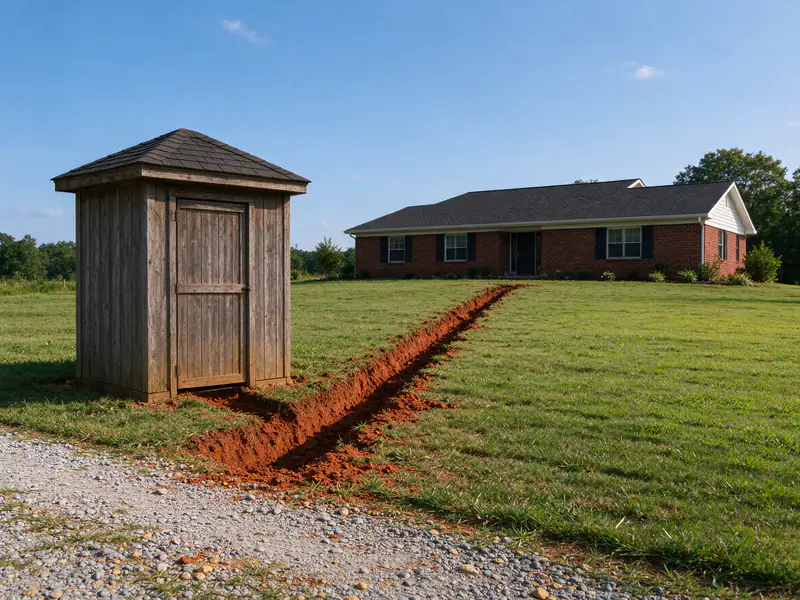
Small wooden well house beside a gravel drive with a trench leading from its door toward a brick ranch house
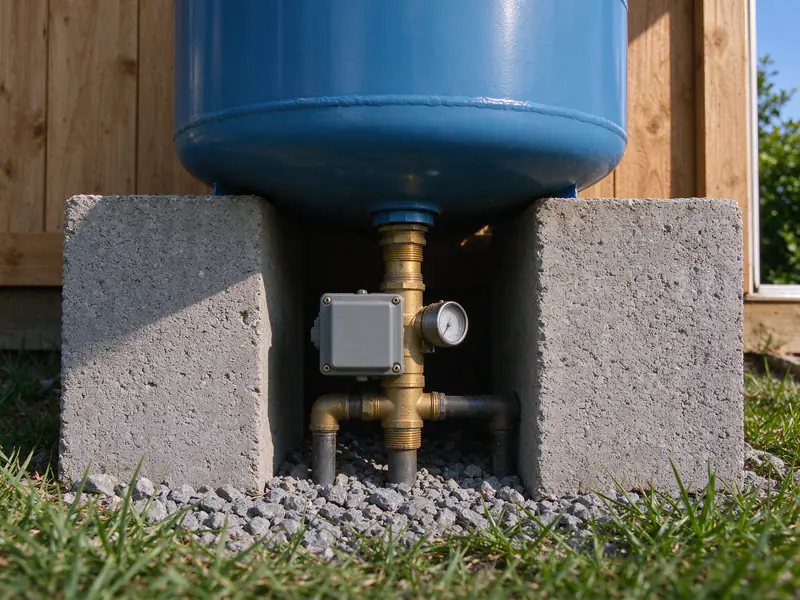
Blue pressure tank with a pressure switch and gauge on a tank tee, set on concrete blocks at a well house
Black polyethylene water pipe with a split and a rusted hose clamp, lifted out of red clay soil
New PEX water line in foam pipe insulation entering a crawl space through a sealed hole in the brick foundation below a vent
Want a well water line scope?
Tell us where the well and pressure tank are, roughly how far they are from the house, and what the water is doing.
How do I know whether my well line or my well pump is the problem?
The symptoms overlap. A pump that runs or cycles when no water is being used can mean a leak in the buried line, but it can also mean a failed check valve, a waterlogged pressure tank or a control problem. Isolating the line and watching the pressure with everything off tells them apart. A wet or green strip between the well and the house points to the line.
Do you work on the well itself or the well pump?
No. The well, the pump, the drop pipe, the pitless adapter and drilling are well contractor work, and North Carolina requires well contractors to be certified. Well water line replacement covers the buried line to the house and its connections, and is coordinated with the well contractor where the work meets the well system.
What pipe is used to replace a well water line?
Polyethylene, PEX or PVC rated for water service are common. Under the North Carolina amendments, water service pipe must be rated for at least 160 psi at 73.4°F and listed to NSF 61 for drinking water. The scope names the pipe and the fittings, and avoids the barbed-fitting-and-clamp joints that often fail on older lines.
Should I switch from my well to city water instead of replacing the line?
It depends on whether city water is available at your street, the condition of the well, your water quality, and the cost of the tap and meter from the utility. About 40 Mecklenburg permits since 2024 describe that kind of switch. The well must then be abandoned under state rules by a well contractor.
Is my well water safe after the line is replaced?
Clear water is not proof of safe water. Any work that opens the water system can introduce bacteria, so the line is flushed and disinfected as the work requires, and a laboratory test is the way to know. Your county environmental health office can advise on private well testing.