1 Mecklenburg repipe permit from April 2025 to October 2026 that describes replacing CPVC with PEX (Mecklenburg County)
29.5% Share of Charlotte housing units built from 1980 to 1999, the era when CPVC, copper and polybutylene were all in use (U.S. Census Bureau ACS)
$4,000 to $12,000+ Typical Charlotte-area range for a whole house PEX repipe on a single-family home
Last Updated:
CPVC pipe replacement removes chlorinated PVC supply pipe that has become brittle or keeps cracking, and replaces it with PEX or copper, either on the hot side or throughout the house. Level Repiping Charlotte arranges CPVC pipe replacement across Charlotte and the surrounding counties, carried out by licensed and insured contractors under a plumbing permit where one is required. This page explains how CPVC ages, how to tell whether yours needs replacing, and when leaving it in place is the better call.
CPVC is not polybutylene. It is still approved for hot and cold water distribution under the North Carolina Plumbing Code, still sold, and still installed. Replacement is about the condition of the pipe in your house, not about the material having been withdrawn. Our guide to whether CPVC is bad covers the background.
What CPVC is and where it is found
CPVC is a rigid plastic pipe, usually cream, tan or off-white, printed with “CPVC”, a copper tube size marking and its ASTM standard. It is joined with solvent cement, which chemically welds each pipe into its fitting. It was used in many houses from the 1980s onward, sometimes for the whole system and sometimes for repairs and additions to copper or polybutylene systems.
Charlotte has a large stock from that era. Census estimates put 29.5% of Charlotte housing units in buildings from 1980 to 1999, and Mecklenburg County assessor records count more than 83,000 single-family houses built in those two decades. Those houses were plumbed with copper, polybutylene, CPVC or a mix, so the era tells you only what to look for, not what a given house has. Our guide to identifying pipe material helps tell CPVC from PEX and polybutylene.
The county’s permit records show CPVC replacement is not the most common reason for a repipe here. Of the 81 Mecklenburg plumbing permits issued from April 2025 to October 2026 that describe a repipe, one describes replacing CPVC with PEX, against 14 naming polybutylene. Many permits do not name the old material, so the true count is likely higher, but CPVC replacement is usually a condition decision for a particular house.
Why CPVC turns brittle
New CPVC flexes a little. Over the years it loses that ability, and several things speed the change.
Heat. Hot lines, especially the first few feet out of the water heater, age faster than cold lines. That is why cracks often appear near the heater first.
Chemical contact. Some caulks, spray foams, firestop products, thread sealants, oils and pest-control treatments attack CPVC where they touch it. Pipe makers publish lists of compatible products for this reason. Damage from contact can show up years after the product was applied.
Restraint. CPVC grows in length as it heats. A hot run clamped tight at both ends, or pressed against framing, puts the stress into its fittings each time the water heats and cools.
Installation. Solvent-cement joints depend on clean, primed surfaces, full insertion and cure time. A poorly made joint can last for years and then fail when the pipe is disturbed.
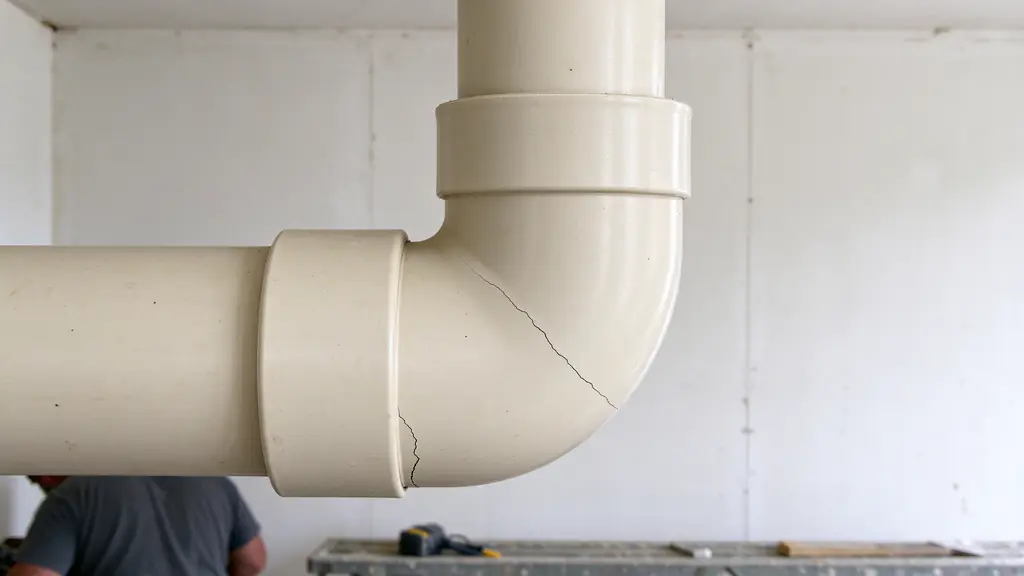
Brittle CPVC fails differently from copper or polybutylene. It tends to split or shatter, often suddenly, and often just after someone has worked on a nearby fixture.
What happens on the first visit
The assessment looks at the CPVC wherever it can be seen without force: at the water heater, under sinks, behind the toilet, in the crawl space or attic. It notes discoloration, chalky surfaces, cracks at fittings and earlier repairs. It looks for products in contact with the pipe, and for hot runs that are clamped rigidly. Street pressure is measured at a hose bib, because high pressure adds stress to brittle pipe; Charlotte Water requires a pressure-reducing valve on new or remodeled plumbing where pressure runs above 80 psi, and our high water pressure guide explains why it matters.
The result is a written recommendation with one of three outcomes: leave the CPVC and handle it carefully during future fixture work, replace the hot side, or replace all of it.
When to replace CPVC and when to leave it
Leave it when there has been no failure, the pipe is not brittle where it can be seen, nothing harmful is in contact with it, and no remodel is planned. Sound CPVC can serve for a long time. Future fixture work should support the stub-out while valves are changed, and a short transition to PEX at the fixture is often sensible.
Replace the hot side when cracks are confined to hot runs, especially near the water heater. A hot-side replacement runs new lines from the heater to each fixture and leaves the cold CPVC in place, named in the scope. Our partial repipe page covers how those boundaries are written.
Replace everything when cracks keep appearing on both sides, when the pipe is brittle at many points, or when every fixture change has turned into a repair. At that stage, each visit risks another crack, and a full replacement removes the problem. Our guide to repairing or repiping walks through that judgment.
How a CPVC replacement runs
New lines, usually PEX, are run while the old system still works: along the joists in a crawl space house, or through the attic and down interior walls in a slab house. Where CPVC stays in service, tie-ins use transition fittings listed for CPVC, and the old pipe is supported while it is cut so the stress does not crack it further back. Fixture shutoff valves are replaced, because old stops on brittle CPVC are where many cracks start. Runs through an unconditioned crawl space or attic get at least R-6.5 insulation under the North Carolina amendment to code section 305.4; CPVC and PEX both crack when water freezes in them, and our guide to frozen pipes in crawl spaces explains how runs are protected. The new system is pressure tested before walls close and inspected where a permit is pulled; our permit guide explains when one applies in Mecklenburg County.
Orange CPVC on a fire sprinkler system is not part of a water supply repipe and is left alone.
What CPVC replacement costs
A full CPVC replacement is a whole house repipe. A whole house PEX repipe on a single-family home typically runs $4,000 to $12,000 or more in the Charlotte area, with larger homes, two-story homes and slab homes running higher. Hot-side and other partial replacements, and repairs, are quoted per job. The drivers are the number of fixtures, the foundation and access, the number of stories, the transitions to retained pipe, and the patching standard. The repipe cost guide explains each one.
If CPVC in your house keeps cracking, use the estimate form or call (704) 452-4386. Note where the cracks have appeared; their pattern says most about what scope fits.
What's included
What a CPVC pipe replacement includes
CPVC that stays in the house can crack when it is handled. A good scope says where the work will touch the old pipe and how.
A check of the CPVC at exposed points: the water heater, under sinks, the crawl space or attic
A note of past cracks and repairs, and of any products in contact with the pipe that could attack it
A written choice: leave in place, replace the hot side, or replace the whole system
New PEX or copper lines for the replaced runs, from the main shutoff or the water heater to each fixture
New fixture shutoff valves, since old stops on brittle CPVC are a common crack point
Careful tie-ins with listed transition fittings where CPVC stays in service
Supports that let hot lines expand, rather than clamping them rigidly
A pressure test before walls close, the inspection where a permit is pulled, and patching as written
The real choice
What to do about CPVC in a Charlotte house
CPVC is still an approved material. Many systems serve for decades; some turn brittle early. The pipe in your house decides.
What to do about CPVC in a Charlotte house
Leave in place
Replace the hot side
Replace all CPVC
Fits when
No failures, pipe not brittle where checked, no harmful contact
Cracks near the water heater or on hot runs only
Repeat cracks across the house, or brittle pipe at many points
CPVC left in service
All of it
The cold side, named in the scope
None inside the house
Future fixture work
Done carefully, often with a short transition to PEX
Easier on the hot side
No CPVC to crack
Price
Repairs quoted per job
Quoted per job
Typical Charlotte range published above
Repairs and partial work are quoted per job. The published Charlotte range covers a whole house PEX repipe.
Guides
Related resources
Guides that go deeper on CPVC pipe replacement decisions.
CPVC is an approved water pipe, not a defective one. But it ages, it becomes brittle, and brittle CPVC cracks in ways that make repairs harder each time. Here is how to tell which situation you are in.
Five supply pipes turn up in Charlotte-area houses. Color, joints, markings and a magnet tell most of them apart in a few minutes, as long as you look in more than one place.
One leak on sound pipe is a repair. A pattern of leaks, or a pipe with a known failure history, is a question about the whole system. The evidence that separates the two is usually in the house.
Both are approved under the North Carolina Plumbing Code. The house, the routes the pipe has to take and what the owner values decide between them, not a rule of thumb.
The typical Charlotte range for a whole house PEX repipe, why copper is quoted separately, how the Mecklenburg permit fee is set, and which parts of the job only a walk-through can price.
How it runs
How a CPVC pipe replacement runs
The call or the form
The age of the house, the pipe you have seen, crawl space or slab, and what has been leaking.
The assessment
Pipe material, fixture count, access routes and street pressure, written up as a scope with a price.
The repipe
New lines are run, then connected to fixtures and the water heater, then pressure tested before walls are closed.
Inspection and patching
The permit office inspects the new piping; access openings in walls and ceilings are then patched to the agreed scope.
What this work looks like
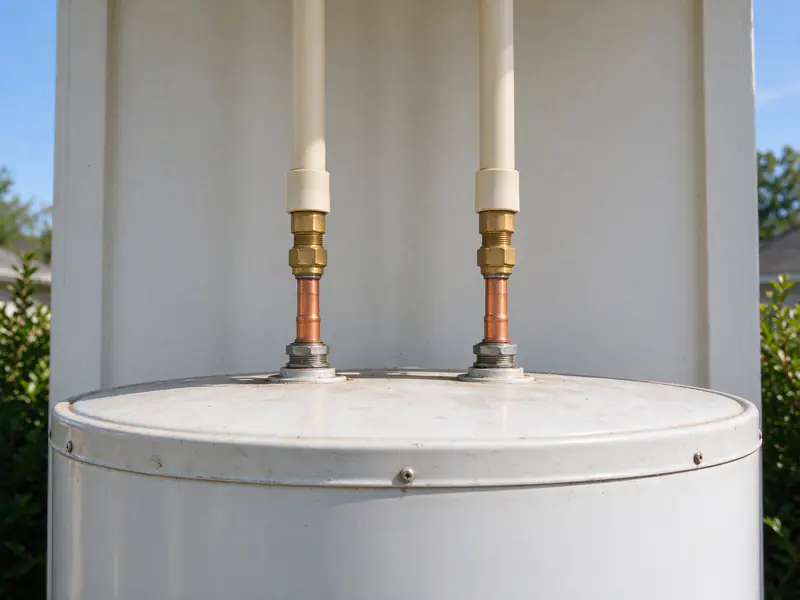
Cream CPVC hot and cold lines connected to the top of a water heater with metal transition fittings
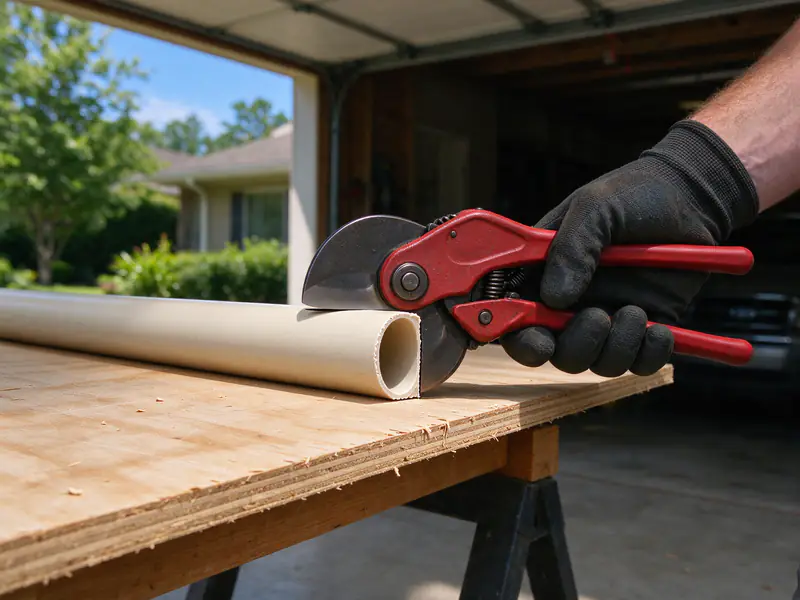
Ratchet pipe cutter closed on a length of cream CPVC pipe, making a clean square cut
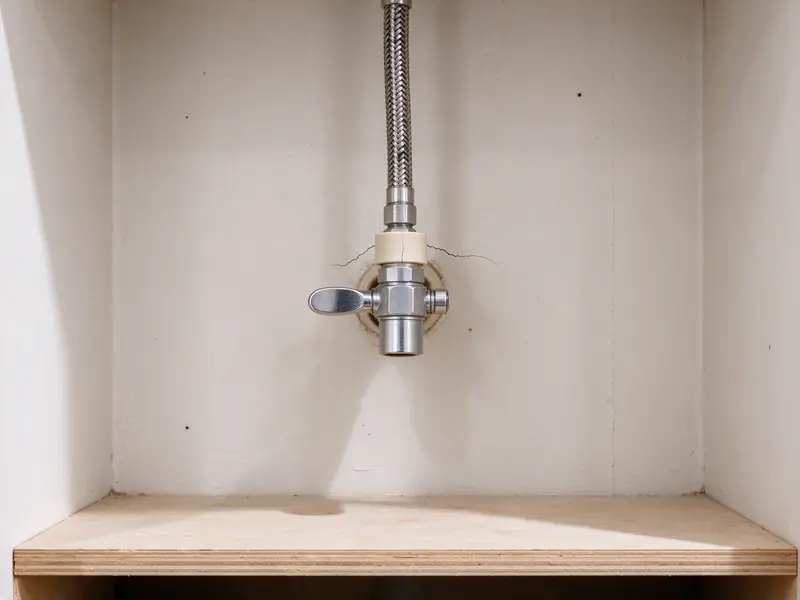
CPVC stub-out under a bathroom sink with a compression shutoff valve and a fine crack in the pipe just behind the valve
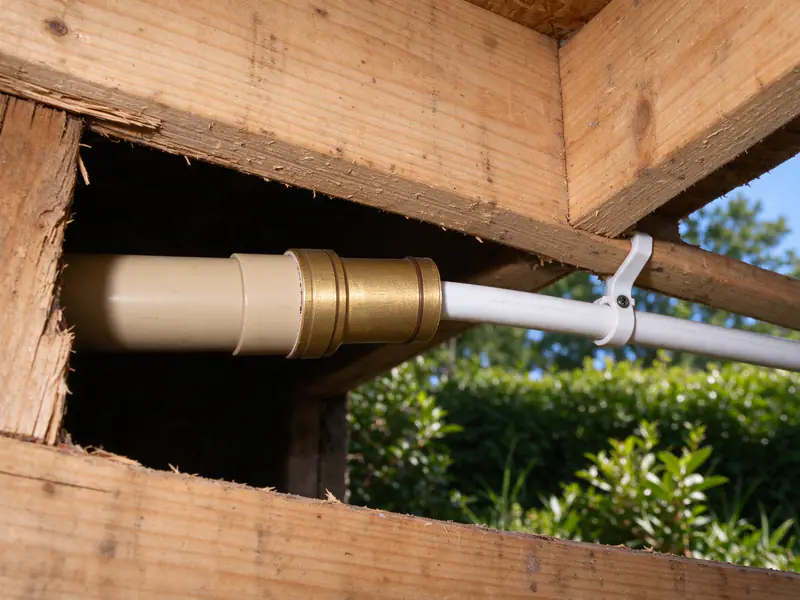
White PEX tubing joined to cream CPVC with a brass transition fitting, supported by a clip on a joist
Cracked or brittle CPVC in your house?
Tell us where the cracks have appeared, how often, and whether they started after fixture or water heater work.
Signs include cracks that appear when a valve or faucet is changed, hairline splits at fittings, and pipe that looks faded or chalky, especially near the water heater. Brittle CPVC tends to shatter or split instead of flexing. A plumber can judge it at exposed points, but you should not bend or strike the pipe to test it yourself.
Should I replace CPVC pipe that has never leaked?
Not necessarily. CPVC is still approved for water supply, and many systems serve for decades without trouble. Replacement makes sense when the pipe is brittle where it can be seen, when cracks keep appearing, or when a remodel opens the walls anyway. Leaving sound CPVC in place and handling it carefully during fixture work is a reasonable choice.
Why does CPVC crack when a faucet or toilet valve is replaced?
Changing a fixture means turning a valve, pushing on a stub-out or cutting the pipe, and aged CPVC has lost most of its ability to flex. The stress lands on the pipe just behind the wall, where a crack can start out of sight. Careful work, support of the stub-out, and a short transition to new pipe reduce that risk.
Is the orange CPVC on fire sprinklers part of a CPVC replacement?
No. Orange CPVC is used for residential fire sprinkler systems, which are a separate system with their own rules and contractors. A water supply repipe replaces the cream or tan CPVC that feeds fixtures and leaves any sprinkler piping alone.
Is PEX or new CPVC better for replacing old CPVC?
Neither is best for every house; both are approved. PEX is the material named most often in recent Mecklenburg repipe permits, because it bends through walls and floors with fewer joints and does not need solvent cement to cure. New CPVC suits some repairs and short runs. Copper is another option. The scope should name the material and why it was chosen.