58.3 Nights a year at or below 32°F in Charlotte, on 1991-2020 climate normals (NOAA)
R-6.5 Minimum insulation on water pipe in an unconditioned attic or crawl space (NC Plumbing Code 305.4)
pH 8.5 Average where Charlotte's water enters the system; lime is added to raise pH for corrosion control (Charlotte Water)
80 psi Above this street pressure, remodeled plumbing needs a pressure-reducing valve (Charlotte Water)
Last Updated:
Pipe repair in Charlotte covers the single failures in a supply system: a pinhole in copper, a leaking fitting, a split from a freeze, or a section damaged during other work. The damaged piece is cut out and replaced, the line is tested, and the opening is closed. Level Repiping Charlotte arranges pipe repairs across Charlotte and the surrounding counties, performed by licensed and insured contractors. A repair is a distinct scope from a repipe, and part of every repair visit is judging whether the pipe around the leak is worth repairing at all.
What happens on the first visit
The first job is confirming what is leaking. Water under a sink or on a ceiling can come from a supply line, a drain, a toilet seal, a supply hose or an appliance, and only a supply line leak is a pipe repair in this sense. If the leak is hidden, the water leak detection process finds it first.
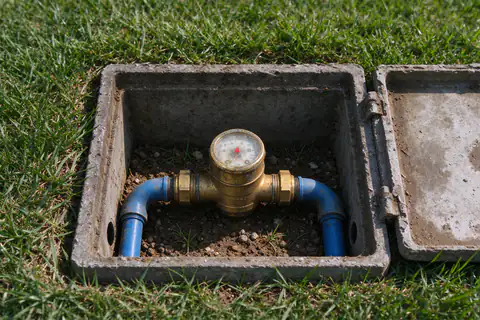
Once the leak is found, the person assessing it identifies the pipe material and looks at the pipe on either side: its color and surface, any green or white crust on copper, rust at threads on steel, brittleness or discoloration on plastic. A gauge reading on a hose bib shows whether high street pressure is adding strain. Charlotte Water reports pressure from about 40 psi on high ground to more than 100 psi in low areas near creeks, and says remodeled plumbing above 80 psi needs a pressure-reducing valve.
The scope then names the repair, the fittings and the patching, and states plainly whether the surrounding pipe looks sound.
How a pipe repair is done
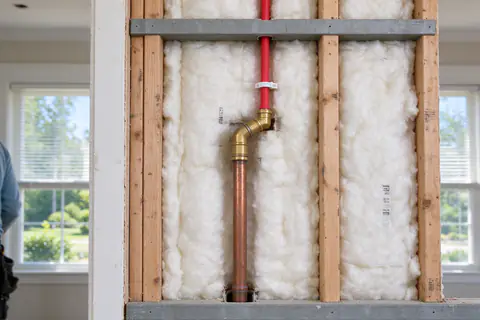
The line is shut off and drained, and wherever valves allow, the rest of the house keeps water. The damaged section is cut out back to sound pipe, and a new section is joined in. On copper, that means soldered joints, press fittings or listed push-fit couplings. On PEX, crimp or expansion fittings to match the existing system. On CPVC, solvent-welded fittings, or a transition to PEX where the old CPVC is too brittle to cut cleanly. Where new copper meets old galvanized steel, a dielectric fitting keeps the two metals apart, because direct contact speeds corrosion at the joint.
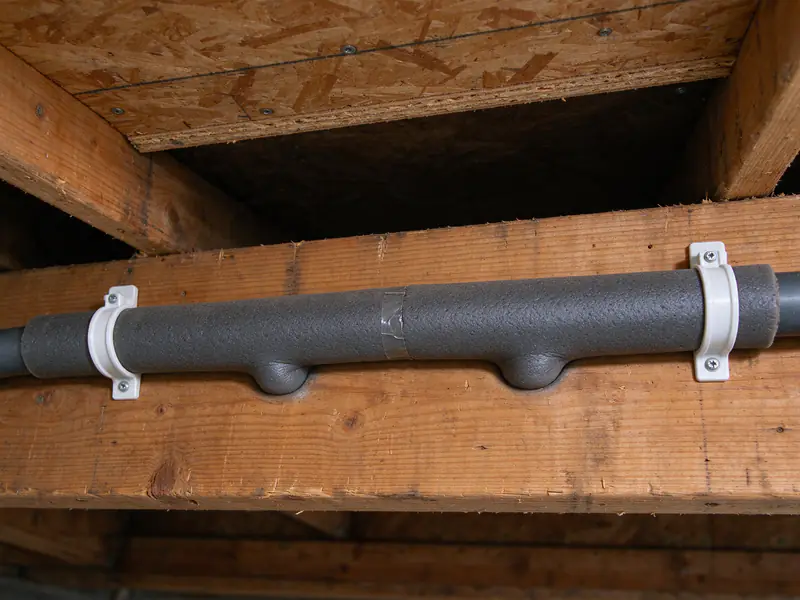
The repaired line is put back under pressure and checked before the opening is closed. Supports and insulation are restored, and insulation is added where the repair sits in an unconditioned crawl space or attic.
Pinhole leaks in copper
Pinholes are small leaks that form where the copper wall has thinned from the inside. There is no single cause. Water chemistry, high flow velocity, workmanship such as leftover flux or burrs, and the way the pipe was installed all play a part, and the cause in a particular house is rarely provable from one leak. Charlotte Water adds lime to raise the pH of its soft, low-alkalinity water for corrosion control, with an average of pH 8.5 and alkalinity of 21 ppm where water enters the system. That is the utility’s side of the equation; it does not diagnose the pipe in any one house.
One pinhole is a repair. A run that leaks again a few feet away, or several pinholes on the same line within a year or two, means the wall of that pipe is thinning along its length. The copper pinhole leaks guide explains the pattern in more detail, and the copper repipe page covers replacement.
Leaks by pipe material
Polybutylene, the gray plastic supply pipe from the late 1970s to the mid-1990s, fails at its fittings and from within. A leaking fitting can be replaced, but every other fitting in the house is the same age and design. A repair buys time; it does not change the material. See polybutylene pipe replacement.
CPVC can turn brittle with age and heat, and older CPVC can crack when it is cut, bent or bumped during the repair itself. That makes repairs on aging CPVC slower and less predictable. The CPVC guide explains how to tell when that is happening.
Galvanized steel leaks most often at threaded joints, where the wall is thinnest. Unscrewing a rusted fitting can break the pipe next to it, so repairs often grow to the next sound joint. PEX leaks are usually at a fitting or where the tubing was damaged by a nail, a screw or rodents, and are generally straightforward to repair.
Freeze breaks
Charlotte’s climate normals for 1991-2020 average 58.3 nights a year at or below freezing and 7.2 at or below 20°F, and hard freezes reached 9°F on December 24, 2022 and 10°F on February 2, 2026. Pipe in vented crawl spaces, attics and exterior walls is where breaks happen. Copper splits, PEX can be pushed off a fitting, and some breaks only show once the pipe thaws and pressure returns.
A freeze repair replaces the split section and then checks the rest of the exposed run. It should also address why the pipe froze. The North Carolina amendment to Plumbing Code section 305.4 requires at least R-6.5 insulation or heat on water pipe in unconditioned attics and crawl spaces, and pipe in exterior walls belongs on the heated side of the insulation. Sealing cold air at crawl space vents and rim joists helps too. The frozen pipes guide and the hard freeze post cover prevention and the first hour after a break.
When a repair stops making sense
A repair is the right call when the pipe around it is sound. It stops making sense when leaks repeat on the same run, when the material has a known failure pattern, or when each repair costs more in access and patching than the pipe work itself. At that point the choice is between replacing the affected runs, a partial repipe, and replacing the whole system. Our guide to repiping or repairing sets out how to weigh it, and the relining guide covers coating systems sometimes offered as an alternative.
Permits, insurance and patching
North Carolina requires a permit for general repair of plumbing under G.S. 160D-1110, but exempts some single-family work under $40,000 that does not change the plumbing design, so the permit question is confirmed per project. Any paid plumbing work in North Carolina needs a state plumbing license under G.S. 87-21.
If the leak caused damage, insurance policies can treat the pipe, the access and the water damage differently; the repiping insurance guide covers what to ask. Patching follows the written scope.
What moves the price of a pipe repair
Pipe repairs are quoted per job. The price depends on how hard the leak is to reach (an open crawl space versus a finished ceiling or a wall behind tile), the pipe material and the fittings it needs, how far the repair has to extend to reach sound pipe, whether the house can keep water on other lines during the work, insulation, and the patching standard. If water is leaking now, close the nearest fixture stop or the main shutoff, then call (704) 452-4386 or send a photo through the estimate form.
What's included
What a pipe repair includes
A repair estimate should name the material being joined and the fittings used. If the pipe around the leak looks poor, the scope should say that too.
Locating the leak and confirming it is a supply line, not a drain, fixture or appliance connection
Identifying the pipe material and looking at its condition on either side of the leak
Shutting off and draining the affected line, with the rest of the house restored to water where valves allow
Cutting out the damaged section and replacing it with pipe and fittings listed for the material
Transition fittings where new material joins old, including dielectric separation where copper meets steel
Pipe supports and insulation restored, and insulation added where the repaired run sits in unconditioned space
A pressure check of the repaired line before any opening is closed
Patching of access openings to the extent written in the scope
The real choice
Spot repair, replacing one run, or repiping the house
Repair, partial replacement and repiping are different scopes. The pipe material and the leak history decide which one fits.
Spot repair, replacing one run, or repiping the house
Spot repair
Replace the affected run
Whole house repipe
What changes
A few inches to a few feet of pipe at the leak
One line from its source to its fixture, such as the hot line to one bathroom
Every supply line from the main shutoff to each fixture
Good fit
One leak on sound pipe, a damaged section, a freeze break
Repeat leaks along one run, or one run that is badly placed
Repeat leaks across the house, polybutylene, or galvanized pipe
Openings
One, at the leak
Along the run's route
Planned for the whole house
What stays
All the old pipe beyond the repair
All the old pipe on other runs
None of the old supply pipe in use
Decision point
Is the pipe around the leak sound?
Is the problem confined to this run?
Is the problem the material itself?
Each is quoted per job; the published whole house range covers PEX repipes only.
One leak on sound pipe is a repair. A pattern of leaks, or a pipe with a known failure history, is a question about the whole system. The evidence that separates the two is usually in the house.
Copper fails from the inside, usually at one spot first. The cause can be the water, the speed it moves, how the pipe was installed or the tube itself, and often more than one of those at once.
Charlotte freezes most winters and sees a hard freeze every few years. Here is why crawl space and attic pipes are the ones that split, what the state code requires, and what helps before and after a cold night.
CPVC is an approved water pipe, not a defective one. But it ages, it becomes brittle, and brittle CPVC cracks in ways that make repairs harder each time. Here is how to tell which situation you are in.
Epoxy lining coats the inside of the pipe you already have; a repipe replaces it. Both are real options for some houses. Here is how lining works, where it reaches its limits, and the questions that decide between them.
A policy usually pays for the damage a sudden leak causes, not for replacing the old pipe. Where a repipe helps is with the insurer's view of the house, and that depends on the carrier.
How it runs
How a pipe repair runs
The call or the form
The age of the house, the pipe you have seen, crawl space or slab, and what has been leaking.
The assessment
Pipe material, fixture count, access routes and street pressure, written up as a scope with a price.
The repipe
New lines are run, then connected to fixtures and the water heater, then pressure tested before walls are closed.
Inspection and patching
The permit office inspects the new piping; access openings in walls and ceilings are then patched to the agreed scope.
What this work looks like
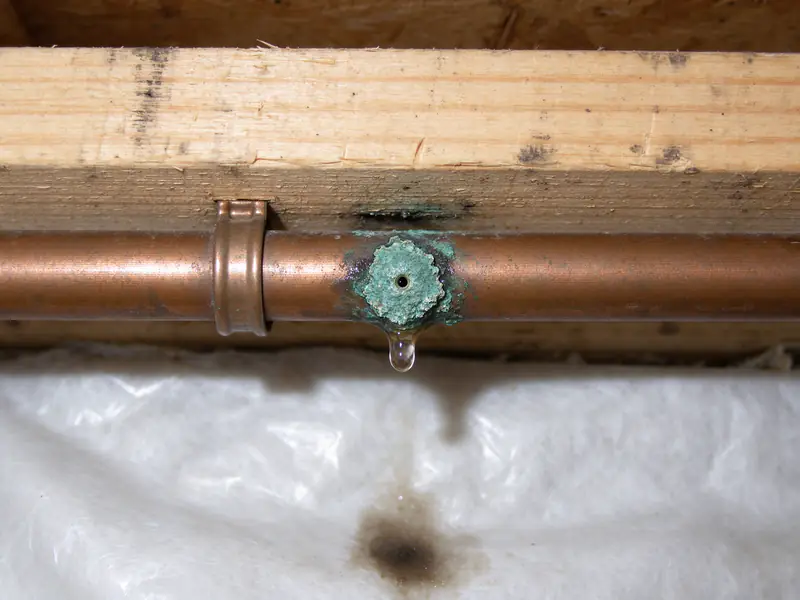
Copper pipe with a small green-crusted pinhole spot on its underside, above a damp crawl space vapor barrier
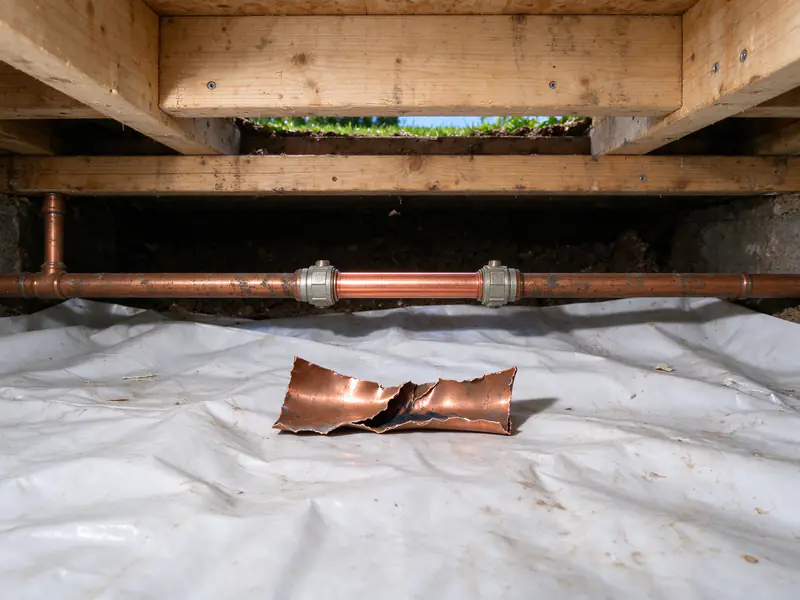
Split section of copper pipe from a freeze, lying beside the new section that replaced it
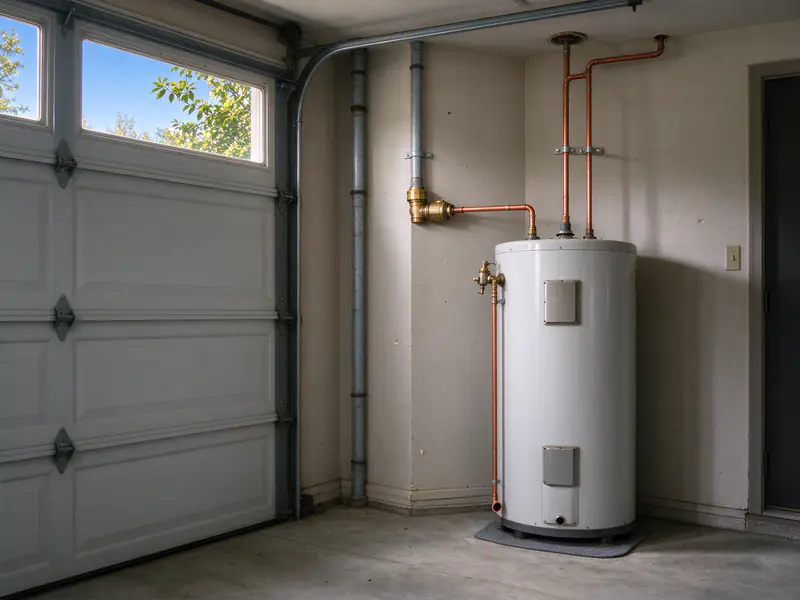
Brass dielectric union joining new copper to an old galvanized line near a water heater
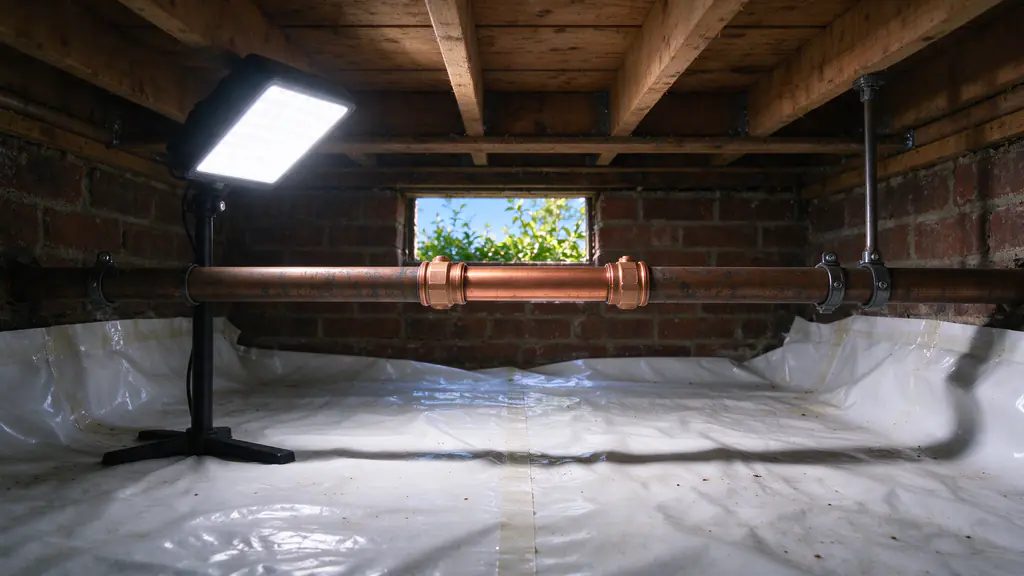
Foam insulation sleeve fitted over a repaired supply line along a crawl space joist
One leak, or the latest in a series?
Tell us where it is leaking, what the pipe is made of, and whether that line has leaked before.
Can a pinhole leak in copper be repaired, or does the pipe need replacing?
A single pinhole in otherwise sound copper is a normal repair: the section is cut out and a new piece joined in. The pipe on either side is checked at the same time for green spots, thin walls or more pinholes. When pinholes keep appearing on the same run, the wall of that pipe is thinning, and replacing the run or the system is the better question.
Is a push-fit coupling a permanent pipe repair?
Push-fit fittings listed to ASSE 1061 are recognized plumbing fittings, and many are rated for use inside walls. Whether one is the right choice depends on the pipe, the location and the manufacturer's listing. Soldered, press and expansion fittings are the other options. The scope names the fitting used for each joint.
How many leaks before pipe repair stops making sense?
There is no fixed number. One leak on sound pipe is a repair. Two or three on the same run, or leaks on the same kind of fitting in different rooms, show a pattern, and each new repair costs access and patching on top of the pipe work. The repipe or repair guide walks through how to weigh that.
Can a pipe that burst in a freeze be repaired without repiping?
Usually, if the rest of the pipe is sound. The split section is cut out and replaced, and the run is checked for other splits, which can show up only once pressure is back on. The repair should also deal with why it froze: insulation to the R-6.5 minimum, sealing cold air at vents and rim joists, or rerouting a line away from an exterior wall.
Does pipe repair include fixing the drywall or ceiling?
Only to the extent the written scope says. Some repairs leave an opening closed and ready for paint, some include finished patching, and some leave it to another trade. Water-damaged drywall, insulation or flooring is a separate repair from the plumbing, and the scope lists it as included or excluded.