66 Service lines Charlotte Water lists as galvanized requiring replacement, mostly in central and inner-ring Charlotte (Charlotte Water)
0 Lead service lines in Charlotte Water's inventory of 333,871 connections (Charlotte Water)
10.4% Share of Charlotte housing units built before 1960 (U.S. Census Bureau ACS)
$4,000 to $12,000+ Typical Charlotte-area range for a whole house PEX repipe on a single-family home
Last Updated:
Galvanized pipe replacement removes old zinc-coated steel supply pipe from service and replaces it with PEX or copper, from the main shutoff to each fixture. Level Repiping Charlotte arranges galvanized pipe replacement in Charlotte’s older neighborhoods and across the surrounding counties, carried out by licensed and insured contractors under a plumbing permit where one is required. This page explains how galvanized pipe fails, how brown water and weak flow are traced to it, and what changes in a repipe of an older house.
How galvanized pipe fails
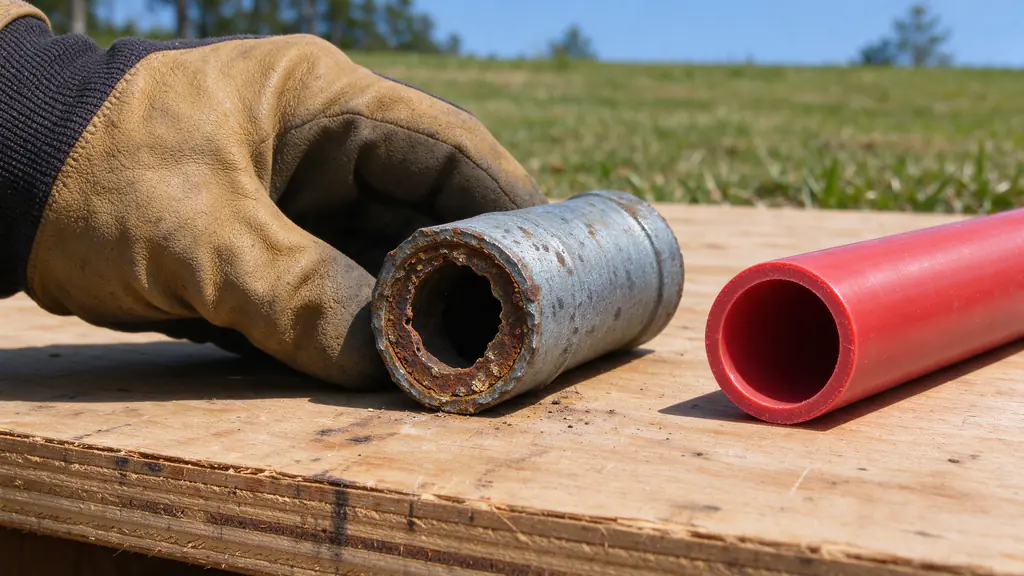
Galvanized pipe is steel with a thin zinc coating, joined with threaded fittings. The zinc protects the steel for a time. Once it wears away, the steel rusts from the inside. Rust does not form a smooth layer; it builds up as lumps that narrow the bore, roughen the wall and break loose as flakes.
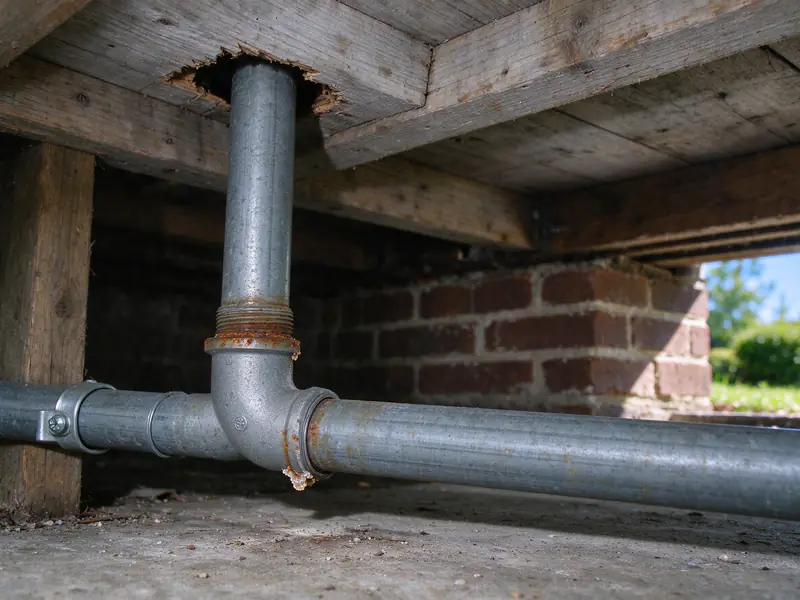
Three things follow. Flow drops, first at the fixtures at the end of the longest runs, and worst when two fixtures run at once. The water discolors, especially after it has been standing. And leaks start at the threads, where cutting the thread left the thinnest wall in the whole pipe.
The outside of the pipe tells you little. A run can look sound in the crawl space while the inside is half closed with rust. That is why a galvanized house is judged by flow and by the condition of cut sections, not by how the pipe looks. Our guide on when to repipe a house sets out the wider signs.
Charlotte’s water does not add much to the problem. Charlotte Water reports average hardness around 32 ppm, which is soft, so mineral scale is not the usual cause of narrowing here. Inside galvanized pipe, the restriction is mostly rust.
Brown water: tracing the source
Discolored water has more than one cause, and the assessment sorts them out before a repipe is recommended.
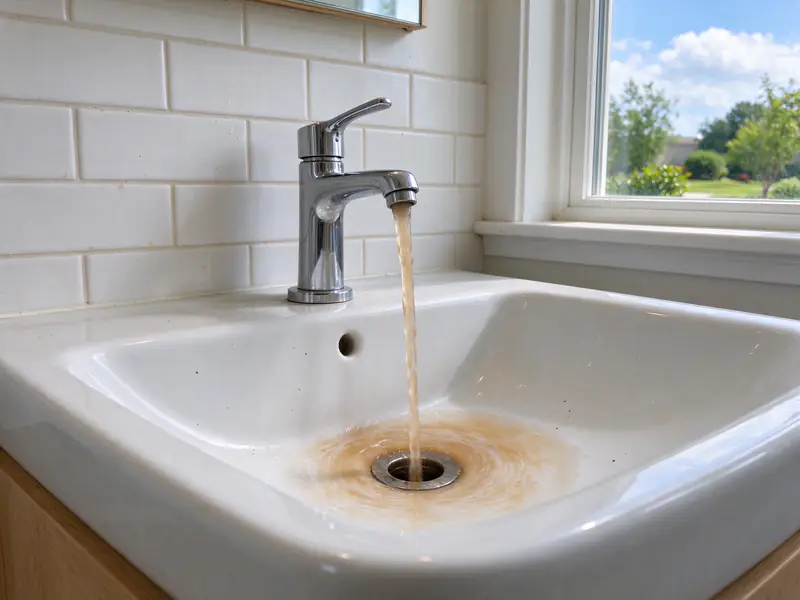
Brown first thing in the morning, then clearing. Rust collects in water standing in the house pipes. Galvanized pipe is a likely source.
Brown on the hot side only. The water heater is the more likely source, from sediment or a corroded tank.
Brown across the street at the same time. Utility work, a main break or hydrant flushing can stir up the public mains. That clears without any work on the house.
Brown at the outdoor spigot nearest the meter as well. The line from the meter to the house may be involved.
Charlotte Water reports average iron of about 5.7 parts per billion at its entry points, which is very low. Persistent discoloration at one house, when neighbors have clear water, usually points to the pipes on the owner’s side of the meter. Where galvanized pipe may once have been connected to lead, testing is part of the answer, and Charlotte Water offers information on that through its lead and copper program.
Where galvanized pipe is found in Charlotte
Charlotte is a young city by housing age. Census estimates put the median Charlotte home at 1995, and only 10.4% of housing units were built before 1960. Galvanized supply pipe belongs mainly to that older core. Mecklenburg County assessor records place the average build year of parts of Dilworth, Plaza Midwood and Elizabeth between the early 1930s and the early 1940s, with nine in ten or more of those houses on crawl spaces. Myers Park, Eastover and other early neighborhoods have similar stock.
That does not mean every older house still has galvanized pipe. Many were partly or fully repiped over the decades, and a house can have copper in one bathroom and steel everywhere else. Our partial repipe page explains how mixed systems are scoped. Where a house still has its original piping, galvanized is plausible, and the assessment confirms it at the main shutoff, under sinks and in the crawl space. Our guide to identifying pipe material shows what to look for.
Galvanized also shows up outside the walls. Charlotte Water’s service line inventory lists 333,871 connections, none recorded as lead, and 66 customer-side service lines as galvanized requiring replacement, most of them in central and inner-ring Charlotte. The owner is responsible for the line from the meter to the house under Charlotte Water’s rules, and the utility’s Lead Free CLT program includes removing galvanized lines in that category. Our guide to lead and galvanized service lines in Charlotte explains the inventory, and lead service line replacement covers the work.
Among the 81 Mecklenburg plumbing permits issued from April 2025 to October 2026 that describe a repipe, 5 name galvanized pipe.
What happens on the first visit
The first visit separates a pipe problem from a pressure problem. Street pressure is measured at a hose bib, and flow is compared at the nearest and farthest fixtures. A good reading at the hose bib and a weak one at the back bathroom points to restriction in the house piping. A weak reading everywhere points elsewhere: the pressure-reducing valve, a partly closed main, the service line, or the street. Charlotte Water reports pressure from about 40 psi to more than 100 psi depending on elevation. Our low water pressure page covers those other causes.
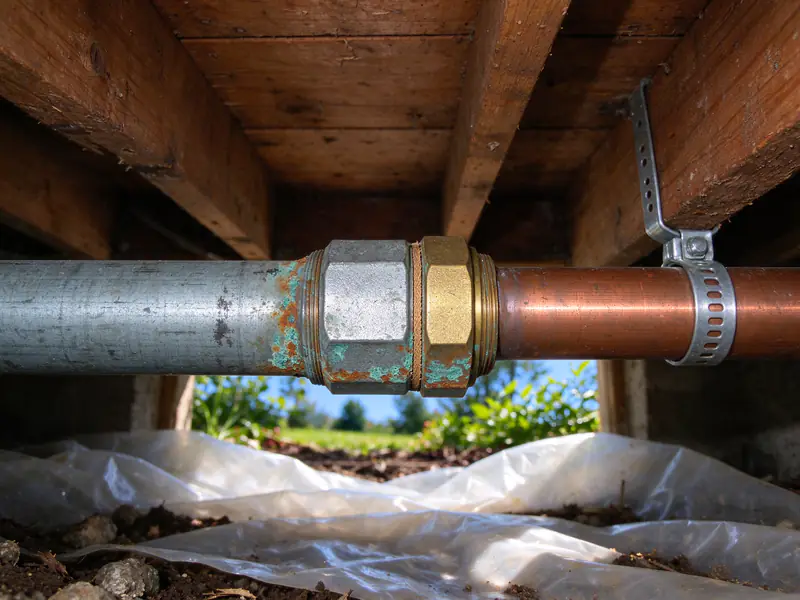
The assessment also records every place galvanized meets copper. Where the two metals touch without a dielectric fitting, the joint corrodes faster, and those joints are often where leaks begin in a mixed system.
How a galvanized repipe runs in an older house
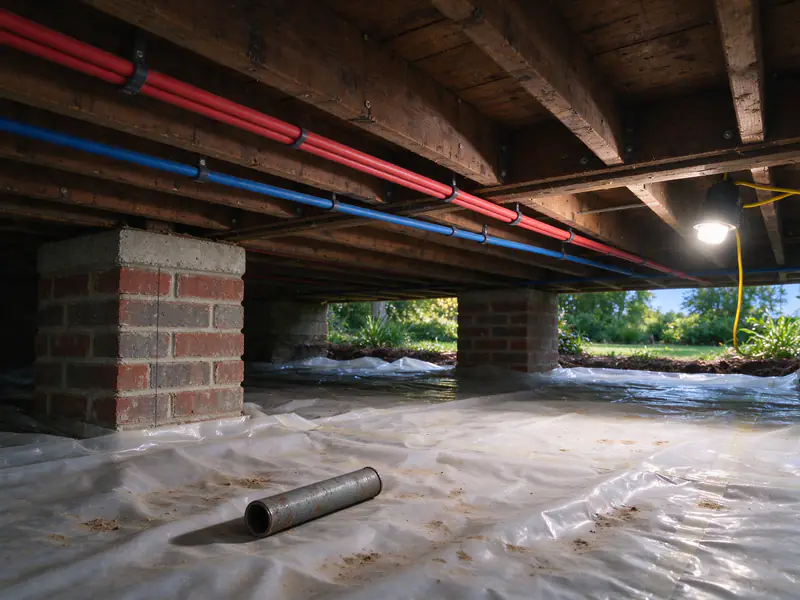
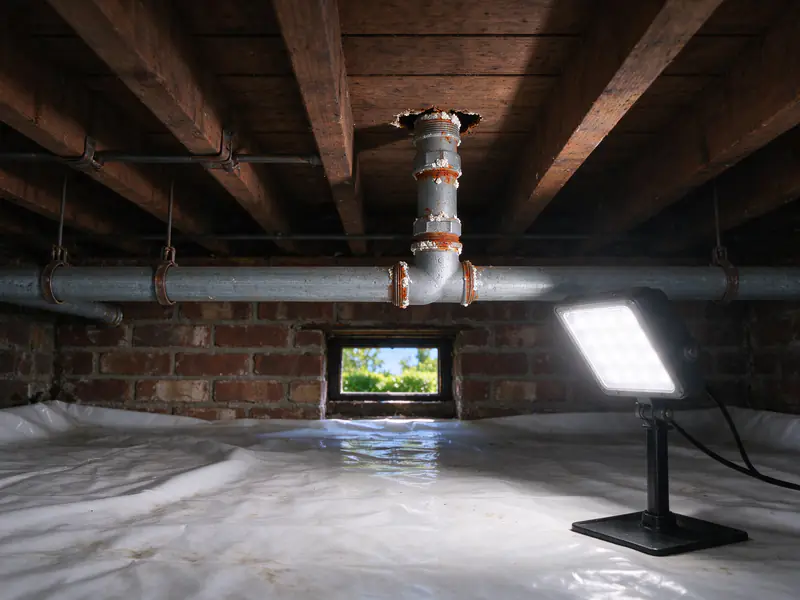
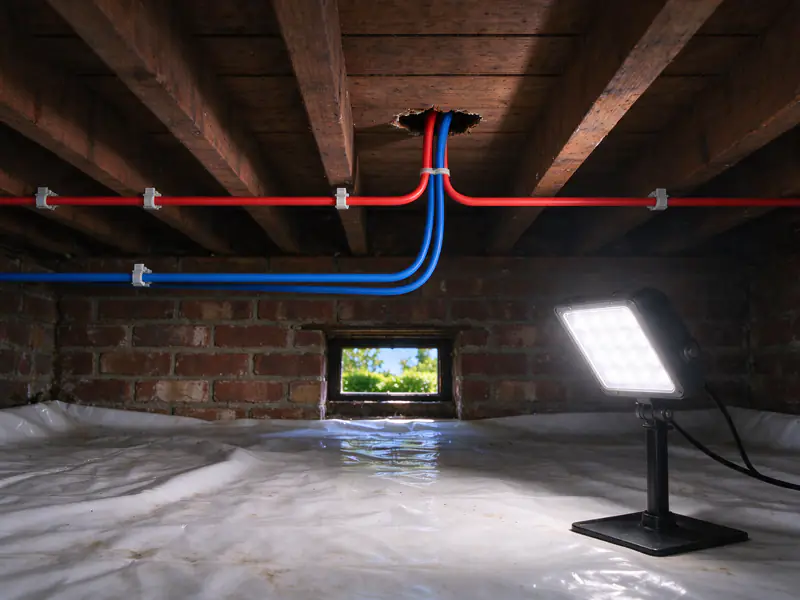
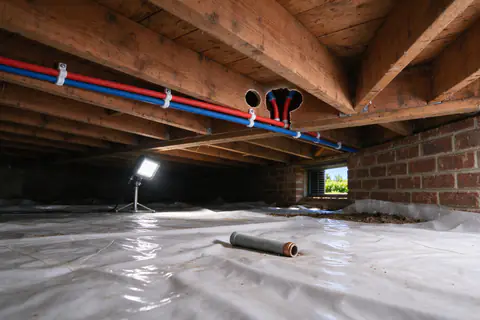
Most of these houses sit on crawl spaces, which makes the new runs straightforward: lines travel along the joists and rise through the floor behind each fixture. The old steel can usually be cut out and removed from the crawl space, and abandoned where it runs inside finished walls.
Older houses add three things to the scope.
Loosened rust. Shutting down and draining a galvanized system shakes rust loose. When fixtures are reconnected, flakes can lodge in faucet cartridges, aerators, toilet fill valves and appliance screens. The new system is flushed, fixture stops are replaced, and those parts are checked. This is also why cleaning or lining old steel rarely works well; our guide to repiping vs pipe relining explains the limits.
Grounding. In many older houses the metal water pipe was part of the electrical grounding path. When steel is replaced with PEX, an electrician confirms or restores the ground.
Walls. County assessor records classify most older Charlotte interiors as drywall, often after remodels, but some houses still have plaster or wood paneling, which changes how openings are cut and patched. In houses built before 1978, disturbing painted surfaces falls under EPA lead-safe work practices. Our guide to drywall after a repipe covers patching standards.
What galvanized pipe replacement costs
A full galvanized replacement is a whole house repipe. A whole house PEX repipe on a single-family home typically runs $4,000 to $12,000 or more in the Charlotte area; larger homes, two-story homes and slab homes run higher. Copper, repairs and partial work are quoted per job. The drivers are bathrooms and fixtures, access, plaster or paneling, the number of stories, the patching standard, and whether the service line is included. See the repipe cost guide or the cost estimator for details, or our whole house repipe page for the full scope.
For a galvanized house with brown water or fading flow, use the estimate form or call (704) 452-4386. Note which fixtures are weakest and when the water discolors; that tells the assessment where to start.
What's included
What a galvanized pipe replacement includes
Galvanized jobs carry a few items that newer-pipe jobs do not. Each of these belongs in the written scope.
A flow and pressure check at the hose bib and at the farthest fixtures, to separate pipe restriction from street pressure or a failing valve
A note of every place galvanized pipe meets copper or another metal, and of any earlier partial repairs
A look at the line from the meter to the house, which may be galvanized too, priced as its own line
New PEX or copper lines from the main shutoff to every fixture and the water heater
New fixture shutoff valves, since old stops often seize or pass rust when disturbed
A flush of the new system and a check of faucet aerators, cartridges and toilet fill valves for loosened rust
Old steel removed where it can be reached in the crawl space, and capped and abandoned where it cannot
Coordination with an electrician where the old pipe was part of the grounding path
A pressure test before walls close, the inspection, and patching to the standard in the scope
The real choice
Choices for a house with galvanized supply pipe
Galvanized pipe fails from the inside, so the visible symptom is rarely the whole story. These are the realistic options.
Choices for a house with galvanized supply pipe
Repair a leaking joint
Replace the worst runs
Full replacement
What it fixes
One leak, usually at a threaded joint
Flow and rust on the replaced runs
Flow, rust and leak risk across the house
Galvanized left in service
Nearly all of it
The runs not replaced, named in the scope
None inside the house
Risk it leaves
Neighboring joints are the same age
New and old pipe meet at transitions that need the right fittings
Service line and drains are separate questions
When it fits
A sudden leak while a larger plan is made
A remodel or one problem branch, with the rest tested
Brown water, weak flow at several fixtures, or repeat leaks
The published Charlotte range covers a whole house PEX repipe; repairs and partial work are quoted per job.
Guides
Related resources
Guides that go deeper on galvanized pipe replacement decisions.
Charlotte Water has classified every one of its service connections. Here is what the inventory says about lead and galvanized lines, what Lead Free CLT does, how to look up your address, and where lead can still hide inside a house.
The three supply pipes found in older Charlotte-area houses, how each one was meant to work and how it fails, the signs that point to the pipe rather than something else, the rules and insurance questions around replacement, and what each scope leaves behind.
Five supply pipes turn up in Charlotte-area houses. Color, joints, markings and a magnet tell most of them apart in a few minutes, as long as you look in more than one place.
Epoxy lining coats the inside of the pipe you already have; a repipe replaces it. Both are real options for some houses. Here is how lining works, where it reaches its limits, and the questions that decide between them.
The typical Charlotte range for a whole house PEX repipe, why copper is quoted separately, how the Mecklenburg permit fee is set, and which parts of the job only a walk-through can price.
Every repipe needs some access. How many openings a house needs depends on its foundation, its stories and where the fixtures sit, and how they are closed depends on a patching standard that belongs in writing.
How it runs
How a galvanized pipe replacement runs
The call or the form
The age of the house, the pipe you have seen, crawl space or slab, and what has been leaking.
The assessment
Pipe material, fixture count, access routes and street pressure, written up as a scope with a price.
The repipe
New lines are run, then connected to fixtures and the water heater, then pressure tested before walls are closed.
Inspection and patching
The permit office inspects the new piping; access openings in walls and ceilings are then patched to the agreed scope.
What this work looks like
Threaded galvanized elbow with orange rust bleeding from the threads where it joins a pipe nipple
Galvanized pipe joined to copper by a dielectric union, with a green and orange stain around the joint
White sink basin with a stream of light brown water running from the faucet
Brick pier crawl space with new red and blue PEX strapped to old joists beside a disconnected run of gray steel pipe
Before
After
Old steel pipe, brown water or weak flow?
Tell us roughly when the house was built, which fixtures are weakest, and whether the water runs brown after sitting.
How long does galvanized pipe last before it needs replacing?
There is no fixed number of years. Galvanized pipe lasts until the zinc coating wears through and rust narrows the bore or eats through a thread, and that depends on the water, the pressure and how much of the original pipe was already replaced. Many Charlotte houses with galvanized pipe are well past the age when problems usually start, so the condition of the pipe, not its age, decides.
Why does water from old galvanized pipe run brown after sitting overnight?
Rust from the inside of the steel collects in water that stands in the pipe, and the first draw in the morning carries it out. If only hot water is discolored, the water heater is the more likely source. If the whole street has brown water, the cause is often utility work on the main. Running water at different fixtures and the outdoor spigot narrows it down.
Why do galvanized pipes lose flow at the farthest fixtures first?
Rust builds up inside the pipe as lumps that narrow the bore, and every narrowed section adds friction. The fixtures at the end of the longest runs, often an upstairs shower or a back bathroom, lose the most. The drop is worst when two fixtures run at once. Street pressure and the pressure-reducing valve are checked first, because they cause the same symptom.
Can galvanized pipe be cleaned out or lined instead of replaced?
Chemical cleaning cannot rebuild steel that has rusted away, and loosened rust tends to settle in valves and faucets. Epoxy lining systems exist, but they depend on the pipe still being sound enough to line, and the threads are usually the weakest point. For small household supply pipe, replacement is the usual answer. Our relining guide compares the two.
Does replacing galvanized pipe affect the house's electrical ground?
It can. In many older houses, the metal water pipe was part of the electrical grounding path. When steel or copper is replaced with PEX, that path is gone, and the grounding must be confirmed or restored. That part belongs to an electrician, and the repipe scope should say who handles it.