No. 1 Private plumbing leaks are the leading cause of a high water bill (Charlotte Water)
Almost 4,000 Leaks Charlotte Water repaired on its own system in a year; leaks past the meter are the owner's to fix (Charlotte Water)
100+ psi Street pressure in some low-lying parts of the system near creeks (Charlotte Water)
46.8% Share of Mecklenburg single-family homes on a slab, where supply lines run out of sight (Mecklenburg County Assessor)
Last Updated:
Water leak detection in Charlotte is the work of proving that water is escaping, then narrowing down where, before anyone cuts into a wall, floor or yard. Level Repiping Charlotte arranges leak detection across Charlotte and the surrounding counties, performed by licensed and insured contractors, using meter and pressure tests first and listening and thermal tools where a leak has to be pinpointed. The result is a written finding that says where the leak is believed to be, how sure that is, and what the repair options are.
Why a high water bill usually points to a private leak
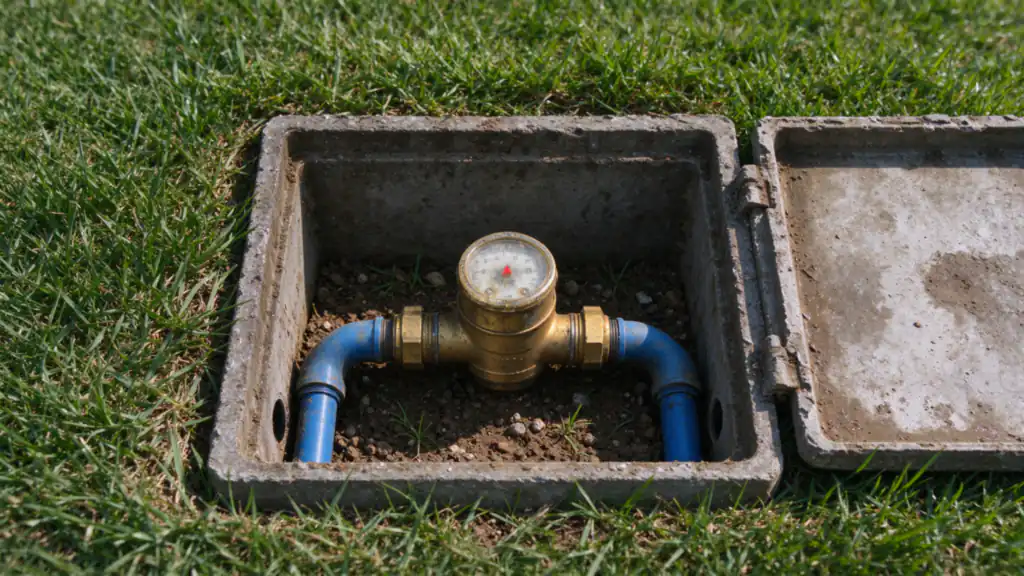
Charlotte Water says the leading cause of a high bill is a private plumbing leak: running toilets, dripping faucets, irrigation systems and old plumbing. It also draws a clear line of responsibility. The utility repairs leaks on its own mains and service lines, almost 4,000 of them in a year, but leaks inside the building or between the meter and the building are the customer’s to repair with a plumber. The meter sits at the boundary, so it records everything that leaks on the owner’s side, whether or not anyone can see it.
That makes the meter the most useful leak detector in the house. It also means a high bill alone doesn’t say where the leak is, or whether it is a pipe at all.
What happens on the first visit
The visit starts with the cheapest and most certain tests. Every fixture, appliance and irrigation zone is turned off, and the meter is read and watched. Most meters have a small leak indicator that turns with even a slow drip. If nothing moves, there is no active leak, and the high bill may come from use, an irrigation schedule or a leak that only runs part of the time.
If the meter moves, the system is split in pieces. Closing the main shutoff at the house separates the buried water service line from the interior. Closing the cold inlet on the water heater separates the hot side. Where branch valves exist, individual runs can be isolated and pressure tested to see which one loses pressure. Each step narrows the search without opening anything.
Toilets get checked early, because a worn flapper or fill valve can send water down the drain silently all day and night. So do the water heater’s relief valve, ice maker lines, hose bibs and irrigation backflow assemblies. These are fixture and appliance repairs, not pipe leaks, and finding one ends the search cheaply.
The methods, and what each can tell you
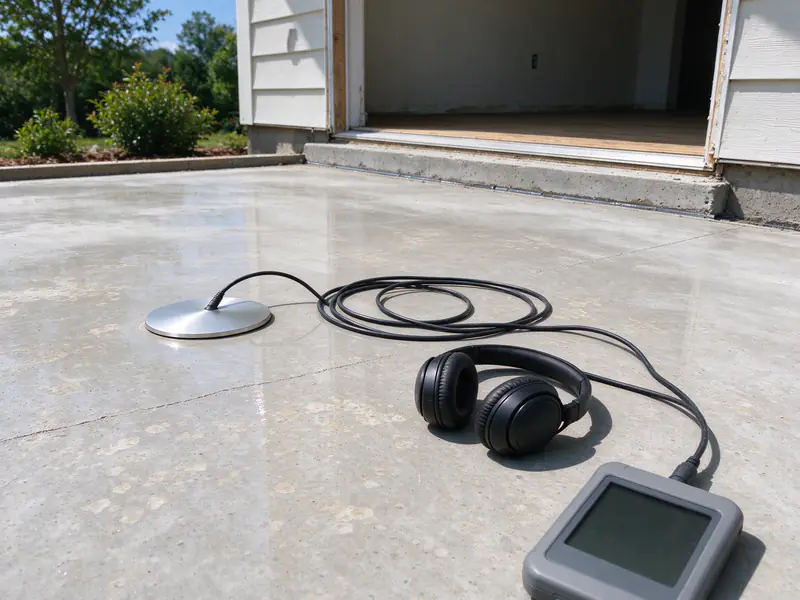
Once the leak is on a known section, the remaining question is where on that section. Acoustic listening uses sensitive ground microphones and contact sensors to pick up the sound of water escaping a pressurized pipe. It works on lines under slabs, in walls and in the yard, but traffic, appliances, depth and the pipe material all affect the signal. Plastic pipe carries sound less well than copper.
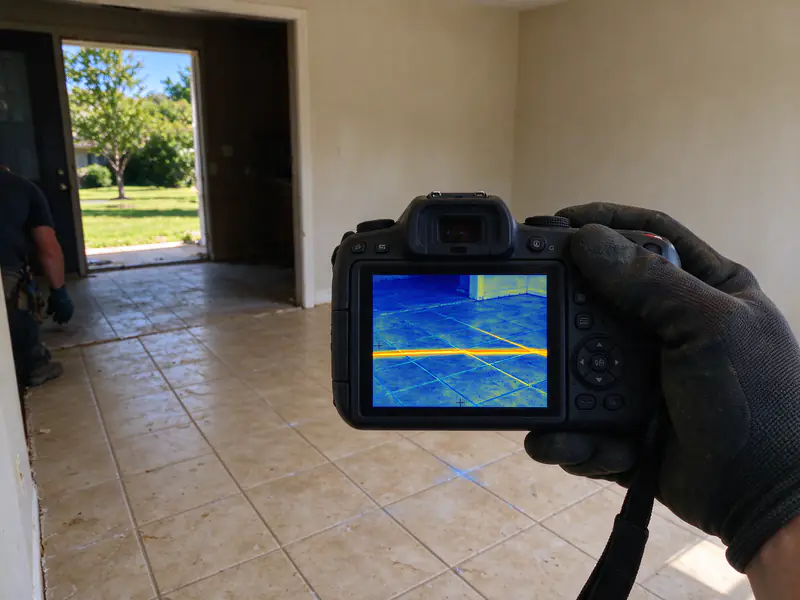
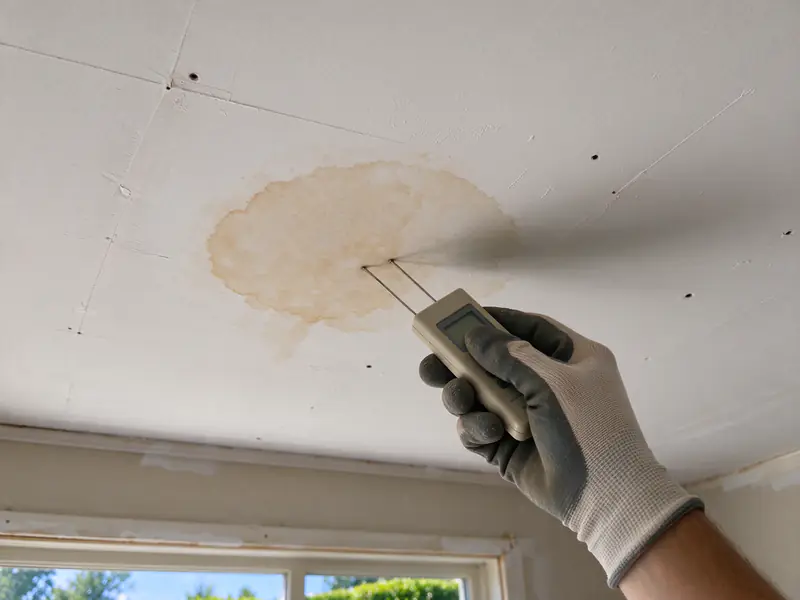
Thermal imaging shows surface temperature. A hot line leaking under a slab often warms the floor above it, and a wet area in a wall or ceiling reads cooler as it evaporates. It does little for a cold line under concrete. Moisture readings show where drywall, subfloor or trim is wet, which is where water went and not always where it started.
None of these tools sees the pipe. Their job is to shrink the area that has to be opened, and the written finding should say how confident the location is. The comparison table on this page sets out what each method can and can’t show.
Where leaks hide in Charlotte houses
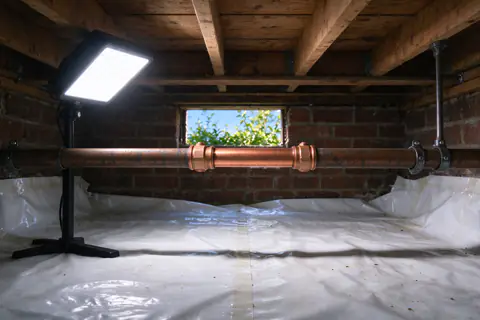
Where a leak can hide depends on the foundation. Mecklenburg County assessor records show 49.9% of single-family homes on a crawl space and 46.8% on a slab. In a crawl space house, most supply pipe runs along the floor joists and can be seen with a flashlight, so a leak often shows as a drip, a wet vapor barrier or damp insulation. Detection there is mostly a matter of looking carefully.
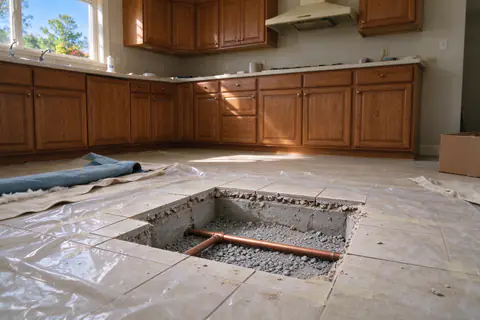
In a slab house, the original lines usually run under or through the concrete, out of sight. A warm floor, the sound of running water with everything closed, or cracked grout can be the only signs. Our guide to the signs of a slab leak covers them, and the slab leak repair page explains what happens once one is confirmed.
In two-story houses, supply lines to upstairs bathrooms run in the ceiling and walls between floors. A stain on a first-floor ceiling under a bathroom is the classic sign, though it may come from a drain, a toilet seal or a shower pan rather than a supply line. Moisture readings and a look from above help sort that out.
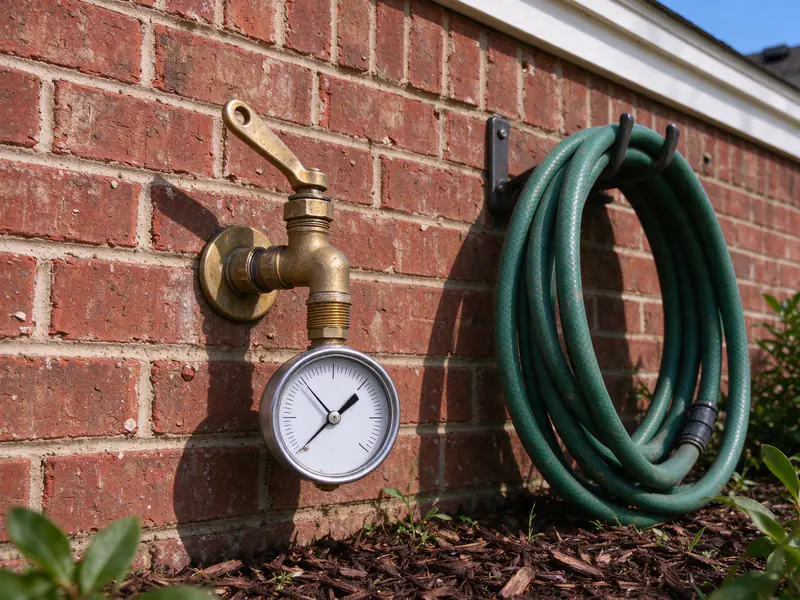
Pressure matters too. Charlotte Water reports street pressure from about 40 psi on high ground to more than 100 psi in low areas near creeks, and high pressure puts constant strain on fittings and supply hoses. Where a leak is found on a house with no working pressure-reducing valve, the high water pressure guide explains why that valve belongs in the repair conversation.
What comes after the leak is found
Detection is the step before a repair, and the repair depends on what was found. A single failed fitting or a pinhole in sound copper is a pipe repair. A leak under a slab is repaired through the floor or rerouted through the attic. A leak in the buried line is fixed by repairing or replacing that line. Repeat leaks on the same system raise a bigger question, because they point at the pipe rather than one joint; our guide to repiping or repairing and the guide to pinhole leaks in copper work through it.
If the leak caused water damage, drying and finish repair are separate trades from the plumbing. Insurance questions about the leak, the access and the damage are covered in the repiping insurance guide.
Paying the bill after a repair
Charlotte Water says it has resources to help with an outstanding balance once a private leak is repaired. The written leak finding and the repair record document what leaked and when it was fixed, so keep both. Customers of other utilities, such as Two Rivers Utilities in Gastonia, ask that utility about its own policy.
What leak detection costs
Leak detection is quoted per job. The price depends on how far the simple tests narrow the search, the size of the house, the foundation, how many sections have to be isolated, and whether pinpointing with listening or thermal equipment is needed. A leak found at a toilet in the first few minutes is a short visit; a slow leak under a slab takes longer. The repair is priced separately once the leak is located. To start, read your meter with everything off, then call (704) 452-4386 or send the details through the estimate form.
What's included
What a water leak detection includes
A leak detection visit should end with a written finding, not just a mark on the floor. If the location is uncertain, the finding should say so.
A meter test with every fixture off, to confirm water is actually leaving the system
Checks of the usual non-pipe causes: toilet flappers and fill valves, dripping faucets, the water heater relief valve, irrigation and ice maker lines
Isolation with the main shutoff and the water heater inlet, to split the yard line from the house and the hot side from the cold
A pressure test on isolated sections where valves allow, to see which part of the system loses pressure
Acoustic listening along the suspected run, and thermal imaging where a hot line or a wet area is involved
Moisture readings on walls, ceilings and floors near the suspected leak
A written finding: where the leak is believed to be, how confident that location is, and the repair options
The real choice
Leak detection methods and what each can tell you
No single method finds every leak. They are used in order, from the cheapest and most certain to the most targeted.
Leak detection methods and what each can tell you
Method
What it shows
Where it helps
Limits
Meter test
Whether water is leaving the system at all
Every house; the first step
Says nothing about where the leak is
Isolation and pressure test
Which section of the system is losing water or pressure
Houses with a main shutoff, a water heater valve and branch valves
Only as fine as the valves allow
Acoustic listening
The sound of water escaping a pressurized pipe
Lines under slabs, in walls and in the yard
Background noise, pipe material and depth all weaken the signal
Thermal imaging
Temperature differences on a surface
Hot lines under floors; wet spots in walls and ceilings
Shows surface temperature only; cold lines show little
Moisture readings
Where materials are wet
Drywall, subfloors and trim near a suspected leak
Shows where water went, which may not be where it started
Results depend on the house, the pipe material and the depth of the leak. No method is exact through concrete.
Guides
Related resources
Guides that go deeper on water leak detection decisions.
A leak under a concrete floor rarely announces itself. Here are the signs that point to one, the ordinary things that cause the same signs, and the simple test that tells you whether water is leaving the house at all.
Charlotte Water draws a clear line at the meter. Here is what the utility owns, what the property owner owns, how to tell which side a leak is on, and when the service line is worth replacing with a repipe.
One leak on sound pipe is a repair. A pattern of leaks, or a pipe with a known failure history, is a question about the whole system. The evidence that separates the two is usually in the house.
Copper fails from the inside, usually at one spot first. The cause can be the water, the speed it moves, how the pipe was installed or the tube itself, and often more than one of those at once.
Street pressure in Charlotte depends on how high your house sits. Here is what the 80 psi line means, how to read a gauge, why pressure creeps up overnight, and how a pressure-reducing valve and an expansion tank work together.
How it runs
How a water leak detection runs
The call or the form
The age of the house, the pipe you have seen, crawl space or slab, and what has been leaking.
The assessment
Pipe material, fixture count, access routes and street pressure, written up as a scope with a price.
The repipe
New lines are run, then connected to fixtures and the water heater, then pressure tested before walls are closed.
Inspection and patching
The permit office inspects the new piping; access openings in walls and ceilings are then patched to the agreed scope.
What this work looks like
Thermal camera aimed at a tile floor, its screen showing a warm streak along the line of a hot water pipe
Acoustic listening pad set on a concrete floor with headphones and a sensor cable beside it
Pressure gauge on a hose bib connection outside a brick house
Pin-type moisture meter held against a water-stained drywall ceiling below a bathroom
High water bill and no leak you can see?
Tell us how much the bill went up, whether the meter moves with everything off, and if the house is on a slab or a crawl space.
Why is my Charlotte water bill high when I can't see a leak?
Charlotte Water says the leading cause of a high bill is a private plumbing leak, and the usual ones are quiet: a toilet that runs between flushes, a dripping faucet, an irrigation zone, or old plumbing leaking out of sight. A meter test with everything off shows whether water is really leaving. If the meter moves, the leak is somewhere on your side.
How accurate is leak detection through a floor or wall?
It depends on the leak. The meter and isolation tests are reliable about whether there is a leak and on which section. Pinpointing the spot through concrete, plaster or deep soil is less exact, because noise, depth and pipe material change what listening and thermal tools pick up. The written finding states how confident the location is before anything is opened.
Will Charlotte Water help with my bill after a leak is fixed?
Charlotte Water says it has resources to help with an outstanding balance after a private leak is repaired. Ask its customer service what it needs from you. The written leak finding and the repair record show what leaked and when it was fixed.
Can I check for a hidden leak myself before calling?
Yes. Turn off every faucet, toilet, appliance and irrigation zone, then read the meter or watch its small leak indicator for several minutes. If it moves, close the main shutoff at the house and watch again. Still moving means the buried line from the meter; stopped means the leak is inside the house.
Does water leak detection include fixing the leak?
No. Detection is its own scope, and the repair is quoted once the leak is found, because the fix could be a toilet part, a single fitting, a section of pipe, a slab reroute or a new service line. The finding lists those options for your house so you can see what each involves.