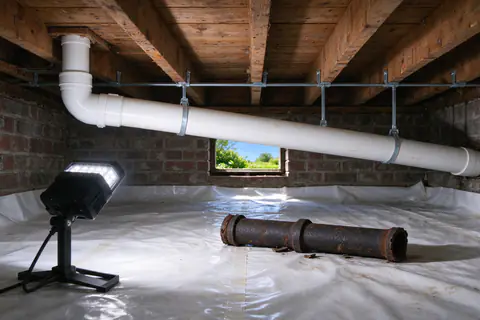
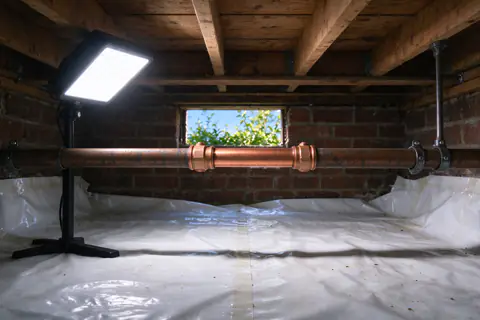
49.9% Mecklenburg single-family homes on a crawl space, where the building drain is often visible to the foundation wall (Mecklenburg County assessor)
10.4% Share of Charlotte housing units built before 1960 (U.S. Census Bureau, ACS)
Last Updated:
Sewer line replacement in Charlotte means replacing the building sewer, the buried pipe that carries everything from the house’s drains out to the public sewer main. Level Repiping Charlotte arranges sewer line replacement across Charlotte and the surrounding counties, with the work performed by licensed and insured contractors under a plumbing permit where one is required. This page covers how a failing sewer is diagnosed, the replacement methods and their limits, and where your responsibility ends and the utility’s begins.
What the building sewer is, and what it is not
Inside the house, drains from every fixture join into the building drain. Where that drain passes out through the foundation, it becomes the building sewer, which runs underground to the public main in the street or an easement. Replacing drain pipe inside the house is drain line replacement. The water line that brings fresh water in from the meter is a different pipe again; it is covered on our water line replacement page.
The building sewer works by gravity. It has to fall steadily all the way to the main, so a section that has sunk can hold water and solids even if the pipe itself is intact. That is why sewer work is about slope and support as much as about pipe material. Homes on a septic system have no public sewer connection; septic work is a separate trade and is not covered here.
Who owns what
The public sewer main belongs to the utility, which in Charlotte and the six Mecklenburg towns is Charlotte Water. The private building sewer from the house belongs to the owner. Exactly where the line between the two falls depends on the system and the property: at a cleanout near the property line, at the right-of-way, or at the tap on the main. That split is confirmed with the sewer utility for each address before the scope is written, because it decides what is yours to replace and what work in the street needs the utility’s involvement. The same principle applies to water lines; our guide to who owns the water line in Charlotte explains that side.
Why sewer lines fail
Roots find their way into joints and cracks, grow, and catch waste. Cutting them restores flow, but they return unless the opening they used is repaired.
Bellies are low spots where the pipe has settled, often from poor bedding or soil movement. Water and solids sit in them.
Offset joints happen when sections shift out of line, leaving a lip that catches debris and admits roots.
Collapse follows when the pipe material gives way under soil load.
Material matters. Clay pipe has a strong barrel but rigid joints that let roots in when they move. Cast iron corrodes and scales inside. Orangeburg, a bituminous fiber pipe used for sewers in older houses, softens and flattens over time and is one of the most common reasons a sewer needs full replacement.
None of these is proven by a symptom alone. A backup can come from a clog inside the house, a single fixture branch, or the public main. That is why the work starts with a camera.
What happens on the first visit
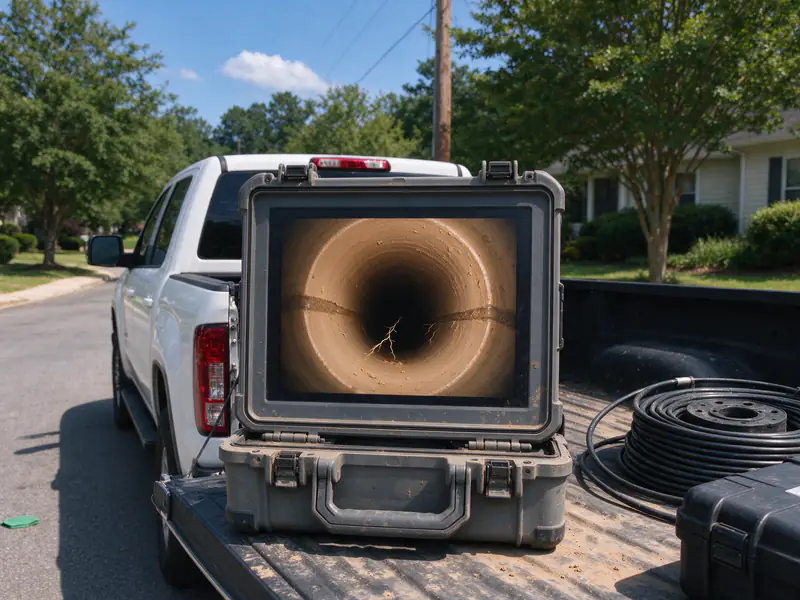
The person assessing the property finds the cleanout, or the best access point if there is none, and asks how the problem shows up: which fixtures back up, whether it follows heavy rain or laundry, how often the line has been cleaned. A camera is run down the line. If roots or buildup block the view, the line is cleaned first so the pipe wall can be seen.
The recording shows the material, the joints, any roots, cracks, offsets, sags or collapses, and the distance to each from the access point. A locator at the surface marks where those defects sit in the yard and how deep the pipe runs. Other buried utilities are marked before anyone digs.
The result is a written scope: the method, the length of line replaced, the new material, where the work starts and stops, the permit, the restoration of lawn, drive or walk, and the price. Sewer line replacement is quoted per job.
Choosing the method
The table on this page compares the options. In practice the decision comes down to a few questions. Is the damage in one spot or along the whole line? Does the pipe still hold its shape and slope? How deep is it, and what is on top of it: lawn, a driveway, a patio, a large tree? Our guide to repiping versus pipe relining explains lining limits in more detail, and the guide to repairing or replacing covers the same one-defect-or-many logic for supply pipe.
Lining is not right for every line. A pipe that has collapsed, flattened or sagged badly usually needs to be dug up and replaced, or replaced by bursting, rather than lined. Trench work is safety-critical: deeper trenches need shoring or a trench box, and the scope allows for it.
Living in the house during the work
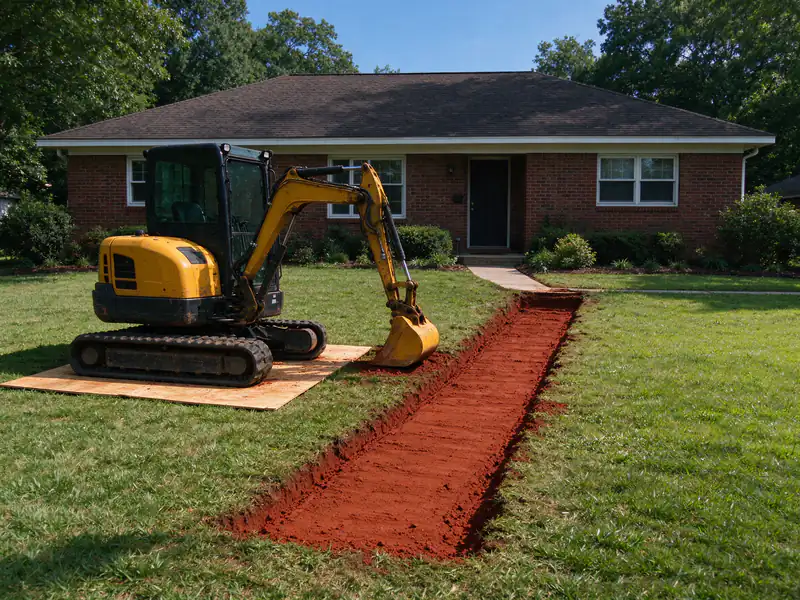
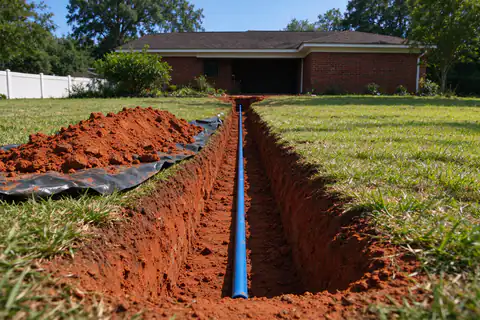
While the old sewer is disconnected, nothing can drain from the house, so the scope says when the line is out of service and for how long. Water still runs to the fixtures, but sinks, toilets, the dishwasher and the washing machine cannot be used during that window. Excavated replacements leave a trench that is backfilled and compacted after the inspection; trenchless jobs leave pits at each end. Lawn, landscaping and paving restoration are written into the scope so you know what the yard will look like when the work is done.
Permits and inspection
Replacing a building sewer is plumbing work. In Charlotte and the six towns, plumbing permits come from Mecklenburg County Code Enforcement; our permit guide covers the county process. In Fort Mill, the town’s Building and Codes department lists replacement of sewer lines among the projects that require a permit; see our Fort Mill page. Requirements elsewhere are confirmed per project and address, including any work at the main or in the right-of-way that the sewer utility controls.
What moves the price
Sewer line replacement is quoted per job. The biggest drivers are the length and depth of the line, the method, what sits on top of the pipe, the number of defects, the need for a new cleanout, trench protection, groundwater, and whether the connection at the main or any public right-of-way work is part of the job. If the problem turns out to be inside the house, see pipe repair or drain line replacement. To start a sewer scope, call (704) 452-4386 or use the estimate form.
What's included
What a sewer line replacement includes
A sewer estimate should say where the work starts and stops. The ownership line between your sewer and the utility's is part of that answer.
A camera inspection of the building sewer, after cleaning where needed so the pipe wall can be seen
Locating the line, its depth and its defects from the surface, and marking other buried utilities before digging
A written scope naming the method, the length replaced, the new material and where the work ends on each side
The plumbing permit, pulled by the licensed contractor doing the work
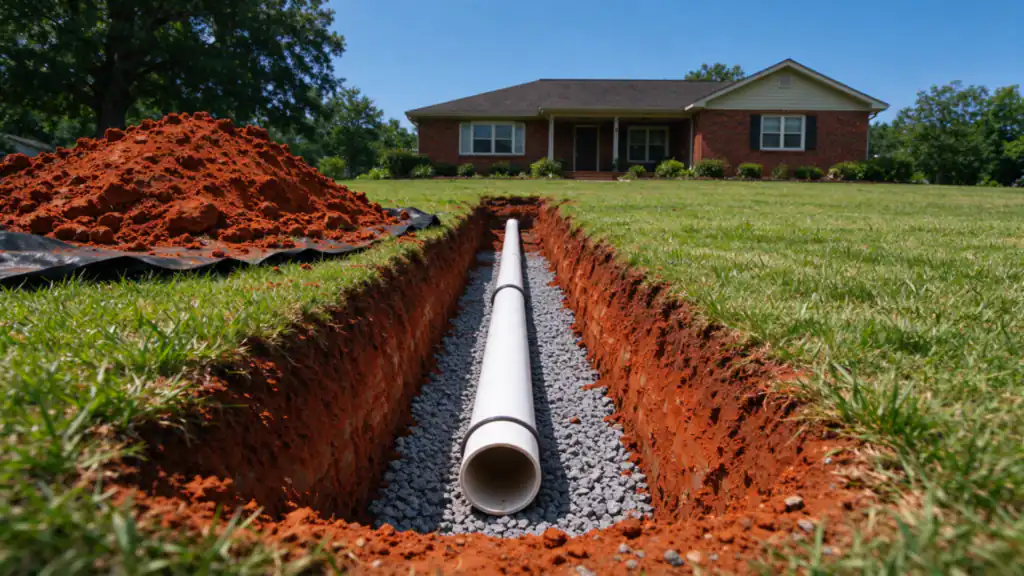
New pipe laid on proper bedding at a continuous slope, with listed couplings where it meets pipe that stays
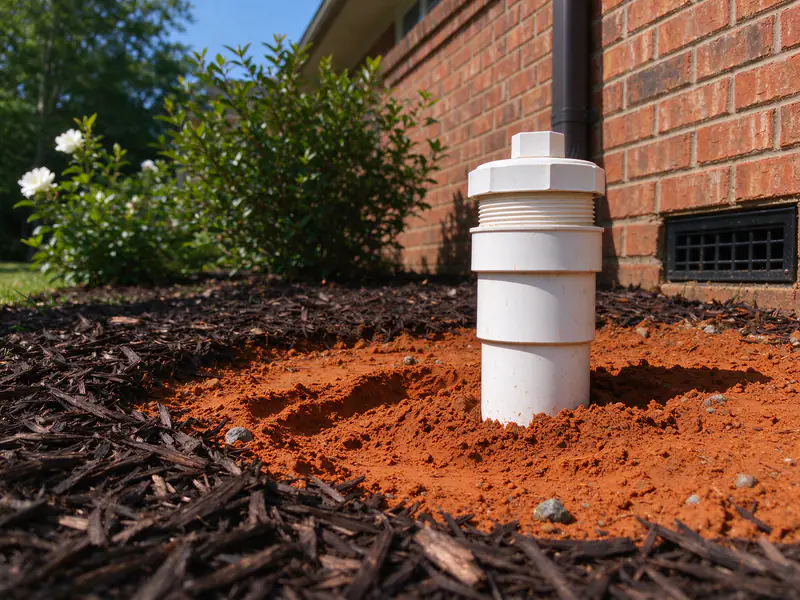
A cleanout near the house where none exists or where the existing one is unusable
Testing and inspection of the new line before backfill, where the permit requires it
Backfill, compaction and surface restoration to the extent written in the scope
The real choice
Ways to fix a failing building sewer
No single method fits every line. The camera result, the depth, and what sits on top of the pipe decide.
Ways to fix a failing building sewer
Spot repair
Excavated replacement
Pipe bursting
Lining (CIPP)
What it does
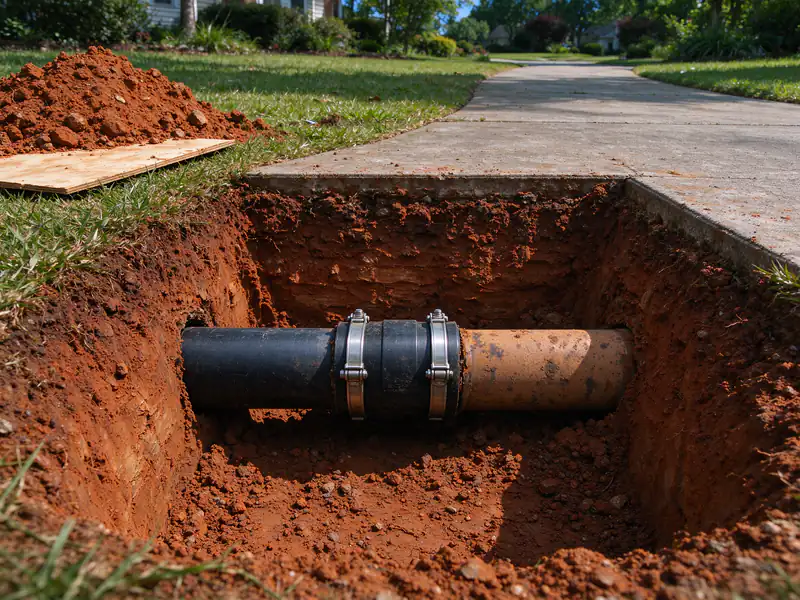
Digs up and replaces one failed section
Opens a trench and lays new pipe along the route
Pulls new pipe through the old path, breaking the old pipe outward
Cures a resin liner inside the old pipe
When it fits
One defect in a line that is otherwise sound
Collapsed pipe, a sag, a shallow line or open ground
A damaged line under a driveway, walk or mature landscaping
A line that still holds its shape and slope
Limits
The rest of the old line keeps aging
Most surface disruption: lawn, drive or walk restored afterward
Needs pits at each end; follows the old path, so a sag can remain
Does not correct a belly or rebuild a collapsed section
Digging
One pit
The full length
Launch and receiving pits
Usually access at a cleanout, sometimes a pit
All methods are quoted per job after the line is inspected.
Guides
Related resources
Guides that go deeper on sewer line replacement decisions.
Epoxy lining coats the inside of the pipe you already have; a repipe replaces it. Both are real options for some houses. Here is how lining works, where it reaches its limits, and the questions that decide between them.
One leak on sound pipe is a repair. A pattern of leaks, or a pipe with a known failure history, is a question about the whole system. The evidence that separates the two is usually in the house.
North Carolina law requires plumbing permits but exempts some single-family work. Here is how that exemption applies to a repipe, who is allowed to pull the permit, what Mecklenburg County charges, and how the inspection runs.
Five supply pipes turn up in Charlotte-area houses. Color, joints, markings and a magnet tell most of them apart in a few minutes, as long as you look in more than one place.
How it runs
How a sewer line replacement runs
The call or the form
The age of the house, the pipe you have seen, crawl space or slab, and what has been leaking.
The assessment
Pipe material, fixture count, access routes and street pressure, written up as a scope with a price.
The repipe
New lines are run, then connected to fixtures and the water heater, then pressure tested before walls are closed.
Inspection and patching
The permit office inspects the new piping; access openings in walls and ceilings are then patched to the agreed scope.
What this work looks like
Sewer camera monitor on a tailgate showing the inside of a clay pipe with fine roots at a joint
White PVC cleanout pipe with a threaded cap rising out of fresh soil near a house foundation
Excavated pit beside a concrete driveway exposing a black HDPE pipe joined to an old clay pipe
Compact excavator parked on plywood mats on a lawn next to a backfilled trench line
Want a sewer line replacement scope?
Tell us the age of the house, whether you have a cleanout, and what is happening: backups, slow drains, odor or a soggy spot in the yard.
Who owns the sewer line between my house and the Charlotte sewer main?
The owner is responsible for the private building sewer from the house, and the utility owns the public main. Where the split falls, for example at a cleanout near the property line or at the main itself, depends on the system and the property, so it is confirmed with the sewer utility for each address before work is scoped.
How do I know my sewer line needs replacing and not just cleaning?
Only a camera inspection shows that. Cleaning clears roots and buildup, but if the camera then shows a collapse, a long sag that holds water, broken pipe or Orangeburg that has flattened, cleaning will keep buying time without fixing the pipe. A line with one defect may suit a spot repair.
Does trenchless sewer replacement mean no digging at all?
No. Pipe bursting needs a pit at each end, and lining usually needs access at a cleanout and sometimes a pit at the connection. Trenchless methods avoid opening the full length of the line, which matters most under driveways, walks and mature trees.
Can a sewer liner fix a pipe with a belly?
Usually not. A liner takes the shape of the pipe it is cured inside, including any low spot. A belly that holds water and solids is normally fixed by replacing that section at the correct slope. The camera shows how deep and long the sag is.
Should I replace drain lines inside the house at the same time as the sewer?
Only if the inside drains have their own problems. The camera inspection often runs from inside the house out, so it shows the condition of the building drain as well. If cast iron under the house is cracked or badly scaled, the scope can include it; if not, the sewer is replaced on its own.