$4,000 to $12,000+ Typical Charlotte-area range for a whole house PEX repipe on a single-family home
80 psi Above this street pressure, new or remodeled plumbing needs a pressure-reducing valve (Charlotte Water)
R-6.5 Minimum insulation on water pipe run through an unconditioned attic or crawl space (NC Plumbing Code 305.4)
81 Mecklenburg plumbing permits from April 2025 to October 2026 that describe a repipe (Mecklenburg County)
Last Updated:
A whole house repipe replaces every hot and cold supply line in a house, from the main shutoff to each fixture, and leaves none of the old supply pipe in use. Level Repiping Charlotte arranges whole house repipes across Charlotte and the surrounding counties with licensed and insured contractors, in PEX or copper, under a plumbing permit where one is required. The rest of this page covers when a whole house repipe is the right call, how the work runs in a Charlotte house, and what moves the price.
When a whole house repipe makes sense
A repipe is the right scope when the problem is the pipe itself rather than one failed joint. In Charlotte that usually means one of three things.
The first is polybutylene, the gray plastic supply pipe installed in many houses built from the late 1970s to the mid-1990s. It was sold as a cheap, flexible alternative to copper and later became known for failing at its fittings and from within. A polybutylene house that has never leaked still carries the same pipe, which is why home inspections flag it and why buyers and insurers ask about it. Our polybutylene replacement page covers that case in detail.
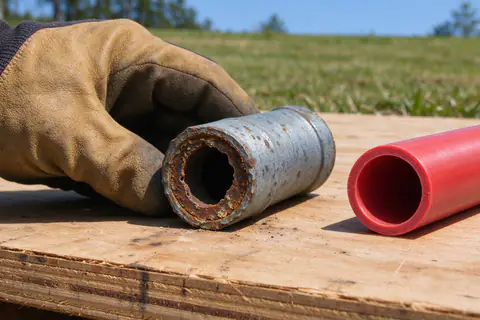
The second is galvanized steel, common in older central neighborhoods such as Dilworth, Elizabeth and Plaza Midwood. Galvanized pipe rusts from the inside. As the bore narrows, flow drops at the farthest fixtures first and the water can run brown after it sits. There is no repair that restores the inside of the pipe, so the fix is replacement. See galvanized pipe replacement.
The third is copper with repeat pinhole leaks. One pinhole is a repair. Several on the same runs over a year or two suggest the pipe wall is thinning, and patching one leak at a time leaves the rest of the system to fail on its own schedule. Our guide to repiping or repairing walks through that decision.
A repipe is not the answer to every symptom. Low pressure can come from the street, from a failing pressure-reducing valve or from a half-closed shutoff, and those are checked first. That is why the low water pressure work starts with measurement.
What happens on the first visit
The first visit maps the system. The person assessing the house identifies the pipe material at the main shutoff, under sinks and wherever pipe is exposed, counts every fixture that needs water, and works out how new lines can reach each one. In a crawl space house that means looking at the floor joists and the clearance underneath. In a slab house it means the attic, the interior walls and the ceiling space above each bathroom.
Street pressure is measured at a hose bib. Charlotte Water says pressure across its system ranges from about 40 psi on high ground to more than 100 psi in low areas near creeks, and the county requires a pressure-reducing valve on new or remodeled plumbing where pressure runs above 80 psi. A repipe is the natural time to add or replace that valve.
The result is a written scope: the new material, the layout, the fixtures, every opening expected in walls and ceilings, the permit, the patching, and the price.
How a repipe runs in a crawl space house
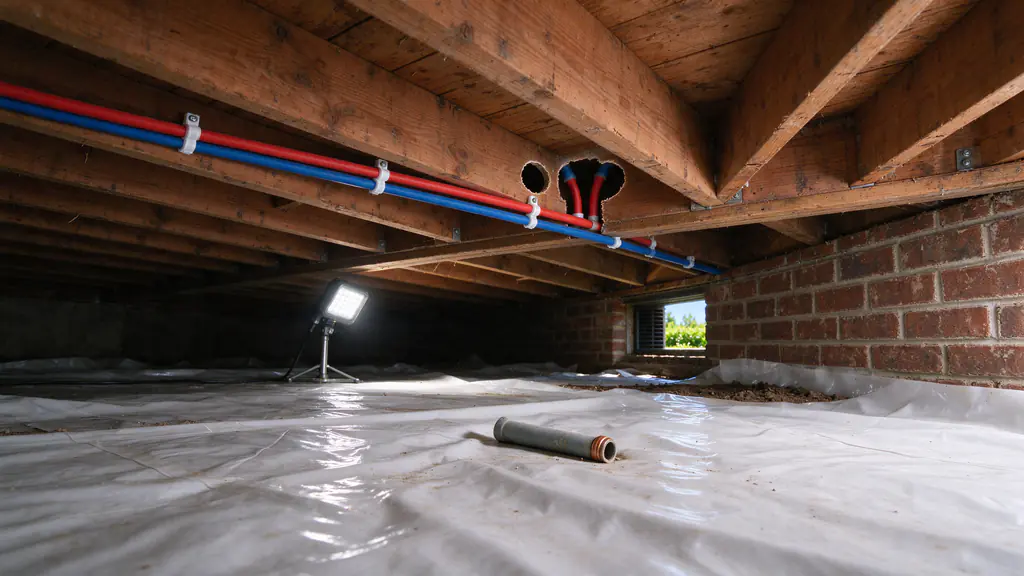
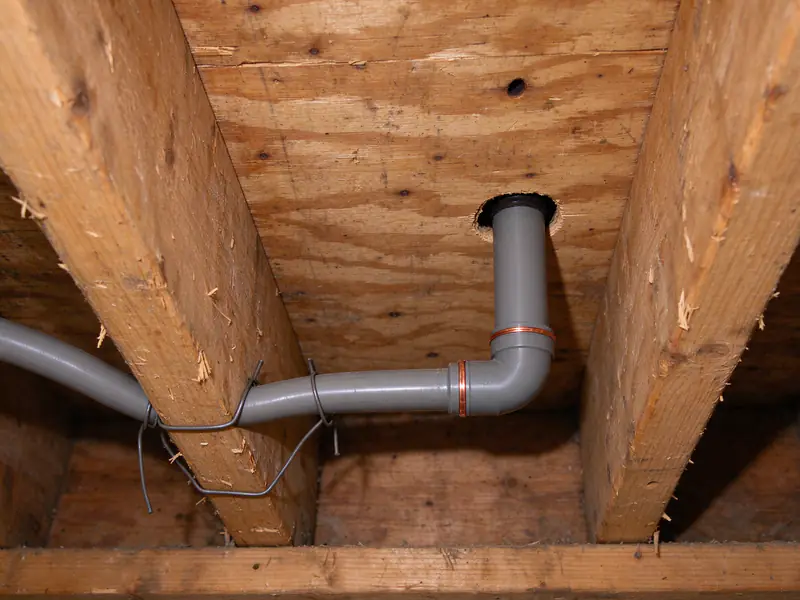
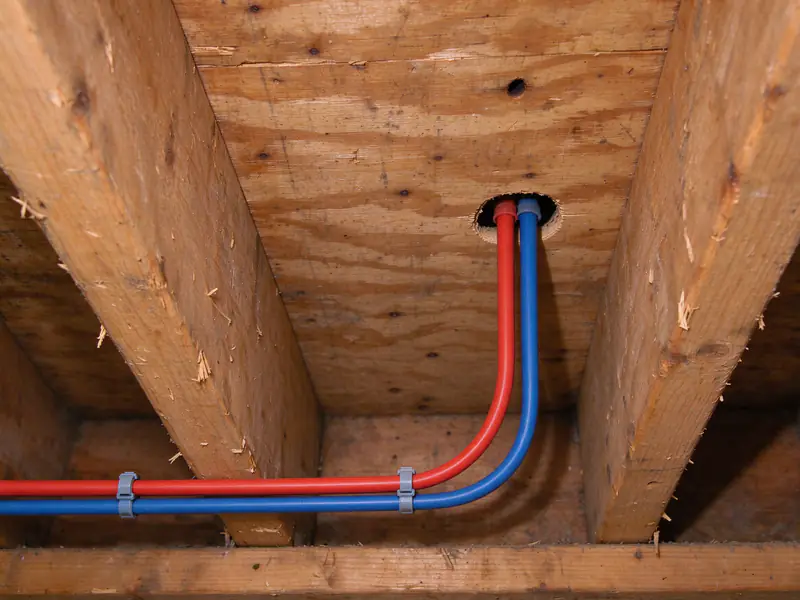
Most Charlotte houses built before 1970 sit on a crawl space: about 94% of Mecklenburg single-family homes built in the 1950s and 95% of those built in the 1960s, according to county assessor records. That matters, because a crawl space is the easiest place to run new pipe. Lines travel along the joists under the house and come up through the floor behind each fixture, so first-floor bathrooms and kitchens often need only small openings, if any.
New lines are usually run while the old system is still in service. When everything is in place, the water is shut off at the main, each fixture is moved from the old pipe to the new one, and the old supply pipe is disconnected. Pipe in a vented crawl space is unconditioned space under the North Carolina code, so it gets at least R-6.5 insulation unless it is otherwise protected. Charlotte averages about 58 nights a year at or below freezing, and hard freezes such as the 9°F night on December 24, 2022 are the reason that rule exists.
How a repipe runs in a slab house
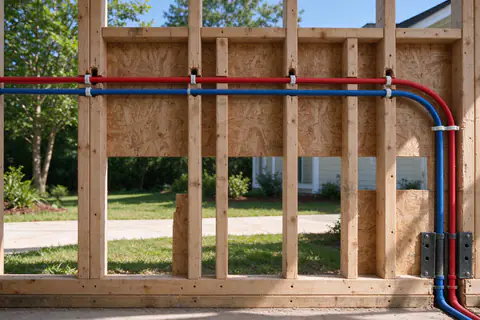
Newer Charlotte houses are mostly built on slabs: 71% of Mecklenburg single-family homes built in the 2000s and 82% of those built since 2020 sit on one. The original supply lines in a slab house usually run under or through the concrete. A repipe does not chase those lines. New pipe runs through the attic and drops down inside interior walls to each fixture, and the old under-slab lines are abandoned in place.
That route leaves the floor alone, but it needs openings in walls and sometimes ceilings, and attic runs need insulation under the same 305.4 rule. Mecklenburg permit records show this pattern directly: one recent permit describes rerouting “all waterlines into the attic” of a slab house. If you have a leak under the slab right now, our slab leak repair page compares a spot repair with a reroute.
PEX or copper
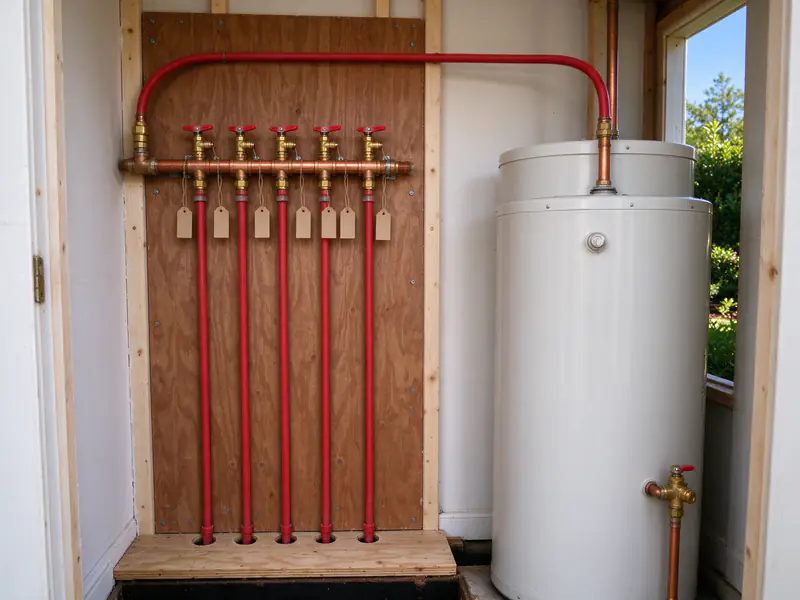
Both are approved under the North Carolina Plumbing Code, and neither is the right choice for every house. PEX bends around obstacles and runs long distances without joints, which suits crawl spaces and attics. It can also be laid out as home runs from a manifold, with a shutoff for each fixture in one place. Copper suits owners who want metal pipe, but every change of direction needs a fitting and the work takes longer. Charlotte Water is soft, low in alkalinity, and treated with lime to raise its pH for corrosion control. The comparison below sets out the practical differences, and the PEX vs copper guide goes further.
Openings, patching and living in the house
A repipe needs access. How much depends on the foundation, the number of stories and where the fixtures sit. Second-floor bathrooms in a crawl space house still need lines brought up through walls or closets. The scope lists every expected opening, and patching is written to a clear standard: closed and ready for paint, or finished. Mecklenburg assessor records classify most single-family interiors as drywall, though some older houses have plaster or plywood paneling, which changes how openings are patched. Our guide to drywall after a repipe covers what to expect.
Most families stay in the house during a repipe. The water is off while fixtures are moved to the new lines, and the scope says when that is.
Inspection
Where a permit is pulled, the county or town inspects the new piping, usually with the system under test pressure, before walls are closed. In Mecklenburg County, Code Enforcement issues plumbing permits for Charlotte and the six towns and posts inspection results online. Our permit guide explains when a permit applies and how the inspection works.
What a whole house repipe costs in Charlotte
A whole house PEX repipe on a single-family home typically runs $4,000 to $12,000 or more in the Charlotte area. Larger homes, two-story homes and slab homes run higher. Copper is quoted per house. The biggest drivers are the number of bathrooms and fixtures, the foundation, the number of stories, finished ceilings between floors, the material, and whether the water service line from the meter is replaced at the same time. The repipe cost guide breaks that down, and the cost estimator gives a range for your house without a phone call. You can also call (704) 452-4386.
What's included
What a whole house repipe includes
A whole house repipe estimate should list each of these. If one is missing, ask whether it is excluded or simply unwritten.
A walk-through that maps the existing pipe material, every fixture and the access routes under, over and through the house
A written scope naming the new material, the layout (trunk and branch or manifold) and every wall or ceiling opening expected
The plumbing permit, pulled by the licensed contractor doing the work
New hot and cold lines from the main shutoff to every sink, tub, shower, toilet, hose bib, ice maker and the water heater
New shutoff valves at fixtures, and a new main shutoff where the old one is worn
Pipe supports, protection plates where lines pass through framing, and insulation where code requires it
A pressure test of the new system before walls are closed, then the county or town inspection
Old supply pipe disconnected and abandoned or removed where it can be reached
Patching of access openings to the extent written in the scope
The real choice
PEX and copper for a whole house repipe in Charlotte
Both materials are approved under the North Carolina Plumbing Code. The house, not a rule of thumb, decides which one fits.
PEX and copper for a whole house repipe in Charlotte
PEX
Copper (Type L)
How it runs
Flexible tubing in long runs with few joints, pulled through joists and walls
Rigid lengths joined at every turn with soldered or press fittings
Openings
Often fewer, because tubing bends around obstacles
More, because each change in direction needs a fitting
Layout options
Trunk and branch, or home runs from a manifold with a shutoff per fixture
Trunk and branch
Where it needs care
Kept out of sunlight and away from heat sources such as flue pipes
Heat and fire risk while soldering inside walls; press fittings avoid the torch
Price
Typical Charlotte range published above
Higher for material and labor; quoted per house
Copper is quoted per house; the published Charlotte range above covers PEX.
Guides
Related resources
Guides that go deeper on whole house repipe decisions.
The three supply pipes found in older Charlotte-area houses, how each one was meant to work and how it fails, the signs that point to the pipe rather than something else, the rules and insurance questions around replacement, and what each scope leaves behind.
The typical Charlotte range for a whole house PEX repipe, why copper is quoted separately, how the Mecklenburg permit fee is set, and which parts of the job only a walk-through can price.
Both are approved under the North Carolina Plumbing Code. The house, the routes the pipe has to take and what the owner values decide between them, not a rule of thumb.
One leak on sound pipe is a repair. A pattern of leaks, or a pipe with a known failure history, is a question about the whole system. The evidence that separates the two is usually in the house.
A repipe runs in stages, and most of them happen with the water still on. Here is what each stage involves, what makes one house take longer than another, and when you will actually be without water.
Every repipe needs some access. How many openings a house needs depends on its foundation, its stories and where the fixtures sit, and how they are closed depends on a patching standard that belongs in writing.
How it runs
How a whole house repipe runs
The call or the form
The age of the house, the pipe you have seen, crawl space or slab, and what has been leaking.
The assessment
Pipe material, fixture count, access routes and street pressure, written up as a scope with a price.
The repipe
New lines are run, then connected to fixtures and the water heater, then pressure tested before walls are closed.
Inspection and patching
The permit office inspects the new piping; access openings in walls and ceilings are then patched to the agreed scope.
What this work looks like
PEX manifold with labeled shutoff valves mounted near a water heater
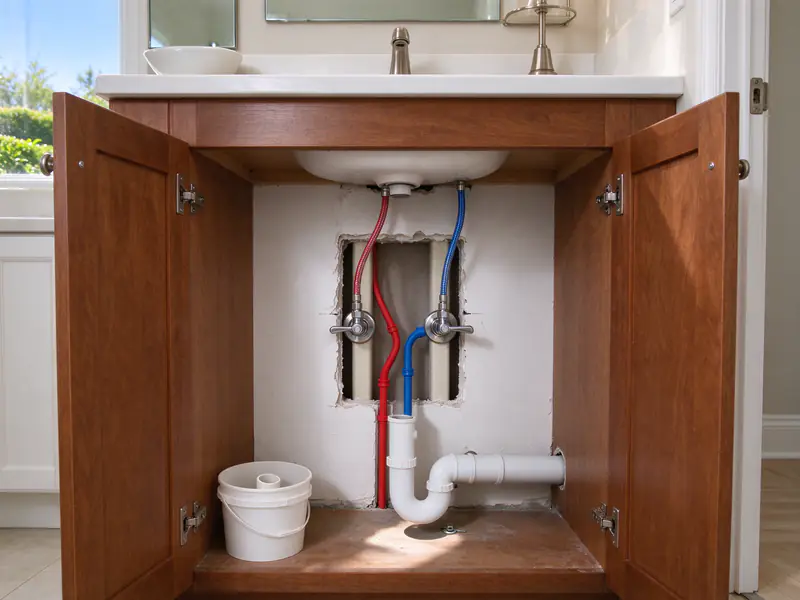
Small rectangular drywall opening behind a bathroom sink with new PEX stub-outs
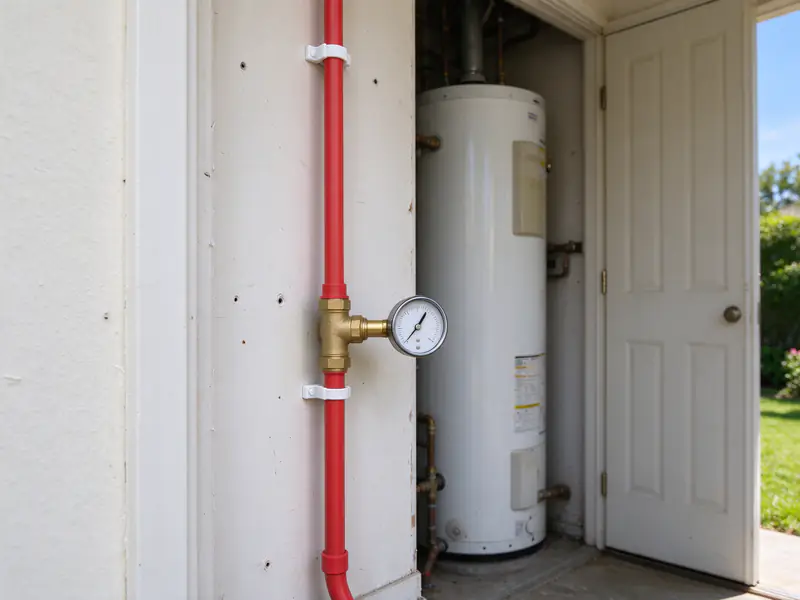
Pressure gauge attached to a new supply line during a pressure test
Before
After
Want a whole house repipe scope for your house?
Send the year the house was built, the number of bathrooms, and whether it sits on a crawl space or a slab.
How long does a whole house repipe take in Charlotte?
It depends on the size of the house, the number of fixtures and how much of the work happens from a crawl space or attic. The written scope gives the schedule for your house, including when the water is off. New lines are usually run before the old system is disconnected, so most of the job happens with water still working.
Do I need a permit for a whole house repipe in Mecklenburg County?
Usually. Mecklenburg County Code Enforcement issues plumbing permits for Charlotte and the six towns. North Carolina exempts some replacements under $40,000 in a single-family home that do not change the design of the plumbing, so the permit question is confirmed for each project. Where a permit is pulled, the county inspects the new piping.
Will a repipe fix my low water pressure?
Only if the old pipe is the cause. Galvanized steel narrows as it rusts inside, and replacing it restores flow. But street pressure, a failing pressure-reducing valve, a partly closed shutoff or clogged fixture aerators cause the same symptom, so those are checked before a repipe is recommended for pressure.
Does a whole house repipe include the line from the meter?
Not unless the scope says so. The line from the meter to the house is the water service, a separate run underground. It is often replaced at the same time when it is galvanized or polybutylene, and it appears as its own line on the estimate.
Can I stay in the house during a whole house repipe?
Most families do. New lines are run while the old system still works, and the water is off while fixtures are moved over to the new pipe; the written scope says when that is. Expect access openings in some walls or ceilings, and plan for work areas around bathrooms and the kitchen on the days crews are inside.