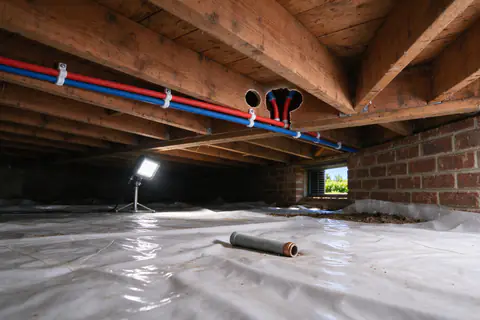
One leak on sound pipe is a repair. A pattern of leaks, or a pipe with a known failure history, is a question about the whole system. The evidence that separates the two is usually in the house.
Last Updated:
Short answerRepair a leak when it is the first failure on pipe that is otherwise sound, or a joint that was made badly. Consider a repipe when leaks repeat on different runs, when the material is polybutylene or corroded galvanized, or when the pipe beside the leak is thin. The leak pattern and the material decide, not one leak.
Whether to repipe or repair leaks is the decision most owners face after the second or third plumber’s visit. Level Repiping Charlotte arranges pipe repairs, partial repipes and whole house repipes across the Charlotte area through licensed and insured contractors, so the answer doesn’t have to be the bigger job. This guide explains how the leak pattern, the pipe material and the condition of the pipe beside the leak point to a spot repair or to replacement.
Start with where the leak is
The first clue is where the water came out.
At a joint. A leak at a soldered elbow, a crimp ring, a threaded coupling or a compression fitting points first to how that joint was made or how it has been stressed. Cold solder joints, flux left inside a fitting, a crimp ring squeezed too little or too much, and a threaded joint that has rusted at the thinnest point are installation or age defects at one spot. The pipe beside the joint may be sound.
In the middle of a pipe. A pinhole or split away from any fitting points to the pipe wall. On copper that usually means the wall has thinned from the inside; on galvanized it means rust has eaten through; on polybutylene it means the plastic has turned brittle. The question becomes how much of the rest of the pipe is in the same condition.
Where the pipe has been stressed. A leak where pipe passes through framing, rubs a duct or sits beside a strap may come from movement or wear at that spot rather than the pipe as a whole. High water pressure adds strain at every joint and bend; Charlotte Water says pressure across its system ranges from about 40 psi to more than 100 psi near creeks.
The pattern matters more than the count
One leak, repaired, is a repair. What changes the answer is a pattern.
What the leaks look like
What it suggests
Usual direction
One joint, sound pipe on both sides
A joint defect
Repair the joint
A second pinhole on a different copper run
Wall thinning beyond one spot
Assess the rest of the copper
Several pinholes on one hot line
Erosion or corrosion on that run
Replace that run, or more
A failed polybutylene fitting
A fitting type used throughout the house
Repair now; plan the system
Leaking threads on galvanized
Rust at the thinnest point; the rest likely narrowed
For polybutylene and galvanized, the problem is the material, and the same material runs through the whole house. Fixing one polybutylene fitting leaves dozens of the same fittings in the walls. Cutting out one rusted section of galvanized leaves the rest narrowed and rusting. Repairs on these materials buy time, which is sometimes the right call, but they don’t change the risk for the rest of the system. See polybutylene pipe replacement and galvanized pipe replacement.
For copper, the problem may be local. Copper that leaked on one hot run near the water heater can be sound elsewhere. That is where a partial repipe earns its place.
How leak detection feeds the decision
When the leak isn’t visible, finding it comes first. A water meter that moves with every fixture off confirms a leak, and the location decides what happens next. Charlotte Water says the leading cause of high bills is a private plumbing leak, and leaks between the meter and the house, or inside it, are the owner’s to repair. Leak detection narrows the location so a repair opens one spot instead of several.
What the leak looks like when it is found settles the question. A failed joint with clean pipe around it points to repair. A pinhole in pipe that shows pitting or green corrosion nearby points to a wider look. A leak under a slab is its own decision; see slab leak repair.
The middle option: a partial repipe
A partial repipe replaces one branch, one bathroom group or the hot side of the house, and leaves the rest. It fits copper with leaks confined to one area, or a remodel that opens one part of the house. It leaves old pipe in service, and every boundary between old and new is a transition joint that needs the right fitting, especially where copper meets galvanized and a dielectric transition is needed. A written scope should say exactly which runs stay.
When a repair is the better call
A repair is often right even in an older house:
The leak was a single joint and the pipe on both sides looks sound.
The house is being sold soon and the buyer will make their own decision.
The repipe is planned but the budget or the season isn’t ready, and the repair stops the damage now.
The cause was outside the pipe: a freeze, a pressure spike or a nail through the wall.
Pipe relining, which coats the inside of existing pipe, is a different method again; the relining guide compares it with replacement.
What each choice costs
A spot repair is quoted per job, and its price depends mostly on access. A whole house PEX repipe on a single-family home typically runs $4,000 to $12,000 or more in the Charlotte area; larger, two-story and slab homes run higher. The repipe cost guide explains the drivers. The comparison that matters is not one repair against one repipe, but the expected run of repairs, and the water damage that can come with them, against one planned job.
Getting a straight answer
If you have had more than one leak, write down where each was, hot or cold, and roughly when. That history is most of what an assessment needs. Call (704) 452-4386 to talk through repair against repipe for your house, or see when to repipe a house for the full picture.
Questions
More questions on this
How many pinhole leaks before repiping makes sense?
There is no fixed number. One pinhole, repaired, may be the only one. A second on a different run, or a cluster on the same hot line within a year or two, is a reason to look at the condition of the rest of the copper. The location of the leaks, hot or cold, and what the pipe beside them looks like matter more than the count.
Is a leak at a fitting a sign the whole system is failing?
Not by itself. A joint that leaks may have been soldered, crimped or threaded badly when it was made, and the pipe on either side can be sound. It becomes a system question when several joints of the same kind fail, as with polybutylene crimp fittings, or when the pipe itself is thin at the joint.
Does a spot repair on polybutylene need a special fitting?
Yes. Polybutylene has its own outside diameter, so a repair uses fittings listed for polybutylene or transition fittings made to join it to PEX or copper. A repair fixes the failed spot only. The rest of the polybutylene, including fittings of the same kind, stays in service.
Get an Estimate for whole house repipe
Tell us the age of the house, the pipe you have seen and what is going wrong. Or call.
The three supply pipes found in older Charlotte-area houses, how each one was meant to work and how it fails, the signs that point to the pipe rather than something else, the rules and insurance questions around replacement, and what each scope leaves behind.
Copper fails from the inside, usually at one spot first. The cause can be the water, the speed it moves, how the pipe was installed or the tube itself, and often more than one of those at once.
Five supply pipes turn up in Charlotte-area houses. Color, joints, markings and a magnet tell most of them apart in a few minutes, as long as you look in more than one place.
Epoxy lining coats the inside of the pipe you already have; a repipe replaces it. Both are real options for some houses. Here is how lining works, where it reaches its limits, and the questions that decide between them.
The typical Charlotte range for a whole house PEX repipe, why copper is quoted separately, how the Mecklenburg permit fee is set, and which parts of the job only a walk-through can price.