46.8% Share of Mecklenburg single-family homes built on a slab foundation (Mecklenburg County Assessor)
82.4% Share of Mecklenburg single-family homes built since 2020 that sit on a slab (Mecklenburg County Assessor)
R-6.5 Minimum insulation on water pipe rerouted through an unconditioned attic (NC Plumbing Code 305.4)
4 Mecklenburg repipe permits from April 2025 to October 2026 that mention a slab (Mecklenburg County)
Last Updated:
Slab leak repair in Charlotte means stopping a leak in a water line that runs under or through a concrete floor, either by opening the floor and replacing the damaged section or by rerouting the line through the attic and walls so the slab is no longer part of the system. Level Repiping Charlotte arranges slab leak repairs and reroutes across Charlotte and the surrounding counties, performed by licensed and insured contractors. Either way, the work starts by finding the leak, because the method depends on where it is and what the rest of the pipe looks like.
What happens on the first visit
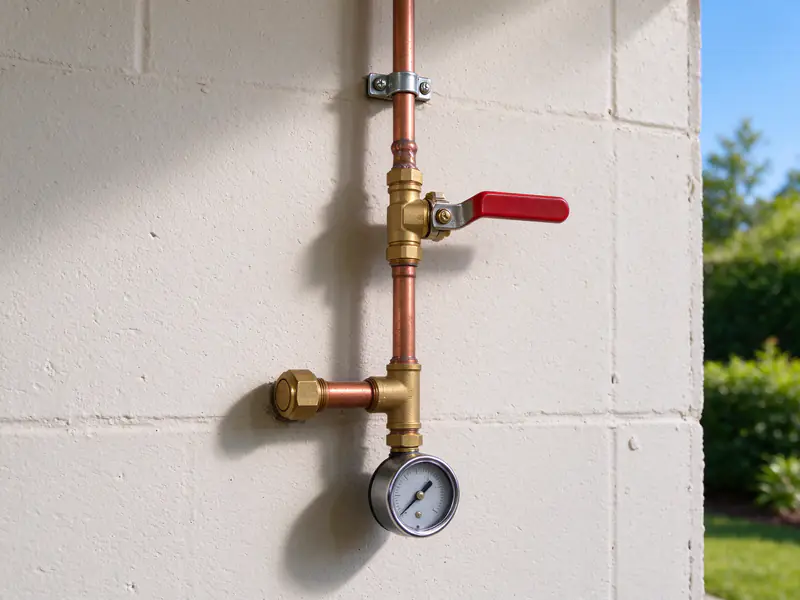
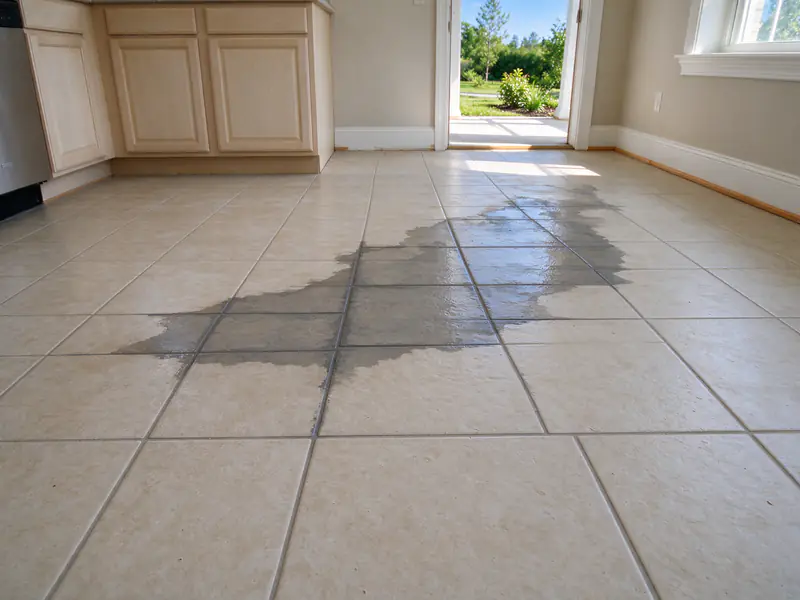
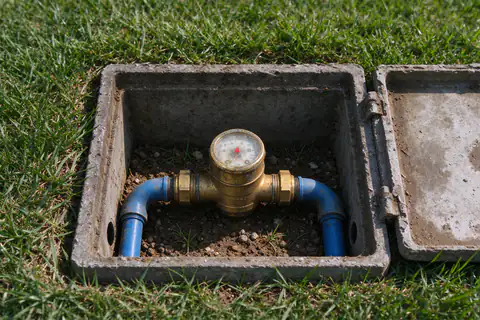
The first visit confirms that there is a supply leak and narrows down where it is. With every fixture off, the water meter should sit still. If it keeps moving, water is leaving the system somewhere between the meter and the fixtures. Shutting off the water heater’s cold inlet, or closing individual valves, then shows whether the loss is on the hot side, the cold side or one branch. A warm spot on a tile floor, the sound of running water with everything closed, or a water bill that has climbed for no reason all point the same way, and our guide to the signs of a slab leak explains what each symptom means.
If a repair through the floor is on the table, the next step is pinpointing the spot. Listening equipment picks up the sound of water escaping a pressurized pipe, and thermal imaging can trace a hot line under the floor. Neither is exact through several inches of concrete, so the written scope says how confident the location is. The full method is on the water leak detection page.
The visit also maps the house: the foundation, the attic, where the water heater and each bathroom sit, and the pipe material where it shows at the water heater and under sinks. That map is what decides between repair and reroute.
Why water lines under a slab fail
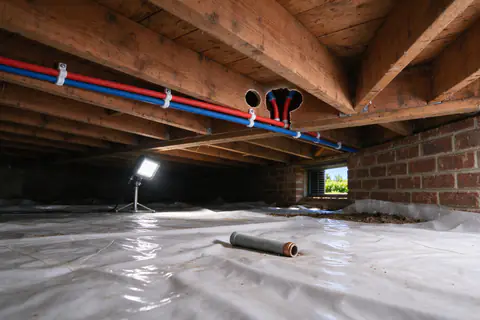
Supply lines in many slab houses were laid in the gravel or sand under the concrete before the pour, usually as soft copper in older houses and plastic in newer ones. Once the slab is poured, those lines can’t be inspected or maintained. Leaks under a slab usually start where the pipe is stressed: where it rubs against gravel or the edge of the concrete, where a hot line expands and contracts with every use, at a bend or a joint, or where the pipe was nicked when it was laid. Hot lines fail more often than cold ones in many houses, which is why a warm floor is a classic sign, but a cold line can leak too.
None of those causes can be confirmed without seeing the pipe, and one leak does not prove the rest of the line is failing. It does show that the line is under the conditions that caused the first one.
Slab houses are common in the Charlotte area and becoming more so. Mecklenburg County assessor records show 46.8% of single-family homes on a slab, rising to 71.4% of those built in the 2000s and 82.4% of those built since 2020.
Repairing the leak through the slab
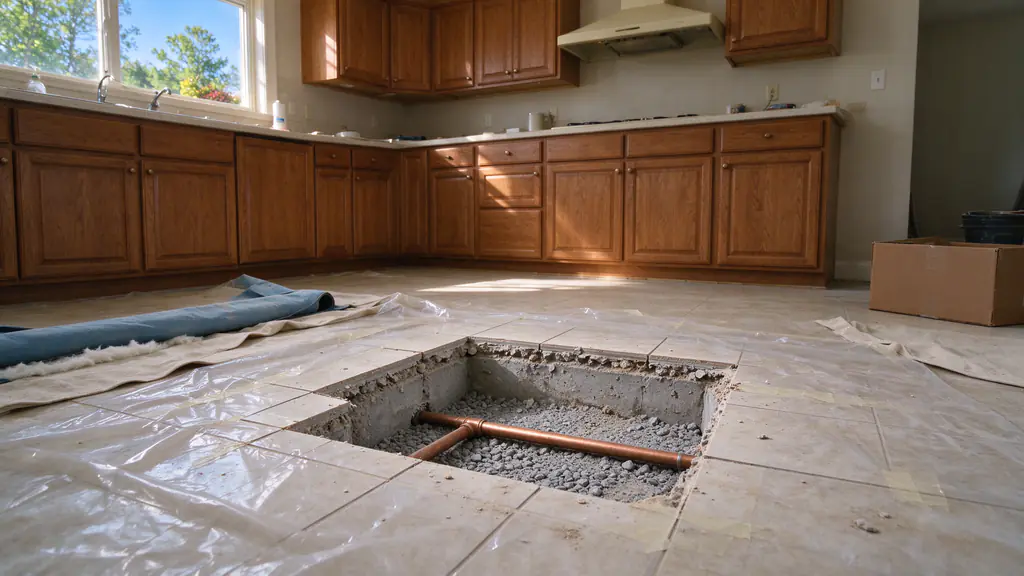
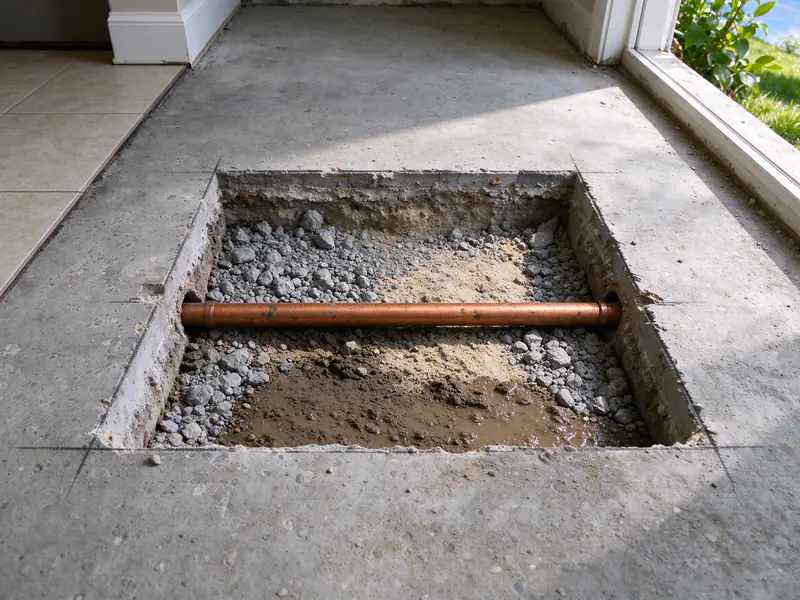
A direct repair opens the floor right over the leak. Flooring is lifted, the concrete is cut, and soil is dug out until the pipe can be reached and worked on. The damaged section is cut out and replaced, the line is pressure tested with the hole still open, and then the hole is backfilled and the concrete patched. Floor finishes are a separate line in the scope, because matching tile or hardwood is not plumbing work.
This is a good repair when the pipe is otherwise in sound condition, the leak is in one spot, and the floor over it can be opened. It is a poor fit when the leak sits under cabinets, a tub or expensive tile, or when it is the second leak on the same line. A repaired section does nothing for the pipe a few feet away, which has been under the same slab for the same number of years.
Rerouting the line through the attic and walls
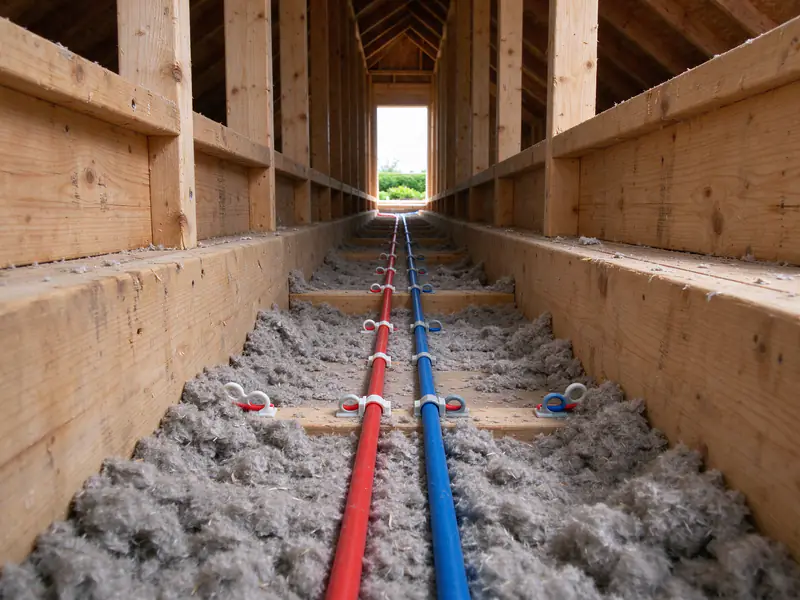
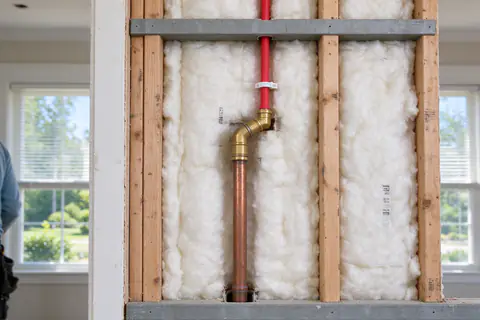
A reroute leaves the old under-slab line where it is and takes it out of service. A new line, usually PEX, is run from the point where the water enters the house up into the attic, across the ceiling joists, and down inside interior walls to each fixture the old line served. At each fixture the old connection is cut off and capped, and the new line takes over. The concrete is not touched.
A reroute can cover one line, such as the hot line to a single bathroom, or every supply line in the house. The second case is a whole house repipe of a slab house, described on the whole house repipe page. In between is a partial repipe, where some runs are rerouted and others stay under the slab. The scope should say which lines remain in the old pipe, because those lines keep their age.
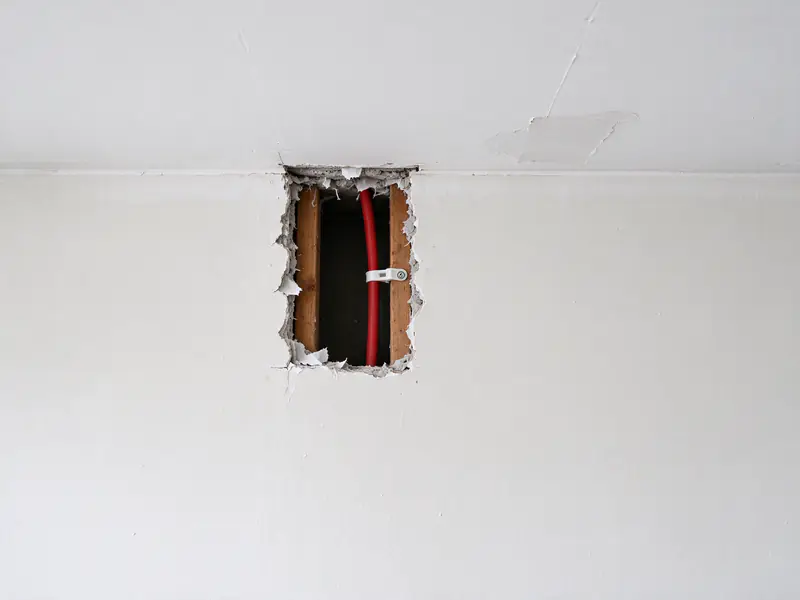
Rerouting needs openings where the new line drops into a wall behind a fixture, and sometimes in a ceiling. The number depends on where fixtures sit relative to interior walls and the attic. Our guide to drywall after a repipe covers the patching.
Attic piping in a Charlotte slab house
Moving water lines into the attic puts them in an unconditioned space, and Charlotte gets cold enough for that to matter. Charlotte’s 1991-2020 climate normals average 58.3 nights a year at or below 32°F and 7.2 nights at or below 20°F. Hard freezes reached 6°F on January 7, 2014, 9°F on December 24, 2022 and 10°F on February 2, 2026.
The North Carolina amendment to Plumbing Code section 305.4 requires water pipe in an unconditioned attic to carry insulation of at least R-6.5 or be protected by heat, and pipe in exterior walls to sit on the heated side of the insulation. In practice the reroute is laid out to keep lines away from eaves and gable ends, close to the ceiling where the house’s heat reaches them, and out of exterior walls where an interior wall can be used instead. The frozen pipes guide explains why these details matter.
When a slab leak points to a repipe
A first slab leak on a house with otherwise sound pipe is a repair. The decision changes when a second leak appears on the same system, when the pipe is a material with a known failure pattern such as polybutylene, or when the house is old enough that the rest of the under-slab copper has had the same years of wear. At that point the question is whether to keep paying to open the floor one leak at a time or to move the whole supply system out of the slab. Our guide to repiping or repairing sets out that decision, and the repipe assessment helps you think it through before anyone visits.
Permits, inspection and patching
North Carolina requires a permit for the installation, extension or general repair of plumbing under G.S. 160D-1110, but exempts some single-family work under $40,000 that does not change the plumbing design. Whether a particular slab repair or reroute needs one is confirmed per project. In Mecklenburg County, Code Enforcement issues plumbing permits for Charlotte and the six towns; the permit guide explains how that works. Any paid plumbing work in North Carolina requires a state plumbing license under G.S. 87-21, and work in Fort Mill or Rock Hill is done by South Carolina-licensed contractors.
The new or repaired line is pressure tested before any opening is closed. Patching follows the written scope: concrete for a direct repair, drywall for a reroute, and floor finishes only where the scope says so.
What moves the price of a slab leak repair
Slab leak work is quoted per job, after the leak is located. The method is the biggest factor: a direct repair is one opening and one section of pipe plus the concrete and floor finish, while a reroute is a length of new line plus wall and ceiling openings. After that, it depends on how far the fixture is from the attic, how many fixtures the line serves, whether the house is one story or two, the flooring over the leak, and whether other lines are rerouted at the same time. Water damage cleanup and flooring replacement are separate trades and separate costs. The repipe cost guide covers the related whole-house numbers.
If the meter is moving with everything off or a floor feels warm, close the cold supply valve on top of the water heater if the leak seems to be on the hot side, note which fixtures are nearby, and call (704) 452-4386 or send the details through the estimate form.
What's included
What a slab leak repair includes
A slab leak estimate should say which method it uses and why. If the scope only says "repair slab leak", ask how the line will be reached and what happens to the rest of it.
Leak location before any concrete is cut: a meter check, isolation of the hot and cold sides, and pinpointing where a repair through the floor is being considered
A written scope naming the method (direct repair or reroute), each opening in the floor, walls or ceilings, and which under-slab lines are abandoned
For a direct repair: floor covering lifted over the leak, the slab cut and dug out, the damaged section replaced and tested before the concrete is patched
For a reroute: new lines run through the attic and down interior walls to every fixture the failed line served, with the old under-slab line cut off and capped
Insulation on attic runs to the R-6.5 minimum, or routing that keeps the line on the heated side of the insulation
A pressure test of the repaired or new line before any opening is closed
The plumbing permit and inspection where the work requires one
Concrete, wall and ceiling patching to the extent written, with floor finishes listed as included or excluded
The real choice
Repairing a slab leak in place or rerouting the line
Both are legitimate repairs. The age and condition of the rest of the under-slab piping usually decides between them.
Repairing a slab leak in place or rerouting the line
Direct repair through the slab
Reroute through attic and walls
What happens
The floor is opened over the leak and the damaged section of pipe is replaced
A new line bypasses the slab, and the old under-slab line is disconnected and left in place
Openings
One opening in the floor, sized to reach the pipe and work on it
Openings in interior walls and sometimes ceilings where the new line drops to fixtures
Floor finishes
Tile, hardwood or carpet over the leak is lifted and has to be replaced or matched
The floor is left alone
The rest of the old line
Stays in service under the slab
Taken out of service on the rerouted run
Best fit
A single leak on otherwise sound pipe, in a spot that can be reached
A second leak, older or questionable pipe, or a leak under finishes or cabinets
What it does not change
Other sections of the same pipe age at the same rate
Lines not rerouted stay under the slab
Both methods are quoted per job after the leak is located.
Guides
Related resources
Guides that go deeper on slab leak repair decisions.
A leak under a concrete floor rarely announces itself. Here are the signs that point to one, the ordinary things that cause the same signs, and the simple test that tells you whether water is leaving the house at all.
One leak on sound pipe is a repair. A pattern of leaks, or a pipe with a known failure history, is a question about the whole system. The evidence that separates the two is usually in the house.
Charlotte freezes most winters and sees a hard freeze every few years. Here is why crawl space and attic pipes are the ones that split, what the state code requires, and what helps before and after a cold night.
Every repipe needs some access. How many openings a house needs depends on its foundation, its stories and where the fixtures sit, and how they are closed depends on a patching standard that belongs in writing.
A policy usually pays for the damage a sudden leak causes, not for replacing the old pipe. Where a repipe helps is with the insurer's view of the house, and that depends on the carrier.
North Carolina law requires plumbing permits but exempts some single-family work. Here is how that exemption applies to a repipe, who is allowed to pull the permit, what Mecklenburg County charges, and how the inspection runs.
How it runs
How a slab leak repair runs
The call or the form
The age of the house, the pipe you have seen, crawl space or slab, and what has been leaking.
The assessment
Pipe material, fixture count, access routes and street pressure, written up as a scope with a price.
The repipe
New lines are run, then connected to fixtures and the water heater, then pressure tested before walls are closed.
Inspection and patching
The permit office inspects the new piping; access openings in walls and ceilings are then patched to the agreed scope.
What this work looks like
Rectangular opening cut in a concrete slab with gravel dug out around a section of copper water line
New red and blue PEX lines laid across attic ceiling joists, partly covered by blown-in insulation
Small drywall opening near the ceiling of an interior hallway wall with a new PEX line dropping down between studs
Pressure gauge threaded onto a capped water line during a pressure test
Before
After
Water under the floor or a meter that won't stop?
Tell us when the house was built, whether a floor spot feels warm, and which fixtures are near it.
How is a slab leak found before the floor is opened?
It starts with the meter. With every fixture off, a moving meter shows that water is leaving the system. The hot and cold sides are then shut off in turn to see which one is leaking, and individual runs are isolated where valves allow. If a repair through the floor is being considered, the spot is narrowed with listening equipment and, for a hot line, thermal imaging. No method is exact through concrete, so the scope says how certain the location is.
Is it better to repair a slab leak or reroute the line?
A direct repair makes sense when the pipe is otherwise sound and the leak sits where the floor can be opened without wrecking expensive finishes. A reroute makes sense when the line has leaked before, when the pipe is old enough that more leaks are likely, or when the leak is under cabinets or tile. The written scope explains which applies to your house and why.
Will a water line rerouted through the attic freeze?
It can if it is left exposed. North Carolina requires at least R-6.5 insulation, or heat, on water pipe in an unconditioned attic, and lines in exterior walls go on the heated side of the insulation. Charlotte averages about 58 nights a year at or below freezing, with occasional hard freezes such as 9°F on December 24, 2022, so attic routing is planned around that.
Could the leak under my slab be a drain line instead of a water line?
Yes. A supply leak runs all the time because the line is under pressure, so it moves the meter with everything off. A drain leak only runs when water goes down a drain, and it often shows up as odor, slow drains or damp soil rather than a meter that never stops. Drain lines under a slab are covered on the drain line replacement page.
Will homeowners insurance pay for slab leak repair in Charlotte?
It depends on the policy. Insurers can treat the failed pipe, the cost of getting to it and the water damage as separate items, and they answer them differently. The written scope records where the leak was found and how it was reached, which is the information an adjuster asks about. Our repiping insurance guide covers the questions to ask your insurer.