14 Mecklenburg repipe permits from April 2025 to October 2026 that name polybutylene (Mecklenburg County)
1,114 Mecklenburg permits from 2010 to 2013 for water-line replacement in condos and apartments, 531 of them naming polybutylene (Mecklenburg County)
$4,000 to $12,000+ Typical Charlotte-area range for a whole house PEX repipe on a single-family home, which is the usual polybutylene scope
Last Updated:
Polybutylene pipe replacement means removing gray polybutylene supply pipe from service and running new PEX or copper lines from the main shutoff to every fixture. In practice it is a whole house repipe for a particular reason. Level Repiping Charlotte arranges polybutylene replacement across Charlotte and the surrounding counties, carried out by licensed and insured contractors under a plumbing permit where one is required. This page covers how to recognize polybutylene, why it fails, what the fittings tell you, and how a polybutylene house fits into a sale or an insurance decision.
What polybutylene is and why it became a problem
Polybutylene, often called PB, is a flexible plastic pipe that was installed widely in American houses from the late 1970s to the mid-1990s. It was cheaper and faster to install than copper, and builders used it in single-family subdivisions, townhouses, condominiums and manufactured homes. Many houses ran it from the meter to the house as well, usually in gray or blue.
The trouble showed up over time. Oxidants used in treated drinking water, such as chlorine, attack polybutylene and its plastic fittings from the inside. The inner wall becomes brittle and can flake and crack long before anything shows outside. Poorly made crimps added a second failure point. Leaks tend to arrive without warning, often at a fitting, and a slow drip under a floor or inside a wall can run for some time before it is found. Failures led to national class-action litigation in the 1990s. The claim programs that paid for replacements have long since closed, and the pipe is no longer made for water supply.
Polybutylene is not illegal to keep. No North Carolina rule requires an owner to remove it. Many polybutylene systems are still in service without a leak. The difficulty is that the pipe gives little warning, and every year adds age to the whole system at once.
How to identify polybutylene
Look where pipe is exposed: at the main shutoff, at the water heater, under sinks, behind the toilet, and in the crawl space or attic. Polybutylene is usually gray, with a slightly waxy feel, and often printed with PB2110. Some is marked with the Qest name, often spelled Quest. Pipe entering the house from the meter can be gray, blue or black.
Gray PEX causes most of the confusion. PEX is printed with “PEX” and its ASTM standard, and its fittings look different. Copper stub-outs at a wall do not settle it either, because many polybutylene systems were converted to copper for the last few inches at each fixture. Our guide to identifying pipe material has photos of each.
The fittings question: plastic, copper or brass
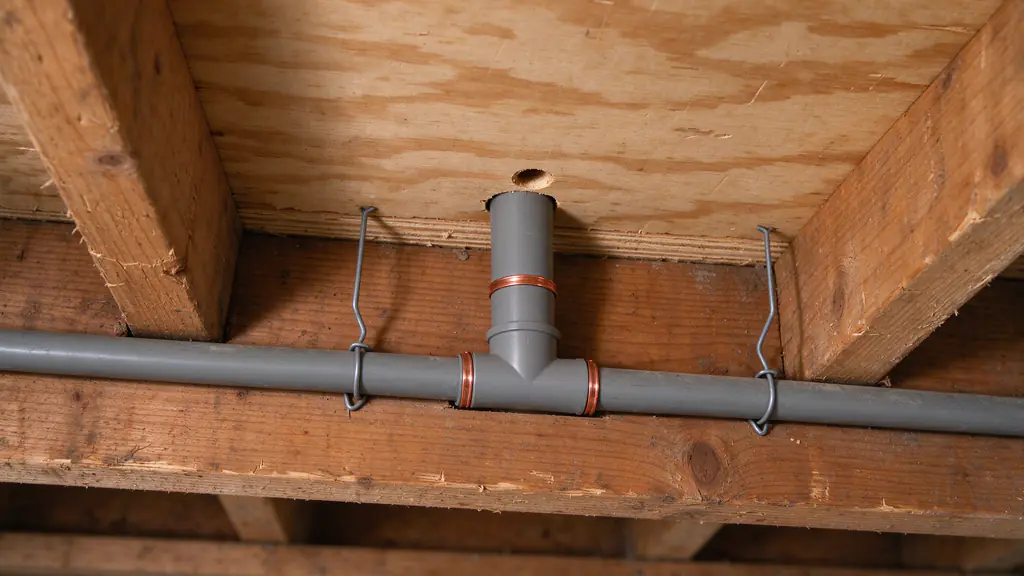
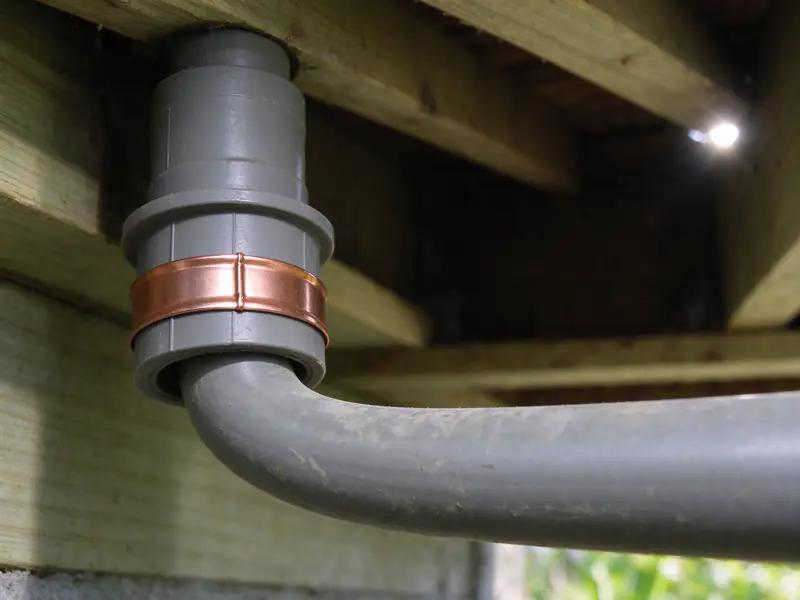
The fittings tell you which generation of polybutylene you have. The earliest systems used acetal plastic insert fittings, gray or white, held with aluminum crimp bands. These were the most failure-prone, because the plastic fittings degrade from the inside in the same way as the pipe.
Later systems used copper or brass insert fittings with copper crimp rings. They are generally regarded as more reliable, and some owners have replaced accessible plastic fittings with metal ones to reduce risk.
That helps, but it has limits. A fittings-only job swaps the joints that can be reached, usually in a crawl space or attic. Fittings inside walls and under slabs stay. The pipe itself keeps ageing. And insurers and buyers usually ask whether the house has polybutylene pipe, not which fittings it uses. The comparison table below sets the options side by side, and our guide to repairing or repiping covers the wider decision.
Polybutylene in Charlotte
Polybutylene belongs to an era Charlotte has a lot of. Mecklenburg County assessor records count 32,098 single-family houses built in the 1980s and 51,431 built in the 1990s, many of them in the window when polybutylene was common. Census estimates put 29.5% of Charlotte housing units in buildings built from 1980 to 1999. Those figures describe the era, not any particular house; plenty of houses from those years were built with copper or CPVC instead.
The county’s permit records show polybutylene is still being replaced. Of the 81 Mecklenburg plumbing permits issued from April 2025 to October 2026 that describe a repipe, 14 name polybutylene, more than any other old material. Earlier, from 2010 to 2013, Mecklenburg issued 1,114 permits for water-line replacement in condominium and apartment buildings, 531 of them naming polybutylene. They were concentrated in east and south Charlotte, in ZIP codes 28212, 28210 and 28215, and associations replaced the pipe unit by unit. If you own a condo or townhouse, our condo repiping page covers the association side.
Selling, buying and insuring a polybutylene house
Home inspections flag polybutylene, and that note often arrives in the middle of a sale.
For sellers and buyers, the North Carolina Real Estate Commission has said that the mere presence of polybutylene is not a material fact that an agent must disclose, unless the agent knows or should know of a probable defect. The Commission also said buyer’s agents may advise clients to discuss polybutylene with their insurer before making an offer. A pipe that has never leaked is not automatically a repair item, so replacement often becomes a negotiation over price or a seller credit rather than a required repair. Our guide to buying a house with polybutylene walks through that conversation.
For insurance, practice varies by company. Some insurers write policies on polybutylene houses, some add conditions, and some decline. Call your own insurer before a closing date is fixed, not after. The polybutylene insurance guide lists the questions to ask, and our general guide to repiping and insurance covers what policies usually pay for after a leak.
A written scope and the inspection record from a full replacement are what an insurer or buyer will ask to see.
How the replacement runs
The assessment traces every polybutylene run, counts the fixtures, and checks the water service line from the meter. Twelve of those 81 recent Mecklenburg repipe permits included water-service work, and a polybutylene service line is often replaced at the same time as a separate line item. See water line replacement.
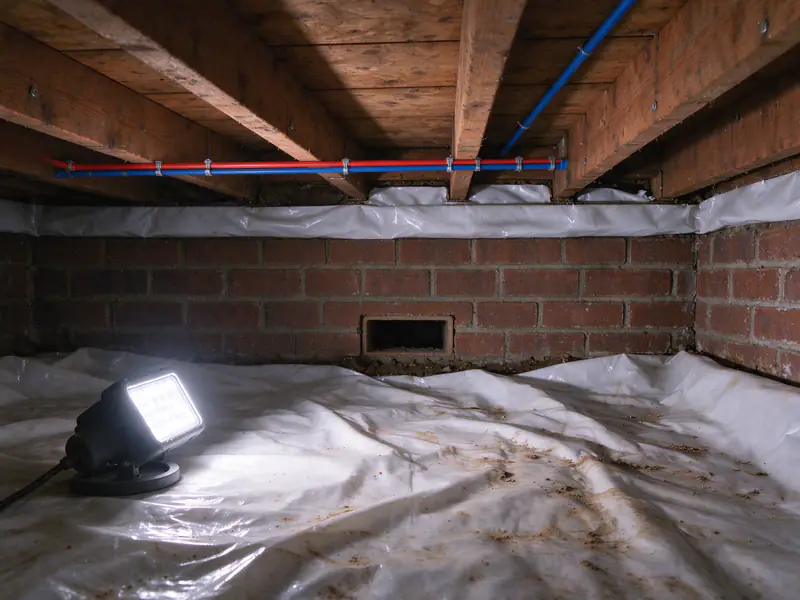
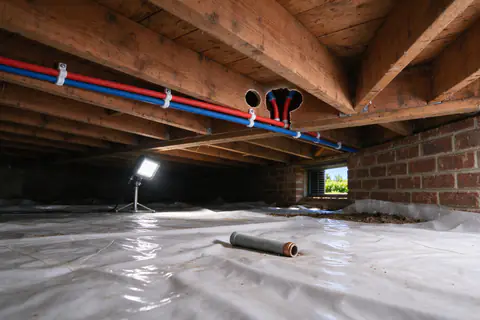
New lines go in while the old system still works. In a crawl space house, PEX or copper runs along the joists and rises behind each fixture, and the old gray pipe can usually be cut out and removed. In a slab house, new lines run through the attic and down interior walls, and polybutylene under the slab is abandoned in place. That route does not involve breaking up floors, though it does need openings in walls and sometimes ceilings, which our guide to drywall after a repipe covers. Fixtures are then moved over to the new lines, including the polybutylene-specific shutoff valves under sinks and toilets, which are replaced. The new system is pressure tested before walls close, then inspected where a permit is pulled; our permit guide explains when one applies. Most families stay in the house during the work.
What polybutylene replacement costs
A full polybutylene replacement is a whole house repipe, so it falls in the same range. A whole house PEX repipe on a single-family home typically runs $4,000 to $12,000 or more in the Charlotte area. Larger homes, two-story homes and slab homes run higher. Copper, repairs and fittings-only work are quoted per job. The main drivers are bathrooms and fixtures, the foundation, the number of stories, the patching standard, and the service line. The repipe cost guide explains each driver, and the cost estimator places your house in the range.
If polybutylene has come up in an inspection, a renewal letter or a leak, use the estimate form or call (704) 452-4386. Send a photo of the pipe if you can; the print and the fittings answer most questions quickly.
What's included
What a polybutylene pipe replacement includes
A polybutylene replacement is only worth what it removes. These items make sure none of the old pipe is left in service by accident.
Identification of every polybutylene run in the house, including fittings, stub-outs and the line to the water heater
A check of the water service line from the meter, which is often polybutylene too, priced as its own line
New PEX or copper supply lines from the main shutoff to every fixture
New fixture shutoff valves, replacing the polybutylene-specific stops found under many sinks and toilets
Old polybutylene disconnected and capped, and removed where it can be reached, such as in an open crawl space
A pressure test before walls close, then the county or town inspection
Written confirmation of what was replaced, useful for an insurer or a future buyer
Patching of access openings to the standard written in the scope
The real choice
Options for a house with polybutylene
Not every polybutylene house leaks. The choice depends on fittings, history, plans for the house and what an insurer or buyer needs.
Options for a house with polybutylene
Repair one leak
Replace fittings only
Full replacement
What changes
One failed section, spliced to PEX with transition fittings
Accessible plastic fittings swapped for metal
Every polybutylene supply line in the house
Polybutylene left in service
Nearly all of it
All of the pipe
None
What it answers
The leak in front of you
The weakest early fittings, where they can be reached
Insurance, sale and future-leak questions
What it does not answer
The age of the rest of the system
Ageing of the pipe itself, and fittings inside walls
Nothing about polybutylene; other plumbing is checked separately
Price
Quoted per job
Quoted per job
Typical Charlotte range published above
The published Charlotte range covers a whole house PEX repipe; repairs and fittings-only work are quoted per job.
Guides
Related resources
Guides that go deeper on polybutylene pipe replacement decisions.
Polybutylene usually turns up in the inspection report, partway through due diligence, with an offer already on the table. Here is what to confirm, who to call, and how buyers handle it, in the order the clock allows.
Each insurer sets its own rules on polybutylene. Some write the policy, some ask questions, some decline. The answer that counts is your carrier's, in writing, and the paperwork from a repipe is what changes it.
Five supply pipes turn up in Charlotte-area houses. Color, joints, markings and a magnet tell most of them apart in a few minutes, as long as you look in more than one place.
The typical Charlotte range for a whole house PEX repipe, why copper is quoted separately, how the Mecklenburg permit fee is set, and which parts of the job only a walk-through can price.
The three supply pipes found in older Charlotte-area houses, how each one was meant to work and how it fails, the signs that point to the pipe rather than something else, the rules and insurance questions around replacement, and what each scope leaves behind.
One leak on sound pipe is a repair. A pattern of leaks, or a pipe with a known failure history, is a question about the whole system. The evidence that separates the two is usually in the house.
How it runs
How a polybutylene pipe replacement runs
The call or the form
The age of the house, the pipe you have seen, crawl space or slab, and what has been leaking.
The assessment
Pipe material, fixture count, access routes and street pressure, written up as a scope with a price.
The repipe
New lines are run, then connected to fixtures and the water heater, then pressure tested before walls are closed.
Inspection and patching
The permit office inspects the new piping; access openings in walls and ceilings are then patched to the agreed scope.
What this work looks like
Close view of gray polybutylene pipe and a wide copper crimp band at a fitting
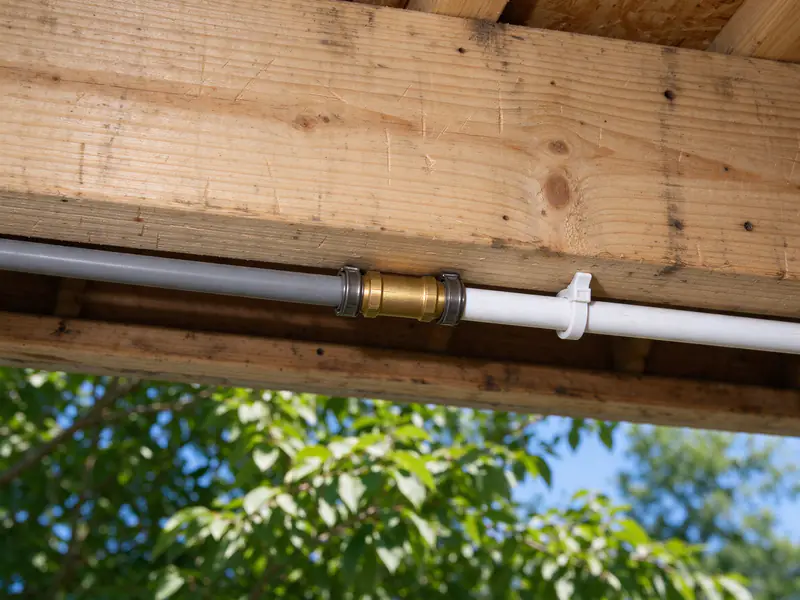
Gray polybutylene line meeting a brass transition fitting joined to white PEX tubing
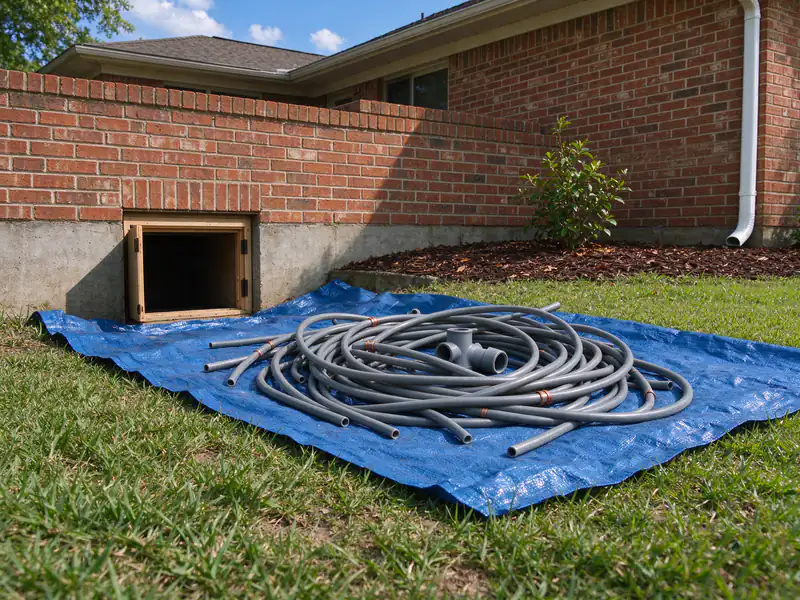
Pile of cut gray polybutylene pipe and plastic fittings on a tarp beside a crawl space access door
Gray polybutylene stub-out under a bathroom sink with a plastic shutoff valve and braided supply line
Before
After
Selling, buying or tired of patching polybutylene?
Tell us the year the house was built, where you have seen gray pipe, and whether it has leaked before.
Read the print on the pipe. Polybutylene is usually stamped PB2110, sometimes with the Qest name, and it feels slightly waxy. PEX is printed with PEX and its ASTM standard. Fittings help too: polybutylene uses wide copper or aluminum crimp bands, or gray or white plastic fittings. If the print has worn off, the assessment confirms it at several points.
Do polybutylene pipes with copper crimp rings still need replacing?
They are not an emergency, but they are still polybutylene. Copper or brass fittings with copper crimp rings replaced the earlier plastic fittings, which failed more often. The pipe itself still ages from the inside, and insurers and buyers usually ask about the pipe, not the fitting. Whether to replace now depends on leak history, your insurer and your plans for the house.
Does a North Carolina seller have to disclose polybutylene that has never leaked?
The North Carolina Real Estate Commission has said the mere presence of polybutylene is not a material fact for agents to disclose unless they know or should know of a probable defect, and that buyer's agents may advise clients to talk to their insurer before making an offer. A known leak or defect is a different matter. Ask your agent or attorney about your own sale.
Is the polybutylene class-action settlement still paying for repipes?
No. The national claim programs that paid for polybutylene replacement in the 1990s and 2000s closed years ago, and owners now pay for replacement themselves. Homeowners insurance generally covers sudden water damage under the policy terms, not the cost of replacing pipe because of its age. Our polybutylene insurance guide covers the questions to ask your insurer.
Can a single polybutylene leak be fixed without repiping the house?
Yes. A failed section can be cut out and replaced with PEX using transition fittings listed for polybutylene. That stops the leak in front of you. It does not change the rest of the system, which is the same age and material, so the decision to repipe is about the whole house rather than that one repair.