10.4% Share of Charlotte housing units built before 1960, the era of cast iron drains (U.S. Census Bureau, ACS)
95.4% Mecklenburg single-family homes built in the 1960s that sit on a crawl space (Mecklenburg County assessor)
46.8% Mecklenburg single-family homes on a slab, where drains run under the concrete (Mecklenburg County assessor)
Last Updated:
Drain line replacement removes failing drain, waste and vent piping inside a house and replaces it with new pipe sized and sloped to code. Level Repiping Charlotte arranges drain line replacement across Charlotte and the surrounding counties, with the work performed by licensed and insured contractors under a plumbing permit where one is required. This page covers cast iron stacks and horizontal drains, older materials such as Orangeburg, and how the camera result decides between a repair and a replacement.
Drains are a separate system from your water lines
A house has two plumbing systems that share walls but little else. The supply side carries water under pressure to every fixture; a whole house repipe replaces that side only. The drain side carries used water away by gravity, through larger pipe that has to keep a steady downhill slope, with vents that let air in so traps do not siphon dry. Supply lines are tested with pressure; drain lines are tested for leaks with water or air before they are covered.
That difference matters when you read an estimate. A quote for a repipe does not include drains unless it says so, and a drain scope says nothing about the water lines. When both are failing in an older house they are often done together, because the same walls and floors are open, but each is priced and inspected as its own scope.
Why older drain lines fail
Cast iron was the standard drain pipe for decades. It is heavy and quiet, and its outer barrel can last a long time, but the inside of the pipe corrodes. Scale builds on the walls and catches waste. Along the bottom of horizontal runs, where water always flows, the pipe can wear a channel until the bottom splits along its length. Joints, especially older lead-and-oakum joints, can loosen. About 10% of Charlotte housing units were built before 1960 according to the Census Bureau’s American Community Survey, and those are the houses most likely to still have original cast iron drains.
Galvanized steel was used for smaller drain and vent lines in some older houses. It rusts from the inside the same way galvanized water pipe does, and its small bore closes up faster.
Orangeburg is a bituminous fiber pipe used mainly for the building sewer outside the foundation. It softens, blisters and flattens under soil load, and roots enter its joints. Where Orangeburg shows up in the camera, it is usually past the point where the drain leaves the house, so it belongs with sewer line replacement.
A slow drain or a backup does not prove any of this. Grease, a foreign object, a failed trap or a problem in the building sewer can cause the same symptom, which is why the work starts with a camera rather than a saw. The same logic as repiping or repairing a water system applies: one defect is a repair, widespread failure is a replacement.
What happens on the first visit
The first visit finds out what the drain is actually doing. The person assessing the house identifies the drain material wherever it is exposed, under sinks, in the crawl space or at the cleanout, and asks which fixtures are slow, which back up, and whether the problem moves with use of a particular bathroom.
A camera inspection is run through a cleanout or a fixture opening. If the line is full of scale or standing water, it may need cleaning first so the camera can show the pipe wall. The recording is matched to locations in the house, so a crack or a channel can be tied to a room, a wall or a spot in the slab.
The result is a written scope: which sections are replaced, the new material, where new pipe joins the old, the cleanouts, the access openings, the test, the permit, the restoration and the price. Drain line replacement is quoted per job, because the length of pipe, the access and the condition found by the camera vary from house to house. The repiping process guide shows how scheduling and access work when drains and supply lines are done together.
Replacing a cast iron stack
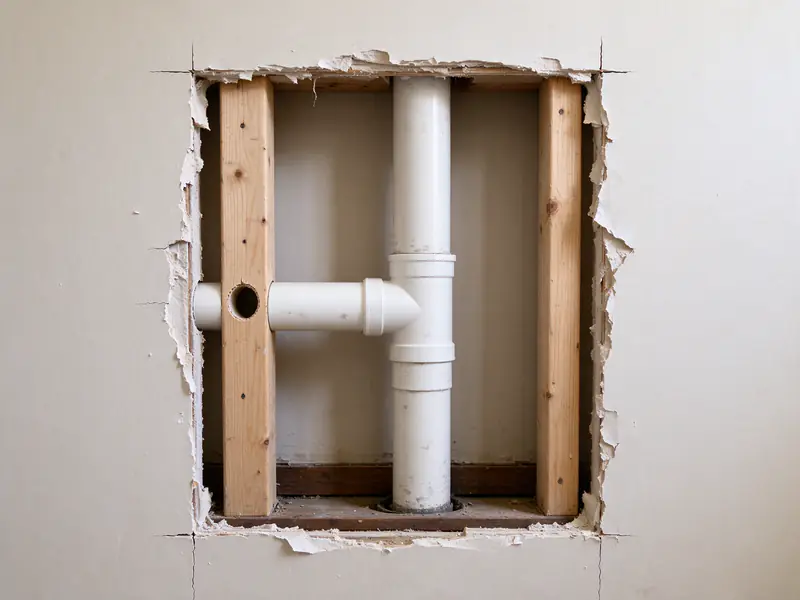
The stack is the vertical drain and vent pipe that runs from the lowest floor up through the roof, with each bathroom and the kitchen draining into it. In a two-story house it passes through both floors, usually inside a wall behind a bathroom.
Replacing a stack means opening that wall, supporting the cast iron above the section being removed, and cutting it out in pieces, because a full length of cast iron is too heavy to drop. New pipe, usually PVC, goes in with the same or code-required sizing. Every branch drain that enters the stack is reconnected, and the new stack is joined to the old pipe above and below with listed transition couplings if only part of it is replaced. Riser clamps support it at each floor.
A partial stack replacement is common when the damage is at the base, where the stack turns horizontal and carries the full flow. A full stack replacement fits when cracking or scale runs the whole height. The camera and the condition of the pipe at the cut points decide which, and the scope says so before any wall is opened.
How the work runs in a crawl space house
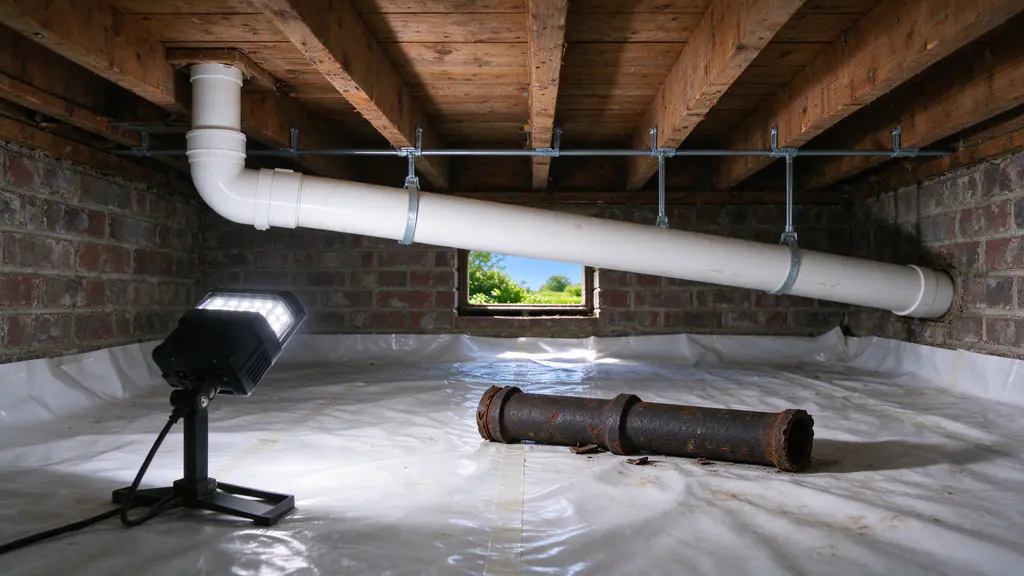
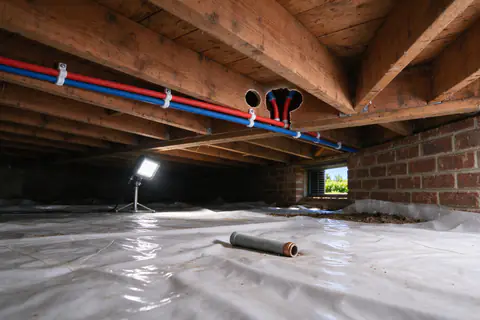
Most Mecklenburg single-family homes built in the 1950s and 1960s sit on a crawl space, according to county assessor records. That is the easier case for drain work. Horizontal drains hang from the floor joists, so failed runs can be cut out and replaced from below, and new pipe can be hung on straps at the correct slope. Openings inside the house are usually limited to where drains rise into walls behind fixtures.
The crawl space also shows the drain’s whole route to the foundation wall, where the building drain becomes the building sewer and heads underground to the street. Damage found past that point moves into a sewer scope.
How the work runs in a slab house
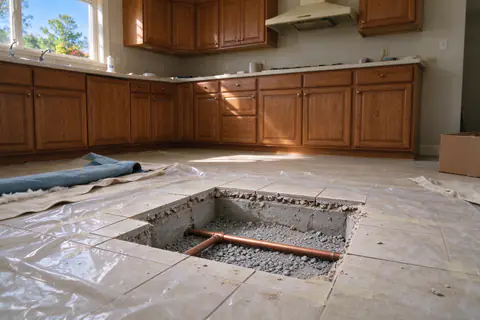
Nearly half of Mecklenburg single-family homes sit on a slab. Their drains run under the concrete, so replacing one means cutting a trench in the slab floor, removing the old pipe, laying new pipe on proper bedding at the right slope, testing it, and pouring the trench back. Flooring over the trench has to come up and go back down.
That is why lining is worth considering under a slab. A liner cured inside the old pipe avoids the trench, but it follows the old pipe’s shape and slope. It cannot fix a section that has sagged and holds water, or one that has collapsed. Our guide to repiping versus pipe relining sets out where each fits. If a slab leak turns out to be a supply line rather than a drain, see slab leak repair.
Testing, inspection and restoration
New drain piping is tested for leaks before it is covered, usually by filling it with water to a set height or holding air in it, by the method the code and the inspector require. Where a permit is pulled, the county or town inspects the new piping. Our permit guide explains how Mecklenburg County handles plumbing permits. Openings are then closed and restored to the standard written in the scope.
What moves the price
Drain line replacement is quoted per job. The main drivers are the length and diameter of pipe replaced, the number of floors a stack runs through, crawl space or slab, how many fixtures reconnect, finished walls and ceilings in the way, the new material, and the restoration standard. If you are not sure what your drains or water lines are made of, the guide to identifying pipe material helps, and the pipe repair page covers single-leak fixes. To start a drain scope, call (704) 452-4386 or use the estimate form.
What's included
What a drain line replacement includes
A drain line replacement estimate should list each of these items. A scope that names no tie-in points or no test leaves the most important parts unwritten.
A camera inspection of the drains in question, after cleaning where the pipe is too fouled to see
A written scope naming each section to be replaced, the new material, and where it ties into the pipe that stays
The plumbing permit, pulled by the licensed contractor doing the work
Removal of the failed cast iron, galvanized or other drain sections named in the scope
New drain, waste and vent piping sized and sloped to code, with transition couplings at every joint to old pipe
Cleanouts where code requires them or where the existing layout has none
A leak test of the new drain piping before it is covered, then the county or town inspection
Restoration of access openings in floors, walls or ceilings to the extent written in the scope
The real choice
Ways to deal with a failing drain line
The camera decides which of these fits. A recurring clog alone does not prove the pipe has failed.
Ways to deal with a failing drain line
Cleaning
Section replacement
Lining
Full drain replacement
What it does
Clears roots, scale or buildup and restores flow
Cuts out a failed length and joins new pipe to the old
Cures a new liner inside the existing pipe
Replaces the drain system from the fixtures to where the building sewer leaves the house
When it fits
The pipe is sound and the blockage is the problem
One defect in a run that is otherwise in fair condition
Pipe that still holds its shape, with access at both ends
Widespread cracking, scale or rot-through across many runs
Where it falls short
Does not repair a crack, a channel or a sag
Old pipe on either side keeps aging
Follows the old pipe's slope and cannot fix a sag or a collapse
The most access: openings in walls and floors, and slab cutting in a slab house
Access needed
A cleanout or a fixture opening
The exposed section, often from a crawl space
Cleanouts and the ends of the run
Every run being replaced
Every option is quoted per job after the drain has been inspected.
Guides
Related resources
Guides that go deeper on drain line replacement decisions.
Epoxy lining coats the inside of the pipe you already have; a repipe replaces it. Both are real options for some houses. Here is how lining works, where it reaches its limits, and the questions that decide between them.
Five supply pipes turn up in Charlotte-area houses. Color, joints, markings and a magnet tell most of them apart in a few minutes, as long as you look in more than one place.
One leak on sound pipe is a repair. A pattern of leaks, or a pipe with a known failure history, is a question about the whole system. The evidence that separates the two is usually in the house.
North Carolina law requires plumbing permits but exempts some single-family work. Here is how that exemption applies to a repipe, who is allowed to pull the permit, what Mecklenburg County charges, and how the inspection runs.
A repipe runs in stages, and most of them happen with the water still on. Here is what each stage involves, what makes one house take longer than another, and when you will actually be without water.
How it runs
How a drain line replacement runs
The call or the form
The age of the house, the pipe you have seen, crawl space or slab, and what has been leaking.
The assessment
Pipe material, fixture count, access routes and street pressure, written up as a scope with a price.
The repipe
New lines are run, then connected to fixtures and the water heater, then pressure tested before walls are closed.
Inspection and patching
The permit office inspects the new piping; access openings in walls and ceilings are then patched to the agreed scope.
What this work looks like
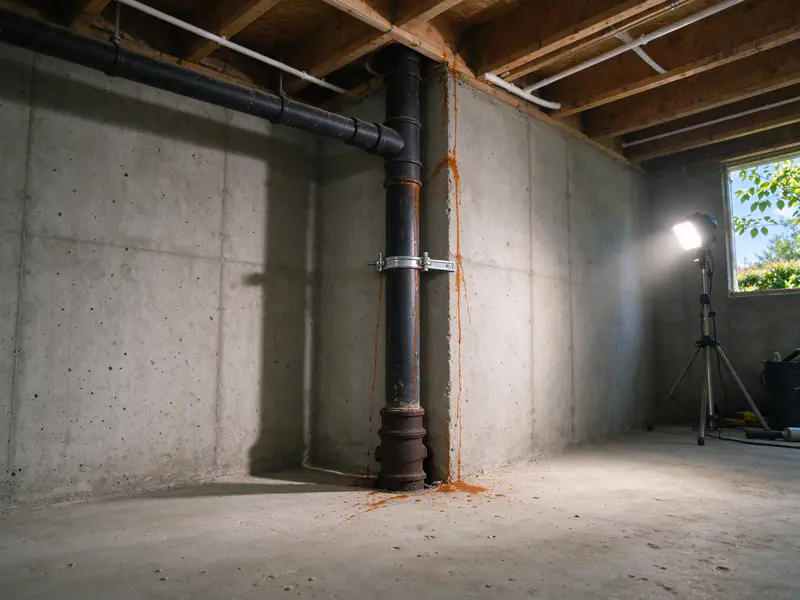
Vertical black cast iron drain stack with rust streaks running down it, standing in an unfinished basement corner
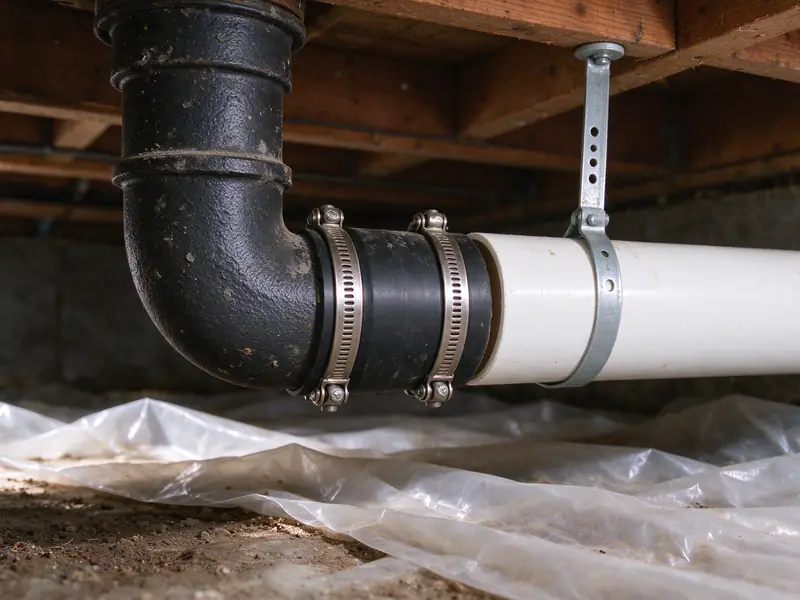
New white PVC drain pipe joined to an old cast iron pipe with a black rubber and steel band coupling
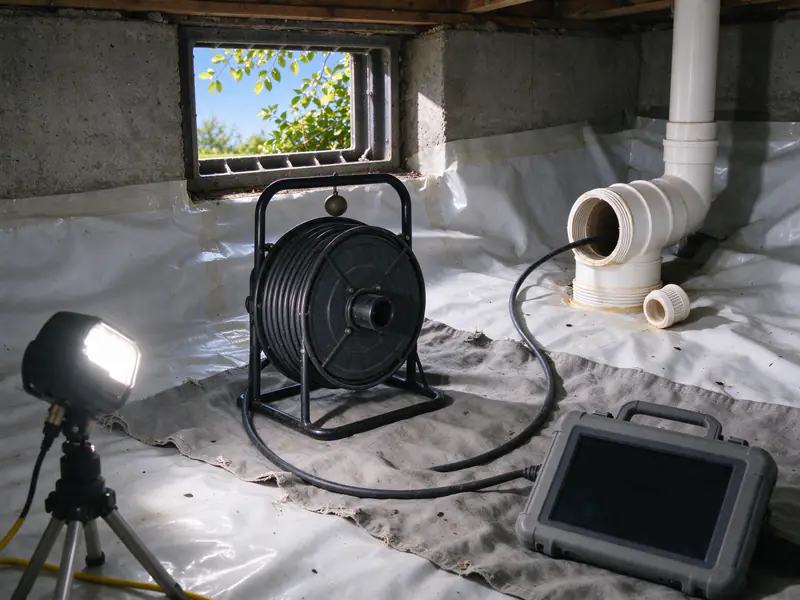
Sewer camera reel and monitor set on a drop cloth beside an open cleanout in a crawl space
Rectangular wall opening behind a bathroom showing a new white PVC drain and vent stack between wood studs
Want a drain line replacement scope for your house?
Tell us the year the house was built, crawl space or slab, and what the drains are doing: slow, backing up, leaking or smelling.
Is drain line replacement part of a whole house repipe?
No. A repipe replaces the pressurized water supply. Drain line replacement covers the drain, waste and vent pipes, which work by gravity and use different pipe, fittings and tests. The two can be done in the same project, but each appears as its own scope with its own line on the estimate.
How do I know if my cast iron drain stack needs replacing?
Signs include rust stains or weeping along the pipe, a crack you can see, sewer odor near the stack, and slow drains that keep coming back after cleaning. None of those proves the whole stack is gone. A camera inspection shows how far scale, channeling or cracking runs, which decides between a section and the full stack.
Can drain lines under a slab be replaced without breaking the floor?
Sometimes. A drain that still holds its shape and slope may suit a liner installed from a cleanout. A collapsed drain, a sag that holds water, or a line that has lost its shape usually needs the slab cut and the pipe replaced, or a new route that avoids the old one. The camera result decides.
What material replaces old cast iron drain pipe?
PVC is the most common replacement drain pipe, and new cast iron is still used where owners want the quieter pipe or where the design calls for it. Transitions between old and new pipe are made with listed couplings. The scope names the material for each section.
Does drain line replacement need a permit in Charlotte?
Replacing drain piping is plumbing work, and Mecklenburg County Code Enforcement issues plumbing permits for Charlotte and the six towns. North Carolina exempts some smaller like-for-like replacements in single-family homes, so whether a given drain job needs one is confirmed per project, and the licensed contractor pulls it where it applies.