$35 Mobile home charge per trade listed in the county fee ordinance (revised July 1, 2026) (Mecklenburg County)
2.5% Share of Gastonia housing units that are mobile homes (U.S. Census Bureau ACS)
5.4% Share of housing units that are mobile homes in the Lancaster County panhandle around Indian Land (U.S. Census Bureau ACS)
58.3 Nights a year at or below 32°F in Charlotte, on 1991-2020 climate normals (NOAA)
Last Updated:
Mobile home repiping replaces the hot and cold supply lines in a manufactured home, most of which run under the floor rather than through walls. In older homes that usually means taking out polybutylene and running PEX in its place, then closing the underbelly and skirting back up. Level Repiping Charlotte arranges mobile home repiping across Charlotte, Gaston and Cabarrus counties and the South Carolina communities south of the state line, performed by licensed and insured contractors. This page covers how plumbing is laid out in a manufactured home, why that changes the work, and what to ask for in the scope.
How plumbing is laid out in a manufactured home
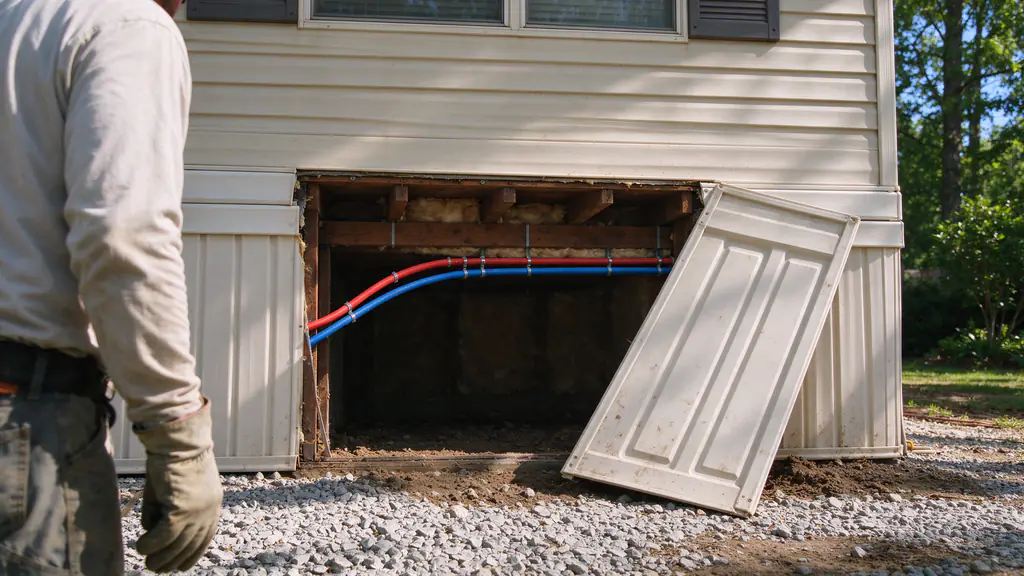
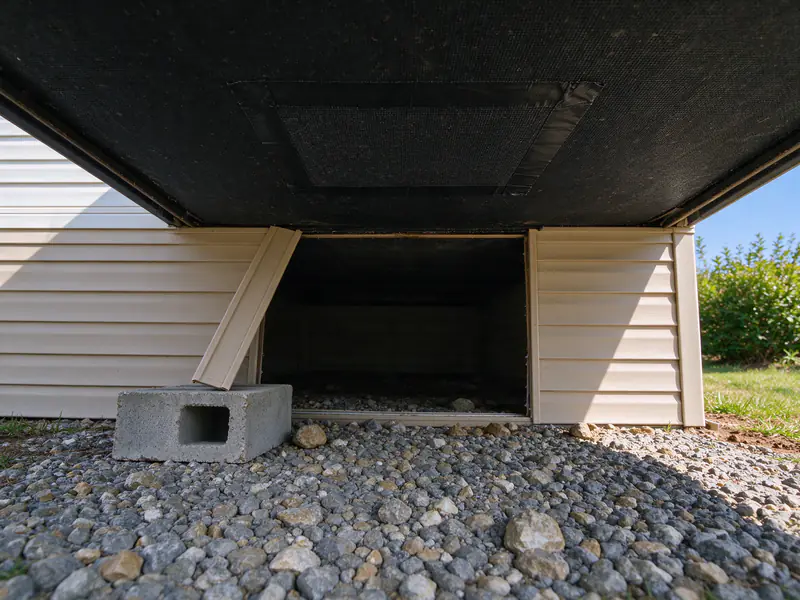
A manufactured home is built in a factory on a steel chassis, and its plumbing is designed around that. Water usually enters through a single inlet riser that comes up from the ground through the underside of the home. From there the supply lines run under the floor to each fixture, either inside the insulated floor cavity or along the underside of the floor framing. A bottom board, a woven or plastic sheet stretched under the floor, closes that cavity and holds the insulation in. Skirting around the base of the home hides all of it.
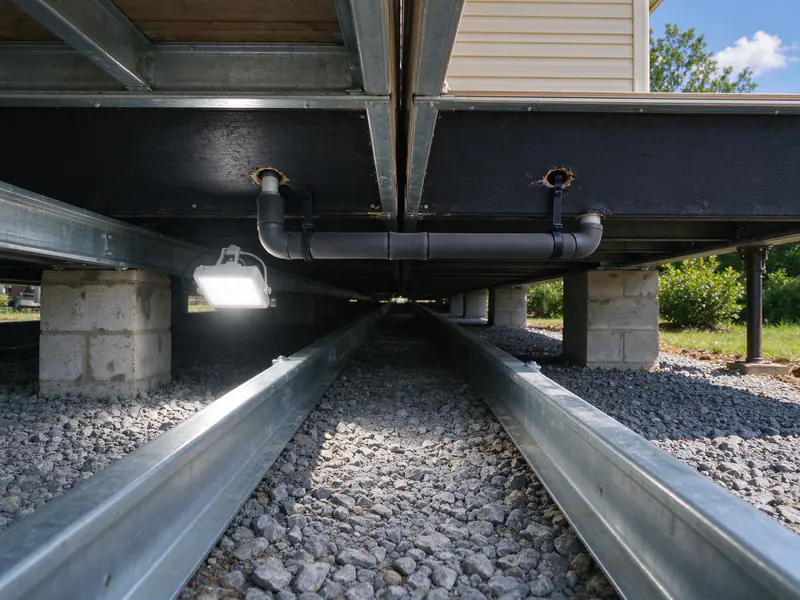
Because most fixtures sit over the floor, many are fed straight up through the floor rather than through a wall. The water heater is often in its own closet, sometimes with an exterior access door. In a double-wide or multi-section home, supply lines cross between the sections at the marriage line through a crossover connection.
All of this makes the underside of the home the work area. A site-built house with a crawl space is reached by crawling under the joists; a manufactured home is reached by removing skirting panels and opening the bottom board where the lines run.
What happens on the first visit
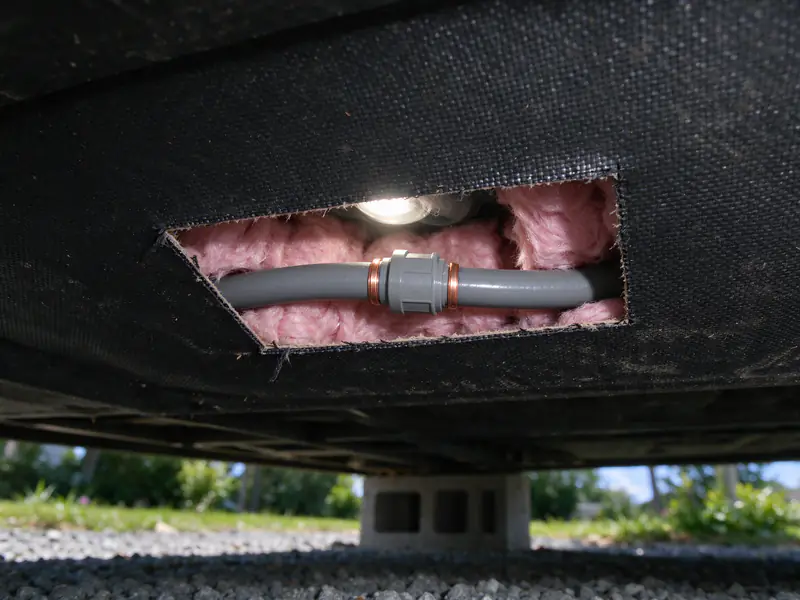
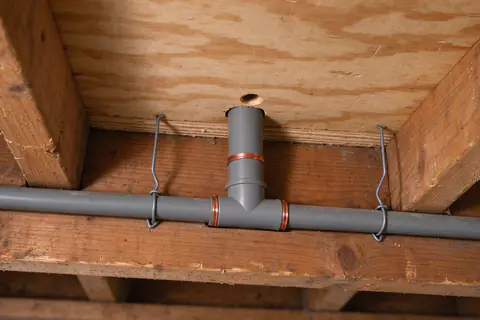
The person assessing the home identifies the pipe material where it shows: at the water heater, under sinks, and through a skirting panel at the inlet. Gray flexible pipe with crimp rings is polybutylene. Cream or tan rigid plastic is CPVC. Red, blue or white flexible tubing with crimp or expansion fittings is PEX. The visit maps every fixture, finds the inlet riser and the main shutoff, notes whether the home is single or multi-section, and looks at the condition of the bottom board and skirting. Street pressure is measured at a hose bib where one exists.
The visit also settles who owns what. On a private lot, the homeowner usually owns the line from the meter or well to the home. In a park, the park’s own arrangement decides that, and it is confirmed before work starts.
The result is a written scope: the material, the route, each underbelly and wall opening, how the bottom board will be closed, the permit, and the price.
Polybutylene in older manufactured homes
Polybutylene was used widely in manufactured homes built from the late 1970s to the mid-1990s, the same years it went into site-built houses. It fails at its fittings and from within, often without warning. In a manufactured home a leak under the floor can soak the insulation and the bottom board before anyone sees it, and a sagging, wet bottom board is a common first sign.
A polybutylene leak can be repaired, but every other fitting is the same age and design. For homes being sold, refinanced or insured, the material itself is often the question, not the leak; the polybutylene insurance guide and the guide to buying a home with polybutylene cover those conversations. The polybutylene pipe replacement page explains the material in more depth.
How a mobile home repipe runs
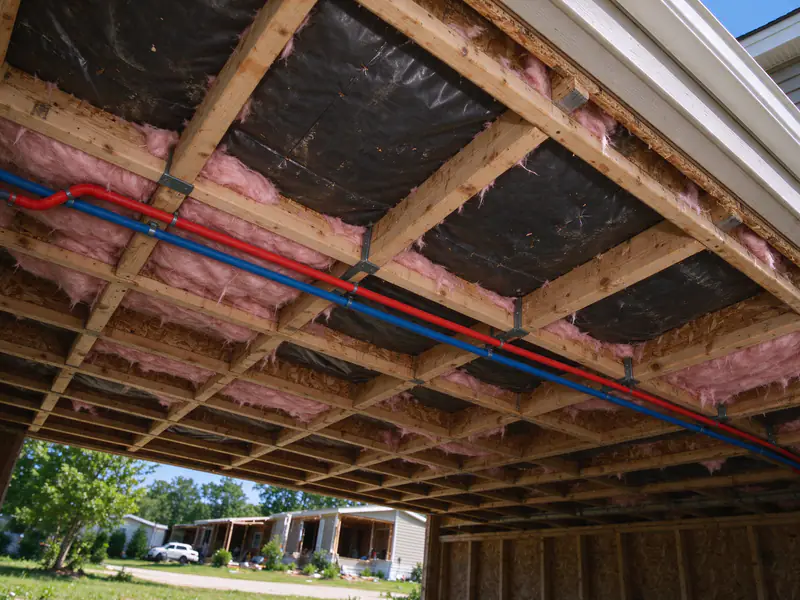
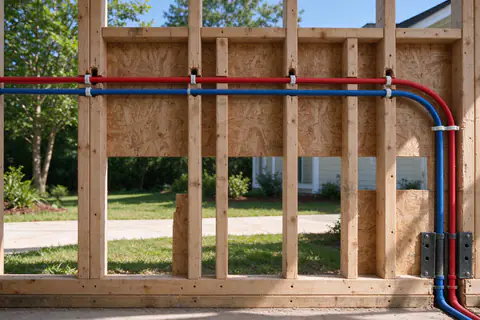
The skirting is opened along the runs that need work, and the bottom board is cut where the lines need to be reached. New PEX is run from the inlet riser along the floor cavity to each fixture, and brought up through the floor or, where needed, a wall. PEX suits this work because it bends around the chassis and floor framing in long runs with few joints; the PEX repipe page explains the material. On a multi-section home, the crossover is replaced and supported.
New lines are usually run while the old system still works. When they are in place, the water is shut off, each fixture is moved to the new line, and the old pipe is cut off. The new system is pressure tested before anything is closed. The bottom board is then patched and sealed, the insulation put back, and the skirting reinstalled.
Freeze exposure under a manufactured home
The space under a manufactured home is unconditioned, and Charlotte gets cold enough to matter. The 1991-2020 climate normals average 58.3 nights a year at or below 32°F and 7.2 at or below 20°F, and hard freezes reached 9°F on December 24, 2022 and 10°F on February 2, 2026.
The weakest points are predictable: the inlet riser where it comes out of the ground, the crossover on a multi-section home, and anywhere the bottom board is torn or the skirting is missing so cold air reaches the pipe directly. The North Carolina amendment to Plumbing Code section 305.4 calls for at least R-6.5 insulation or heat on water pipe in unconditioned space. A repipe keeps new lines inside the insulated cavity where it can and insulates or heat-protects the exposed sections, often with listed heat tape on the riser. The frozen pipes guide covers the rest.
Permits and who does the work
Manufactured homes are built in the factory to a federal construction standard, and work on the plumbing after the home is set is done under state licensing and local permits. In North Carolina, any paid plumbing work requires a state plumbing license under G.S. 87-21. Whether a particular repipe needs a permit is confirmed per project. In Mecklenburg County, Code Enforcement issues plumbing permits for Charlotte and the six towns, and its fee ordinance, revised July 1, 2026, lists a $35 per-trade charge for mobile homes; which fee line applies to a given job is the county’s decision. The permit guide explains the process.
In South Carolina, residential plumbing work over $500 requires a Residential Plumber license from the state’s Residential Builders Commission, and work in Indian Land or Rock Hill is done by SC-licensed contractors. Census figures show mobile homes make up 2.5% of housing units in Gastonia and 5.4% in the Lancaster County panhandle around Indian Land.
What moves the price
Mobile home repiping is quoted per home. The drivers are the number of bathrooms and fixtures, single or multi-section construction, the condition of the bottom board and how much of it has to be opened and replaced, skirting removal and reinstallation, freeze protection on exposed lines, and whether the line from the meter or well to the home is replaced at the same time. The published Charlotte range on the whole house repipe page is for site-built single-family homes and does not apply here. To start, check what the pipe looks like at the water heater, then call (704) 452-4386 or send a photo through the estimate form.
What's included
What a mobile home repiping includes
The underbelly is the part of a manufactured home that is most often left open after plumbing work. The scope should say how it will be closed.
Identification of the existing pipe and fittings, the main inlet riser, the water heater location and every fixture
Access planned through skirting panels and the bottom board, with the openings listed in the written scope
New PEX supply lines from the main inlet to every sink, tub, shower, toilet, washer connection, hose bib and the water heater
The crossover connection between halves on a double-wide or multi-section home
New fixture shutoff valves, and a new main shutoff where the old one is worn
Lines supported and kept inside the insulated floor cavity, or insulated or heat-protected where they cannot be
A pressure test before the bottom board and skirting are closed
Bottom board patched and sealed, insulation restored, and skirting panels reinstalled
The plumbing permit and inspection where one is required
The real choice
Repairing a mobile home leak or repiping the home
A single leak can be repaired. When the pipe is polybutylene or the leaks keep coming, the whole supply system is the better question.
Repairing a mobile home leak or repiping the home
Repair the leak
Repipe the home
What changes
One fitting or section at the leak
Every supply line from the main inlet to each fixture
Underbelly openings
One, at the leak
Several, planned along the main runs
Polybutylene
The rest of the system keeps the same pipe and fittings
No polybutylene left in use
Good fit
PEX or copper with one damaged spot, or a single freeze break
Polybutylene, repeat leaks, or a home being sold or insured
Freeze protection
Restored at the repair
Reviewed for the whole run, including the inlet riser
Mobile home repairs and repipes are quoted per home.
Guides
Related resources
Guides that go deeper on mobile home repiping decisions.
Five supply pipes turn up in Charlotte-area houses. Color, joints, markings and a magnet tell most of them apart in a few minutes, as long as you look in more than one place.
Each insurer sets its own rules on polybutylene. Some write the policy, some ask questions, some decline. The answer that counts is your carrier's, in writing, and the paperwork from a repipe is what changes it.
Polybutylene usually turns up in the inspection report, partway through due diligence, with an offer already on the table. Here is what to confirm, who to call, and how buyers handle it, in the order the clock allows.
Charlotte freezes most winters and sees a hard freeze every few years. Here is why crawl space and attic pipes are the ones that split, what the state code requires, and what helps before and after a cold night.
One leak on sound pipe is a repair. A pattern of leaks, or a pipe with a known failure history, is a question about the whole system. The evidence that separates the two is usually in the house.
How it runs
How a mobile home repiping runs
The call or the form
The age of the house, the pipe you have seen, crawl space or slab, and what has been leaking.
The assessment
Pipe material, fixture count, access routes and street pressure, written up as a scope with a price.
The repipe
New lines are run, then connected to fixtures and the water heater, then pressure tested before walls are closed.
Inspection and patching
The permit office inspects the new piping; access openings in walls and ceilings are then patched to the agreed scope.
What this work looks like
Gray polybutylene supply pipe with copper crimp rings exposed through an opening in a mobile home's black bottom board
New red and blue PEX lines strapped under a manufactured home floor, with pink fiberglass insulation above
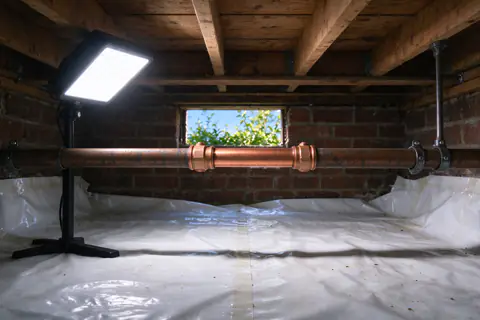
Insulated PEX crossover line running between two sections of a double-wide home at the marriage line
Patched and taped bottom board under a mobile home, with a vinyl skirting panel leaning beside it
Gray pipe or leaks under your mobile home?
Tell us the year the home was made, single or double-wide, and whether it sits in a park or on its own lot.
Is polybutylene common in mobile homes around Charlotte?
Polybutylene was widely used in manufactured homes built from the late 1970s to the mid-1990s, the same era it was used in site-built houses. There is no local count of how many still have it. Gray flexible supply pipe, often with copper or plastic crimp rings at the fittings, is the usual sign. The pipe identification guide shows what to look for.
Do walls have to be opened to repipe a mobile home?
Fewer than in most site-built houses, because the supply lines run under the floor and come up through it to most fixtures. Access is mainly through skirting panels and the bottom board. Some fixtures, such as a shower valve or a washer box, are fed through a wall, and those spots may need a small opening. The written scope lists each one.
Who is responsible for the water line to a mobile home in a park?
It depends on the park and the lease. Some parks own the water system up to each home's connection and leave the piping in the home to the homeowner; others draw the line differently. The lease and the park's arrangement with the utility set it, so confirm it with the park before work starts.
Does a double-wide mobile home need anything different in a repipe?
Yes. A double-wide or multi-section home has a crossover where supply lines pass between the sections at the marriage line. That connection is often exposed under the home and is a common place for leaks and freezing. A repipe replaces it, and the scope says how it is supported, insulated and protected.
Is a permit required to repipe a mobile home in Mecklenburg County?
Usually, for a full repipe, though North Carolina's permit rules have exemptions and the answer is confirmed per project. Mecklenburg County Code Enforcement issues plumbing permits for Charlotte and the six towns, and its fee ordinance lists a $35 per-trade charge for mobile homes. Which fee applies to a given job is the county's decision.