A pre-1960 house with original pipe
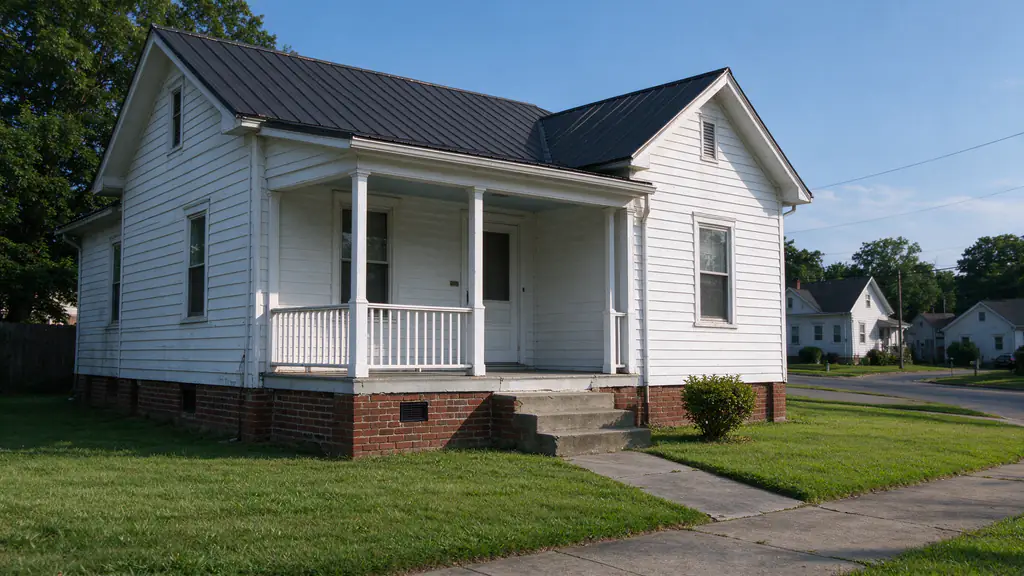
About a quarter of Gastonia's homes were built before 1960, the era of galvanized steel supply pipe that narrows from the inside as it rusts.
Service area · Gaston County
In Gastonia
About a quarter of Gastonia's homes were built before 1960, the era of galvanized steel supply pipe that narrows from the inside as it rusts.
Another quarter were built from 1960 to 1979, and many later houses date from the polybutylene years; the pipe at the water heater tells you which you have.
About 2.5% of Gastonia's housing units are mobile homes, whose supply lines run under the floor and need their own approach.
Services
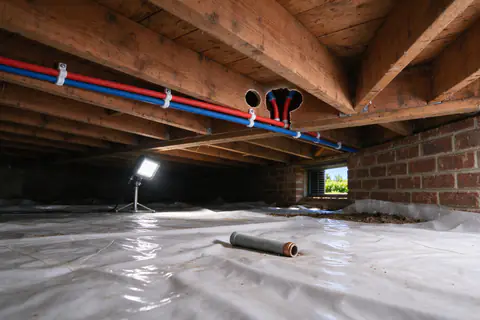
Whole house repipe in Charlotte: every supply line replaced with PEX or copper, pressure tested and inspected. Typical cost published.
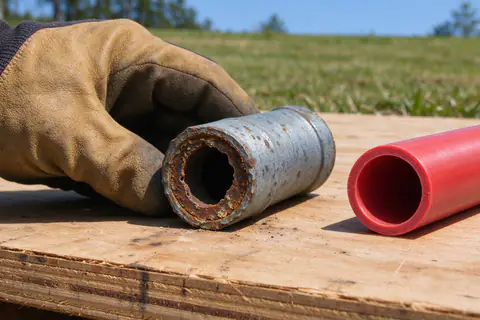
Galvanized pipe replacement in Charlotte: why old steel pipe loses flow and runs brown, how it is tested, and how a repipe runs in older homes.
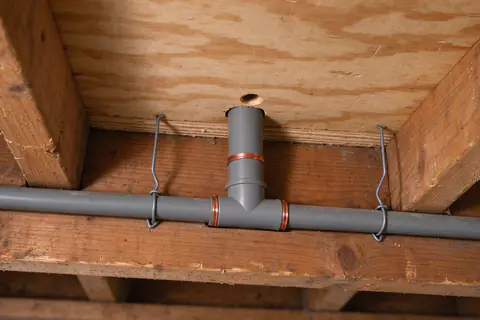
Polybutylene pipe replacement in Charlotte: identifying gray PB and its fittings, what it means for a sale or insurance, and typical cost.
Last Updated:
To repipe a Gastonia, NC house is usually to replace older pipe than in Charlotte, because Gastonia’s houses are older. The median Gastonia home was built in 1978, against 1995 in Charlotte, and about a quarter of Gastonia’s housing went up before 1960 (Census American Community Survey). Level Repiping Charlotte arranges whole house repipes in Gastonia, Belmont and Mount Holly through licensed and insured contractors, under Gaston County permits rather than Mecklenburg’s.
Housing age is context, not a diagnosis of any one house, but the eras in Gastonia line up with the pipe materials that bring people to a repipe. Of Gastonia’s 35,337 housing units, 26.1% were built before 1960 and 8.0% before 1940. Houses from those decades were often plumbed with galvanized steel, which rusts from the inside, narrows over time and sends brown water out after it sits. Another 26.3% were built from 1960 to 1979. Many houses from the late 1970s into the 1990s were plumbed with polybutylene, the gray plastic pipe that inspectors flag.
The older parts of the city, such as the mill village around Loray Mill and the York-Chester neighborhood, hold some of that early housing. Where a house of that age still has its original supply pipe, the galvanized pipe replacement page applies. Where the gray pipe shows up at the water heater, see polybutylene replacement. If you’re not sure what you have, the pipe identification guide walks through it.
Gastonia also has more manufactured housing than Charlotte: about 2.5% of its units are mobile homes. Their supply lines run under the floor inside the skirting, and they are covered on the mobile home repipe page.
A repipe in Gastonia runs through a different permit office from one in Charlotte. Gaston County Building & Development Services, at 128 W Main Ave, issues building and trade permits and performs inspections for the City of Gastonia, unincorporated Gaston County, and towns including Belmont, Mount Holly, Cramerton, Dallas, Lowell, McAdenville and Stanley. Mecklenburg County’s fee schedule and online systems don’t apply west of the Catawba River.
The code is the same. North Carolina applies one state plumbing code everywhere, so the material rules, the pressure test and the requirement for R-6.5 insulation on pipe in unconditioned attics and crawl spaces are the same as in Charlotte. North Carolina’s licensing rule is also statewide: paid plumbing work needs a license from the State Board of Examiners of Plumbing, Heating and Fire Sprinkler Contractors. What changes in Gaston County is who reviews the permit, how it is applied for and what it costs. The fee comes from Gaston County’s own schedule and is added to the estimate.
Gastonia’s water comes from Mountain Island Lake on the Catawba River, the same lake that supplies much of Charlotte, but it is treated by the City of Gastonia’s Two Rivers Utilities. Two Rivers reported an average pH of 7.4 at its entry point and alkalinity of about 21 ppm. Charlotte Water, by comparison, reports an average pH of 8.5 after adding lime for corrosion control. Both are soft, low-alkalinity waters.
That difference is context for copper, not a verdict on it. Corrosion in copper depends on water chemistry, water velocity, workmanship and the age of the pipe together, so one figure doesn’t explain why a particular house has pinhole leaks. If yours does, the copper pinhole leak guide covers the causes and when a run is worth replacing.
Two Rivers identified the material of 18,300 service lines in its system ahead of federal Lead and Copper Rule changes, sorting them into copper, plastic and galvanized categories, and its lead sampling came back below detection at the 90th percentile. The service line from the meter to the house belongs to the owner. When a repipe finds galvanized pipe at the main shutoff, the water line replacement page explains replacing that run too.
The job follows the same pattern as anywhere in the region, with Gaston County’s permit in place of Mecklenburg’s. A walk-through maps the pipe, the fixtures and the access routes. In a crawl space house, new lines run along the joists under the floor. In a slab house, they run through the attic and down inside walls. The new system is pressure tested and inspected by Gaston County before walls are closed, and access openings are patched to the scope agreed in writing.
Belmont and Mount Holly sit between Gastonia and Charlotte along the Catawba River, and both use Gaston County Building & Development Services for permits and inspections, so the permit side of a repipe works the same as in Gastonia. Their housing is a little newer: 23.1% of Belmont’s homes and 20.4% of Mount Holly’s were built before 1960. Each town’s water service is confirmed for the address.
A whole house PEX repipe on a single-family home typically runs $4,000 to $12,000 or more across the Charlotte area, Gastonia included. Older houses don’t automatically cost more, but plaster walls, original galvanized fittings and a long run from the meter can add to the scope. The repipe cost guide breaks down what moves the price, and the cost estimator gives a range without a phone call. Or call (704) 452-4386.
Repipe estimate for a Gastonia house
Send the year the house was built, the pipe you can see at the water heater, and whether it sits on a crawl space or a slab.
The area
The shaded disc marks the general service area around the area’s center, not an office or job site. Open Gastonia, NC in Google Maps
Questions
A whole house PEX repipe on a single-family home typically runs $4,000 to $12,000 or more across the Charlotte area, Gastonia included. The number of bathrooms, the foundation, the number of stories and PEX versus copper move it most. Gaston County's permit fee comes from its own fee schedule and is added to the estimate.
Gaston County Building & Development Services, at 128 W Main Ave in Gastonia. It issues permits and inspections for the City of Gastonia, unincorporated Gaston County and towns including Belmont, Mount Holly, Cramerton, Dallas, Lowell, McAdenville, Ranlo, Stanley, Bessemer City and Cherryville.
It comes from the same lake but is treated by a different utility. Two Rivers Utilities draws from Mountain Island Lake and reported an average pH of 7.4 at its entry point, against 8.5 for Charlotte Water. Both are soft, low-alkalinity waters.
Two Rivers Utilities identified the material of 18,300 service lines ahead of the federal Lead and Copper Rule changes, in copper, plastic and galvanized categories, and its lead sampling came back below detection at the 90th percentile. The line from the meter to your house is yours, so its material is worth checking during a repipe.
Yes. Gaston County Building & Development Services handles permits and inspections for both towns, so the permit process is the same as in Gastonia. The water utility can differ by town, so it is confirmed for each address.
Guides
The three supply pipes found in older Charlotte-area houses, how each one was meant to work and how it fails, the signs that point to the pipe rather than something else, the rules and insurance questions around replacement, and what each scope leaves behind.
The typical Charlotte range for a whole house PEX repipe, why copper is quoted separately, how the Mecklenburg permit fee is set, and which parts of the job only a walk-through can price.
Five supply pipes turn up in Charlotte-area houses. Color, joints, markings and a magnet tell most of them apart in a few minutes, as long as you look in more than one place.
Charlotte Water has classified every one of its service connections. Here is what the inventory says about lead and galvanized lines, what Lead Free CLT does, how to look up your address, and where lead can still hide inside a house.
Nearby
Tell us the age of the house, the pipe you have seen and what is going wrong. Or call.
Get a repipe estimate