A recurring leak in a 2000s house
When the same kind of fitting or the same run keeps leaking, the question is whether it is one weak spot or a pattern through the system.
Service area · Lancaster County, SC
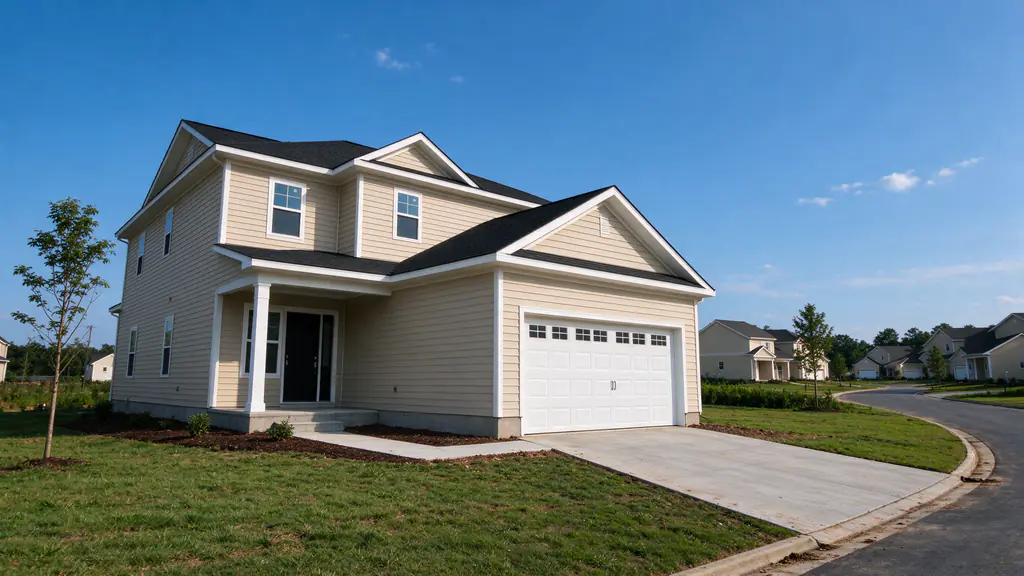
In Indian Land
When the same kind of fitting or the same run keeps leaking, the question is whether it is one weak spot or a pattern through the system.
A warm spot, a damp patch of flooring or a meter that turns with every tap closed can point to a supply line under the slab.
An older resale in the panhandle, or one with an unknown plumbing history, is worth a look at the pipe before closing.
Services
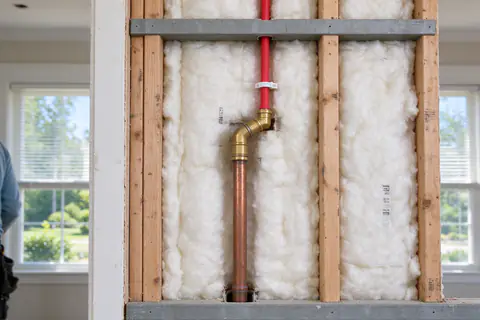
Partial repipe in Charlotte: the hot side, one bathroom group or one floor replaced, with the old pipe that stays named and sound transitions.
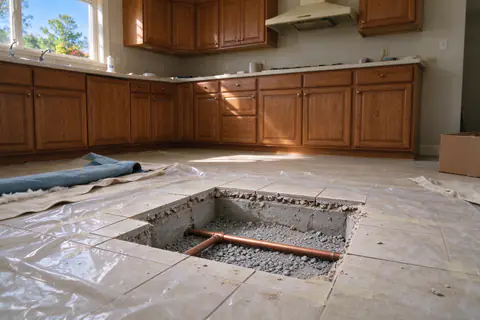
Slab leak repair in Charlotte: the leak is found first, then fixed through the floor or bypassed with new lines run through attic and walls.
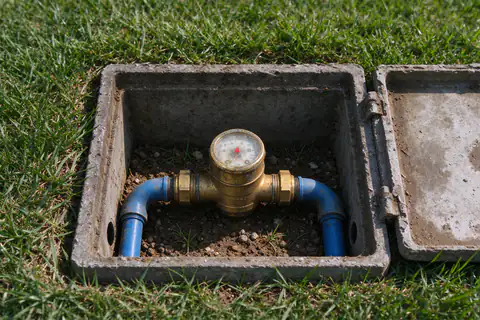
Water leak detection in Charlotte: meter and pressure tests, then listening and thermal tools, to trace a hidden leak before anything is cut.
Last Updated:
Most homes in Indian Land are too new to need a repipe because of age. In the Van Wyck census division, which covers the Lancaster County panhandle, the median home was built in 2012 and 86.9% of housing has gone up since 2000, according to the Census American Community Survey. The case to repipe Indian Land SC homes therefore rests on what is failing, not on the calendar. Level Repiping Charlotte offers slab leak repairs, partial repipes and, where the evidence supports one, full system replacement across Indian Land, with the work performed by licensed and insured contractors holding South Carolina credentials.
The supply pipe in a house from the 2000s or 2010s is almost always CPVC or PEX, and either can serve for decades when it was installed well. A repipe in a house that young is about a specific weakness rather than the pipe wearing out. Older CPVC loses flexibility, especially near the water heater where it runs hot, and a run that is bumped during another repair may crack; the CPVC guide explains how that shows up. On the PEX side, the weak link tends to be the connection rather than the tubing: certain brass insert fittings from that period are prone to dezincification, which leaves a crusted, porous fitting that seeps. Workmanship matters too: a crimp ring set slightly off can hold for years and then fail.
The question is whether a leak is one bad spot or a pattern. One failed fitting is a repair. The same failure repeating across the house points toward replacing the system or the affected part of it, and the repipe or repair guide sets out where that line falls. A partial repipe replaces the runs that are failing and leaves the rest, as long as the written scope says plainly which old pipe stays. A full PEX repipe fits the case where every run shares the defect.
Where an Indian Land house sits on a slab with supply lines under it, a leak below the floor is a realistic reason to call even when the house is young. Signs include a warm patch of flooring, damp carpet or baseboard with no visible source, and a water meter that keeps moving with every tap closed; the slab leak signs guide covers them. Finding the leak is its own step, covered on the water leak detection page. Once it is found, the choice is between repairing that run through the slab and rerouting the supply through the attic and walls, which the slab leak repair page explains. A second leak in the same system makes the reroute more attractive.
Indian Land is unincorporated Lancaster County, so residential permits come from Lancaster County Development Services, not the Town of Fort Mill. The county builds on the International Residential Code with South Carolina modifications. Its residential construction page sets the renovation permit fee at the contract cost times 0.0075, plus a plan review fee of 10% of the permit cost, asks for a copy of the contract with the application, and gives a review target of 5 to 7 business days. Permits expire after 180 days with no inspection, and inspections are requested online or by phone by 3 pm the business day before. The water-supply test in the county’s published inspection steps belongs to its new-house sequence, and the inspector confirms per project what a repipe must hold. On the licensing side, South Carolina requires its own Residential Plumber credential for home plumbing jobs above $500; North Carolina credentials don’t transfer.
The Lancaster County Water & Sewer District serves more than 35,500 water customers and buys its water from the Catawba River Water Treatment Plant near Van Wyck, where river water settles in a pre-settling lake and reservoir before filtration. The district disinfects with chloramines, which sets it apart from the Lake Wylie water used in Fort Mill and Rock Hill. Its latest annual report gives a 90th-percentile lead level of 5.0 ppb and copper of 0.122 ppm, and its service line inventory is online. Chloramine is one input in choosing a pipe material, and PEX sold for drinking water carries a chlorine-resistance rating on the tubing, but the disinfectant is not a reason in itself to replace sound pipe.
Not every house in the panhandle is new. Tract medians range from 1994 to 2016, and about 5.4% of the area’s housing units are mobile homes, whose lines run under the floor and are covered on the mobile home repipe page. For a resale with an unknown history, identifying the pipe before closing is worth the trouble: a house from the mid-1990s could have polybutylene, and the buying with polybutylene guide covers how that affects a sale.
For a single-family home, a whole house PEX repipe typically costs $4,000 to $12,000 or more in the Charlotte area, and Indian Land is priced on that same range; larger houses, second stories and slabs push a job higher in it. Partial repipes and slab leak repairs are quoted per job. Lancaster County’s permit fee follows from the contract amount. The repipe cost guide covers the drivers. For an Indian Land house, call (704) 452-4386.
Repipe or repair estimate for an Indian Land home
Send the year the house was built, what is leaking or failing, whether the house is on a slab, and the pipe you can see at the water heater.
The area
The shaded disc marks the general service area around the area’s center, not an office or job site. Open Indian Land, SC in Google Maps
Questions
Yes, the same range applies: a whole house PEX repipe on a single-family home typically runs $4,000 to $12,000 or more across the Charlotte area. Many Indian Land houses need a partial repipe or a slab leak repair instead, which is quoted per job. Lancaster County's permit fee is figured from the contract cost.
Lancaster County's residential construction page sets the renovation permit fee at the contract cost times 0.0075, plus a plan review fee of 10% of the permit cost, and a copy of the contract goes in with the application. Whether a given repipe is filed that way is confirmed per project.
Lancaster County's published inspection steps include a water-supply test, but they are written for new construction. The test the inspector requires for a repipe is confirmed per project, and the new system is tested before walls are closed either way.
The Lancaster County Water & Sewer District, which buys its water from the Catawba River Water Treatment Plant near Van Wyck and disinfects with chloramines. Its service line inventory is online. It is a different source and treatment plant from Fort Mill and Rock Hill, which use Lake Wylie water.
For age alone, usually yes. Most of the area's housing was built after 2000 with CPVC or PEX. A repipe makes sense when there is a pattern: repeated fitting leaks, brittle CPVC, a slab line that has failed more than once, or a remodel that already opens the walls.
Guides
One leak on sound pipe is a repair. A pattern of leaks, or a pipe with a known failure history, is a question about the whole system. The evidence that separates the two is usually in the house.
A leak under a concrete floor rarely announces itself. Here are the signs that point to one, the ordinary things that cause the same signs, and the simple test that tells you whether water is leaving the house at all.
CPVC is an approved water pipe, not a defective one. But it ages, it becomes brittle, and brittle CPVC cracks in ways that make repairs harder each time. Here is how to tell which situation you are in.
Polybutylene usually turns up in the inspection report, partway through due diligence, with an offer already on the table. Here is what to confirm, who to call, and how buyers handle it, in the order the clock allows.
The typical Charlotte range for a whole house PEX repipe, why copper is quoted separately, how the Mecklenburg permit fee is set, and which parts of the job only a walk-through can price.
Nearby
Tell us the age of the house, the pipe you have seen and what is going wrong. Or call.
Get a repipe estimate